MOSAIC Education

BC SCIENCE 10 · PHYSICS

Learn physics
piece by piece.

Visual, ELL-friendly lessons based on the MOSAIC Physics worksheet. Explore energy, heat, nuclear reactions and Earth's energy systems, one topic at a time.

Choose a topic

Topic 01

Energy and Chemical Reactions

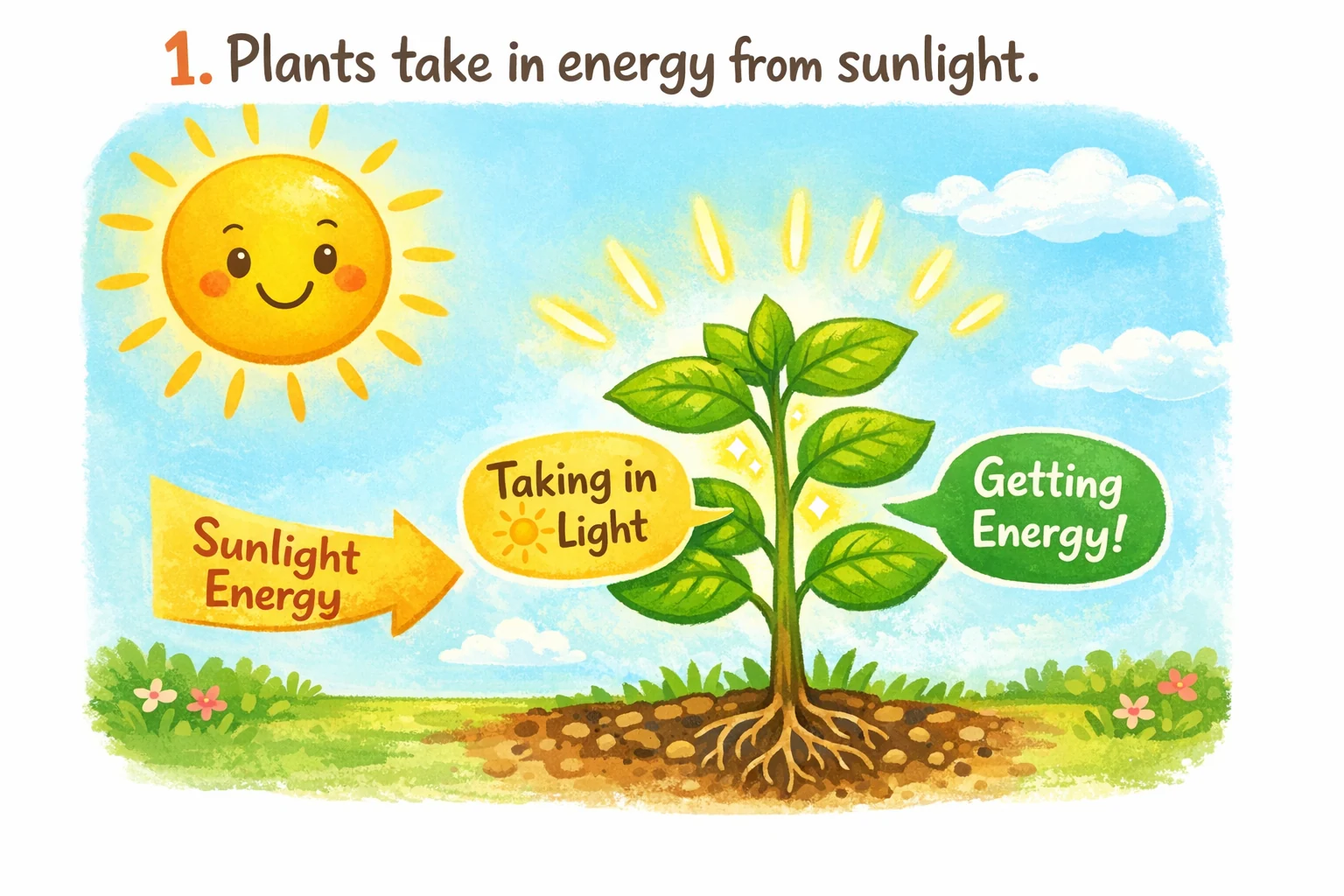
Big Question: How does energy support living things?

Page 1

Energy and Chemical Reactions
Original illustration from Physics worksheet page 1
Original worksheet illustration · Page 1
Vocabulary Easy meaning / example
Photosynthesis The process plants use to make food using sunlight
Cellular respiration Breaking down sugar with oxygen to release energy

Easy explanation

Photosynthesis: plants use sunlight to make sugar and store energy.

Cellular respiration breaks down sugar with oxygen to release usable energy.
Topic 02

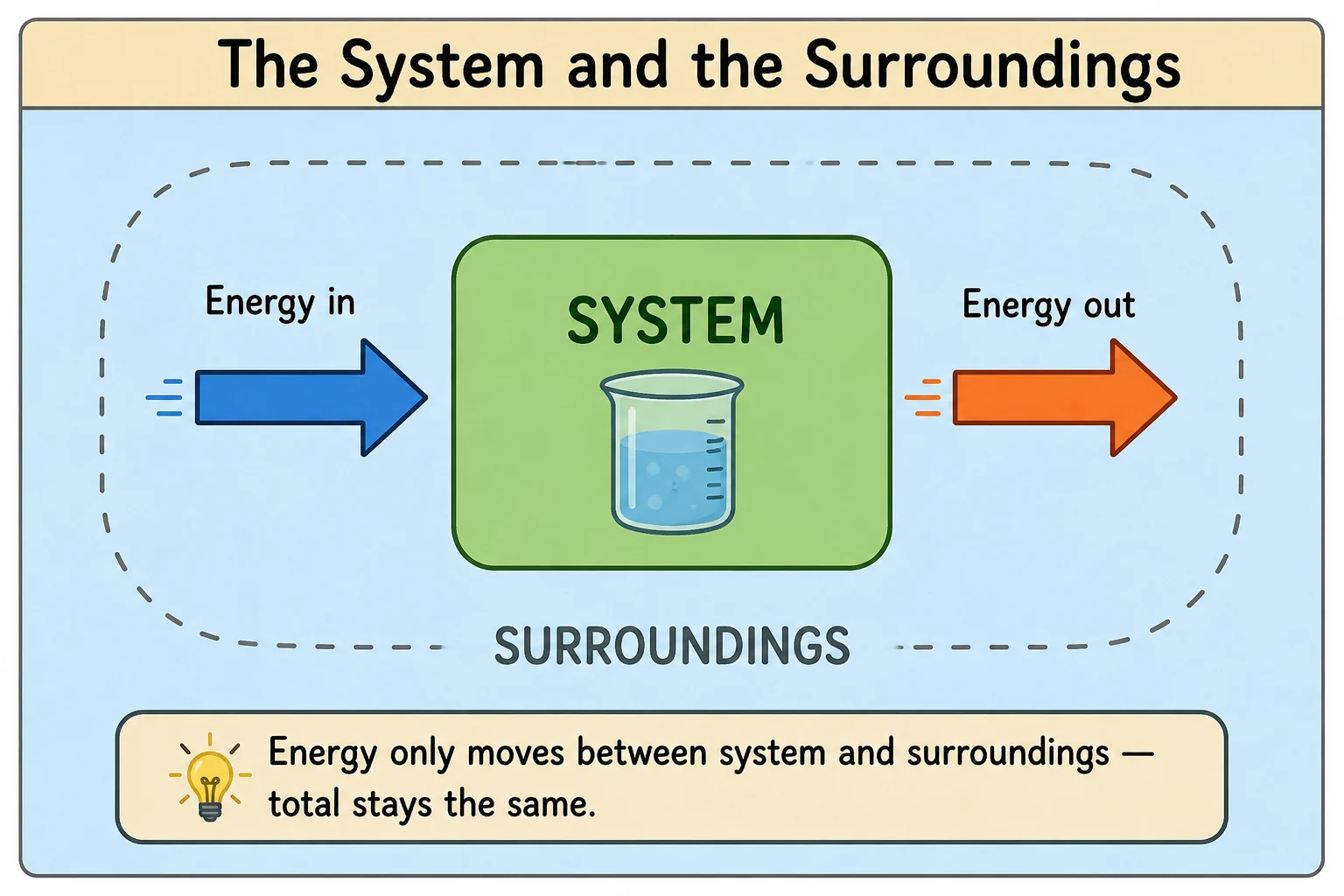
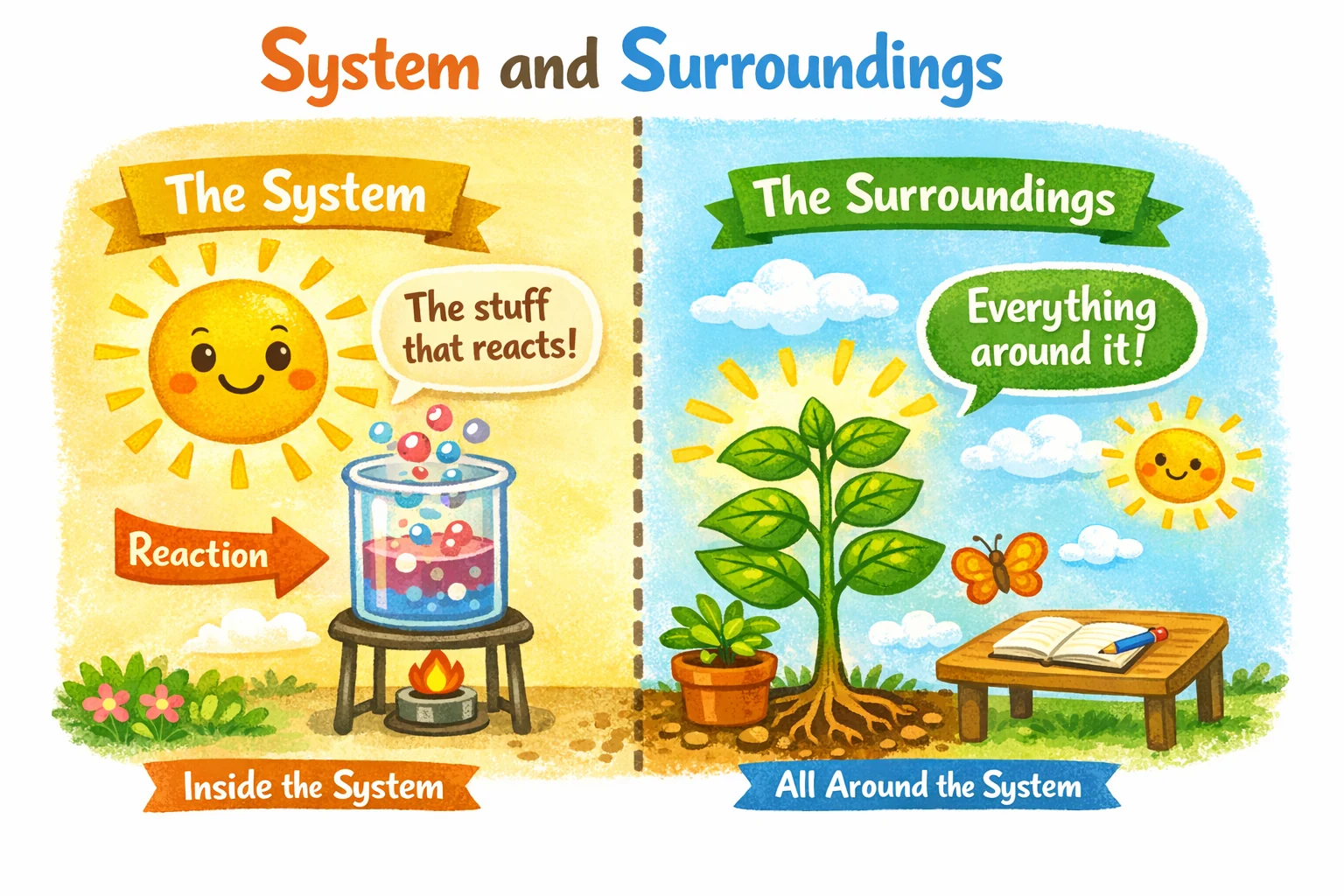
The System and the Surroundings

Big Question: Where does energy move?

Page 2

The System and the Surroundings

Original illustration from Physics worksheet page 2
Original worksheet illustration · Page 2

Easy explanation

The system is the material being studied. Everything around it is the surroundings.

Energy moves between the system and its surroundings.

Page 3

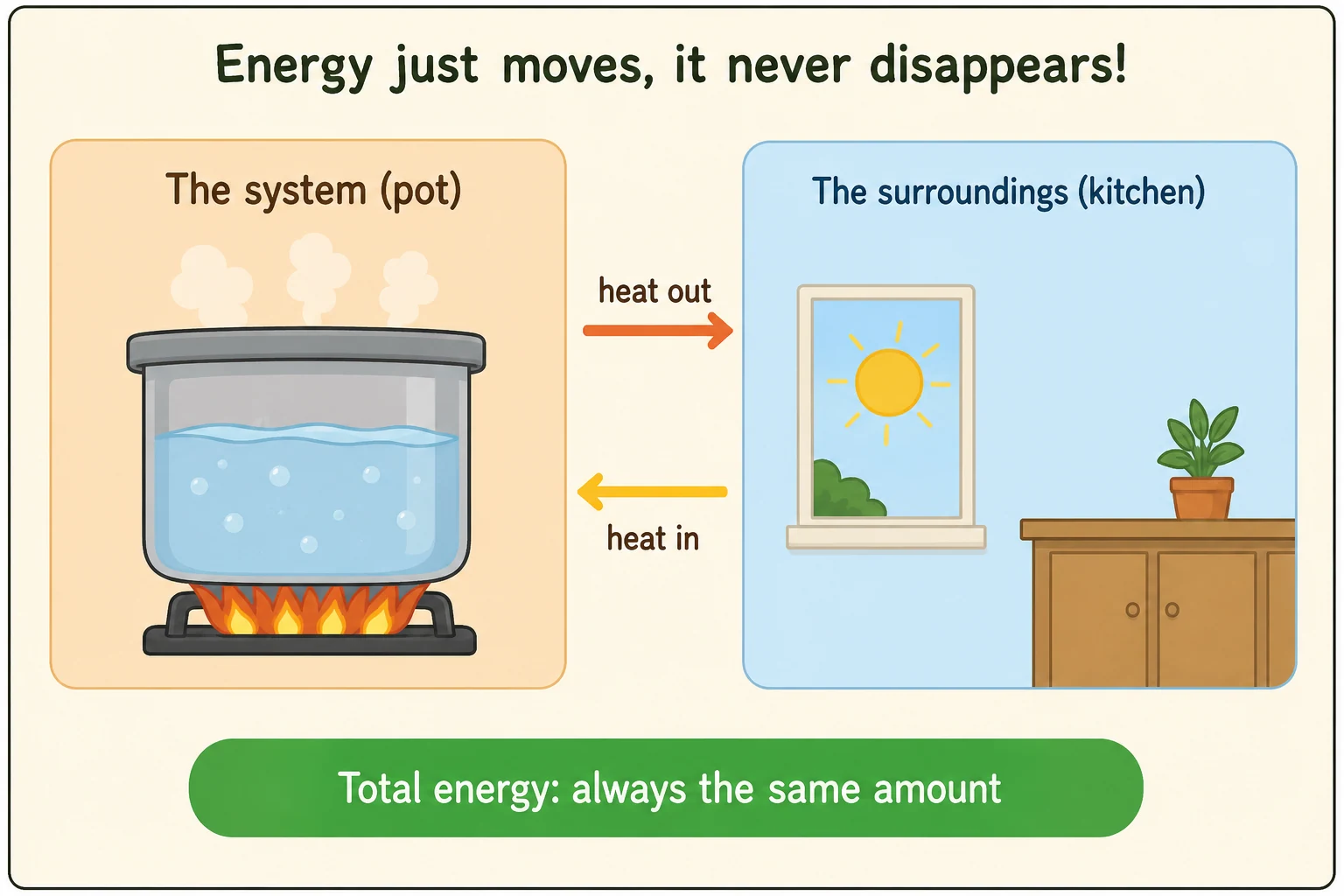
The System and the Surroundings

Original illustration from Physics worksheet page 3
Original worksheet illustration · Page 3

Easy explanation

A pot and kitchen show how heat can enter or leave a system.

Page 4

Energy never disappears

Original illustration from Physics worksheet page 4
Original worksheet illustration · Page 4

Easy explanation

Energy moves between a system and its surroundings; it does not disappear.

Topic 03

Exothermic and Endothermic Reactions

Big Question: How does heat move during a reaction?

Page 5

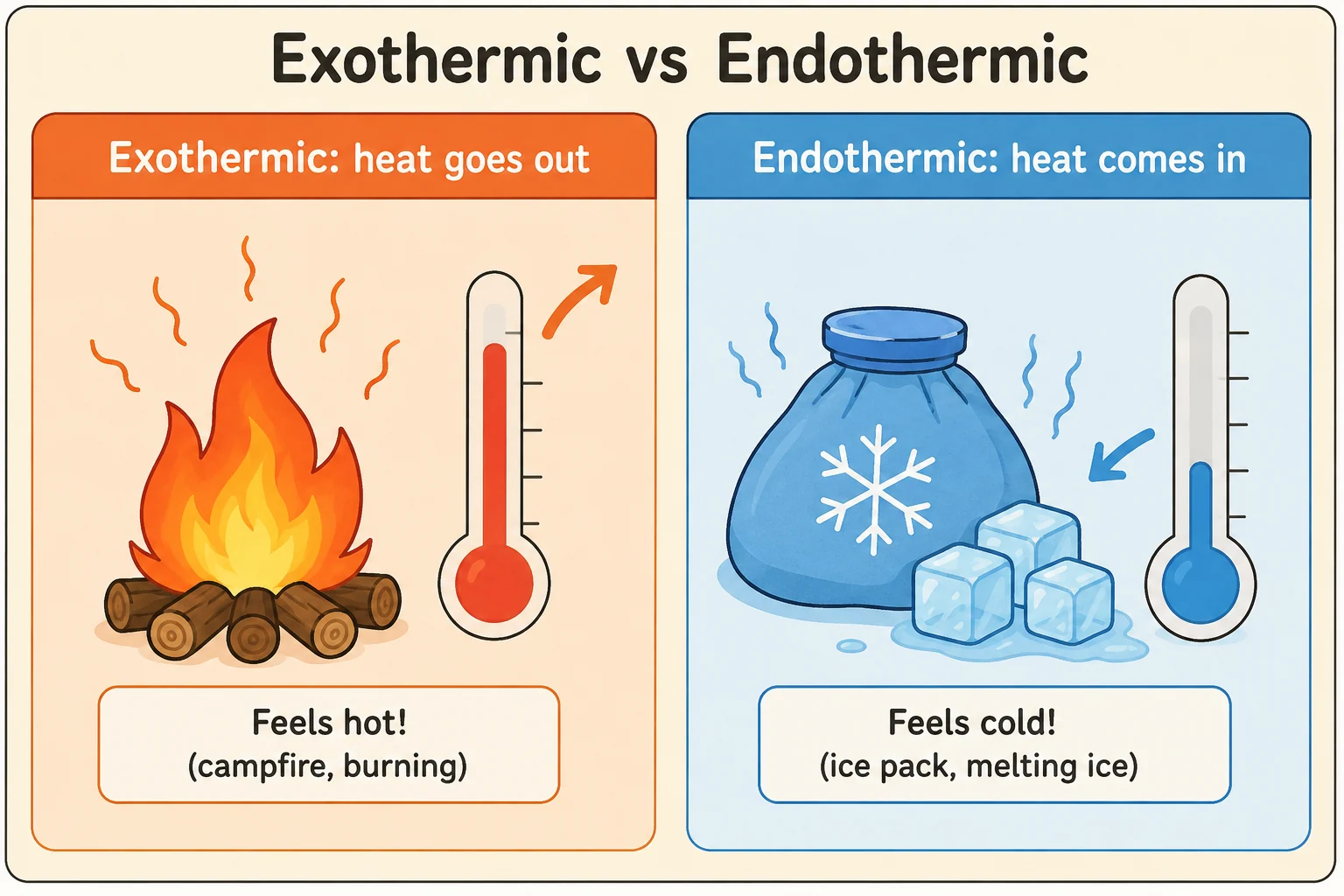
Exothermic and Endothermic Reactions

Original illustration from Physics worksheet page 5
Original worksheet illustration · Page 5
Vocabulary Easy meaning / example
Exothermic A reaction that releases heat to its surroundings
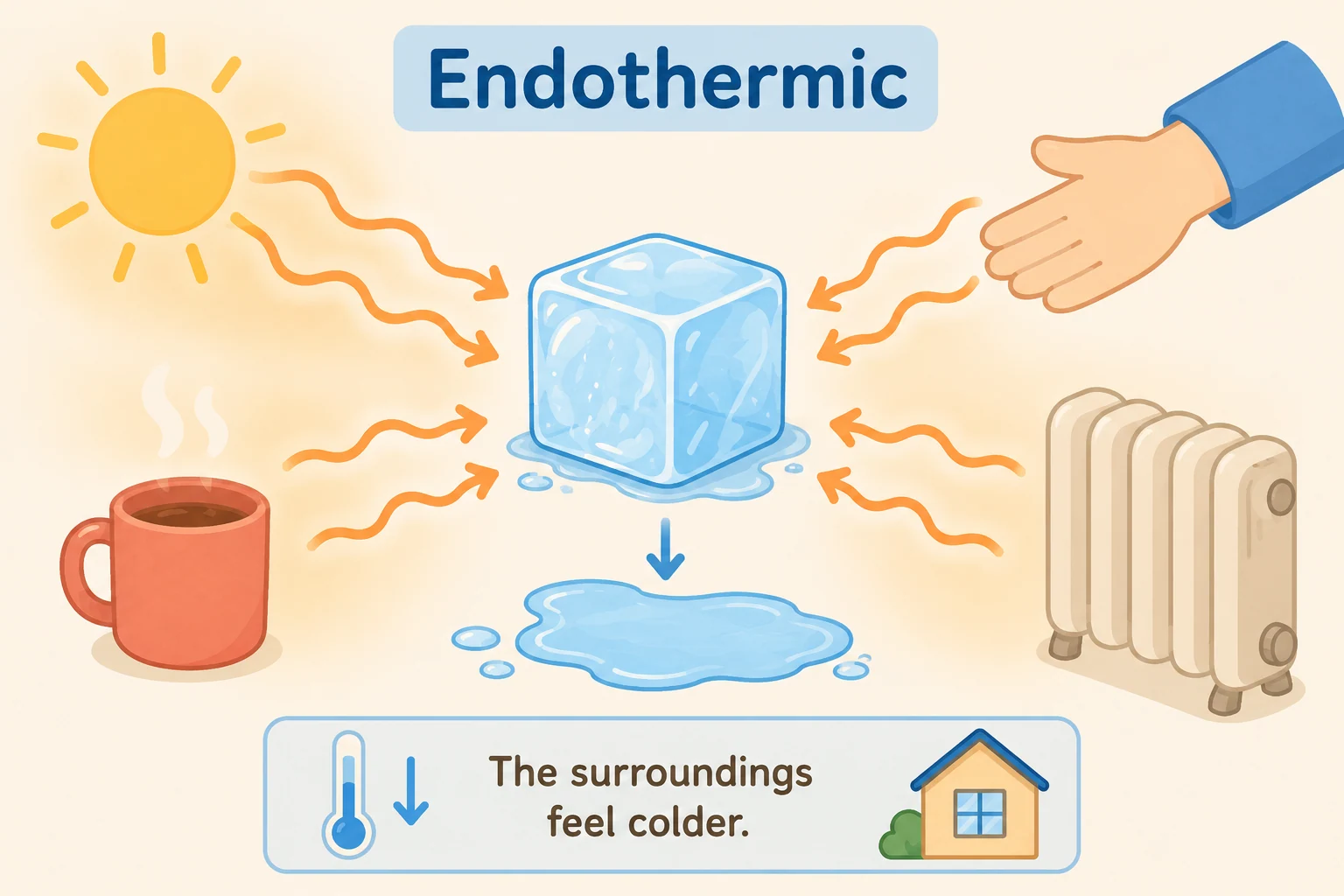
Endothermic A reaction that absorbs heat from its surroundings

Easy explanation

Exothermic reactions release heat. Endothermic reactions absorb heat.

Page 6

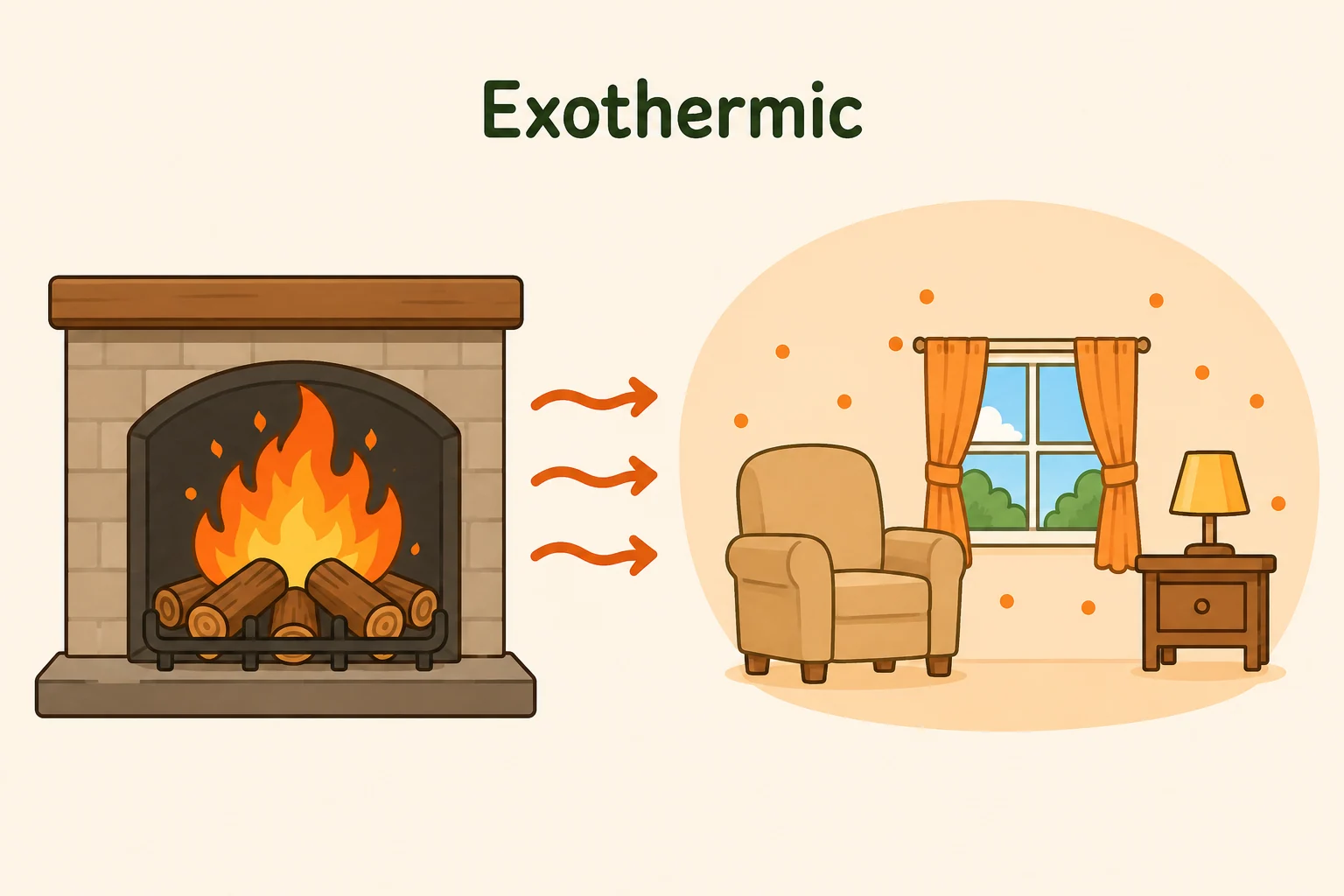
Exothermic Reaction

Original illustration from Physics worksheet page 6
Original worksheet illustration · Page 6

Easy explanation

Burning wood releases heat to the room: an exothermic example.

Page 7

Endothermic Reaction

Original illustration from Physics worksheet page 7
Original worksheet illustration · Page 7

Easy explanation

Melting ice absorbs heat from its surroundings. This is a heat-absorbing change, not a chemical reaction.

Topic 04

What Is Energy? / Perpetual Motion

Big Question: Can a machine move forever without new energy?

Page 8

What is Energy? / Perpetual Motion Machine

Original illustration from Physics worksheet page 8
Original worksheet illustration · Page 8
Vocabulary Easy meaning / example
Perpetual Continuing forever
Perpetual motion machine A proposed machine that operates forever without added energy

Easy explanation

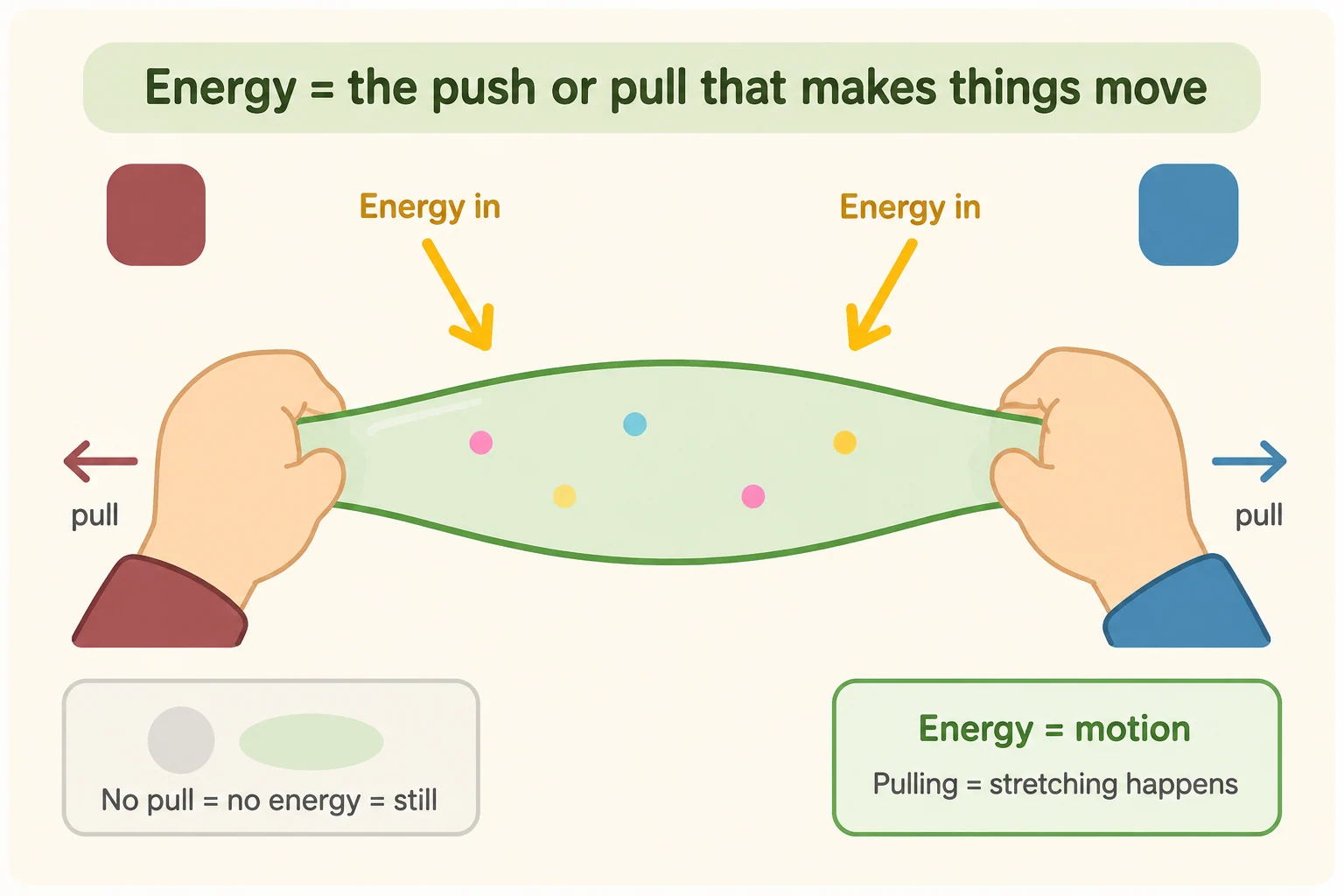
Energy makes things move or change.

Page 9

Why perpetual motion is impossible

Easy explanation

A perpetual motion machine that operates forever without new energy is impossible.

Topic 05

Types of Kinetic Energy

Big Question: What forms can moving energy take?

Page 10

Types of kinetic energy

Original illustration from Physics worksheet page 10
Original worksheet illustration · Page 10

Easy explanation

The worksheet introduces different types of kinetic energy.
Page 11

Examples of kinetic energy

Type Example Visual
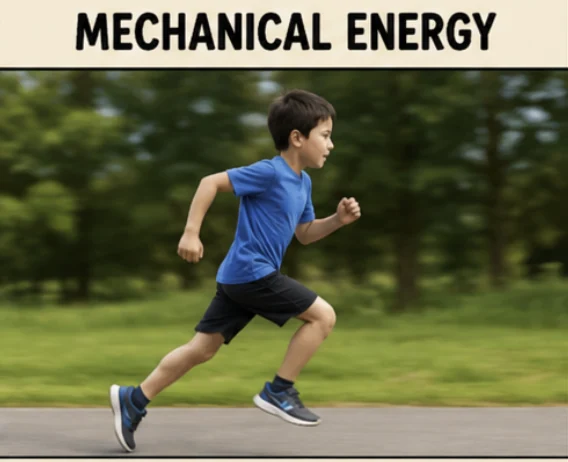
Mechanical A runner moving Runner showing mechanical energy
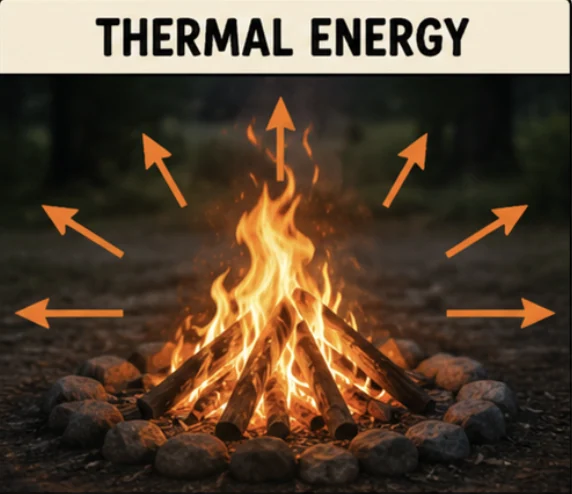
Thermal Hot tea has fast-moving particles Thermal energy illustration
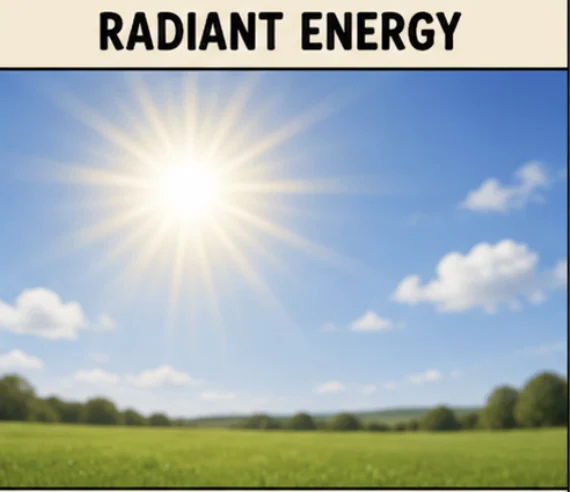
Radiant Sunlight Radiant sunlight illustration
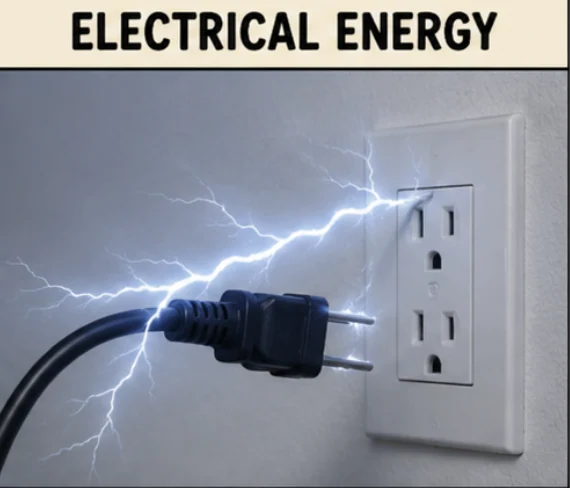
Electrical Electrons moving in a wire Electrical energy illustration
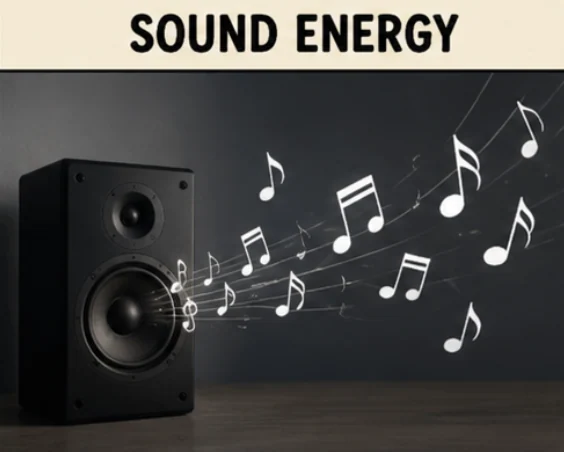
Sound Vibrations in air Sound energy illustration

Easy explanation

Examples in the worksheet: mechanical, thermal, radiant, electrical and sound energy.
Topic 06

Potential Energy, Kinetic Energy and Friction

Big Question: How does stored energy change into motion and heat?

Page 12

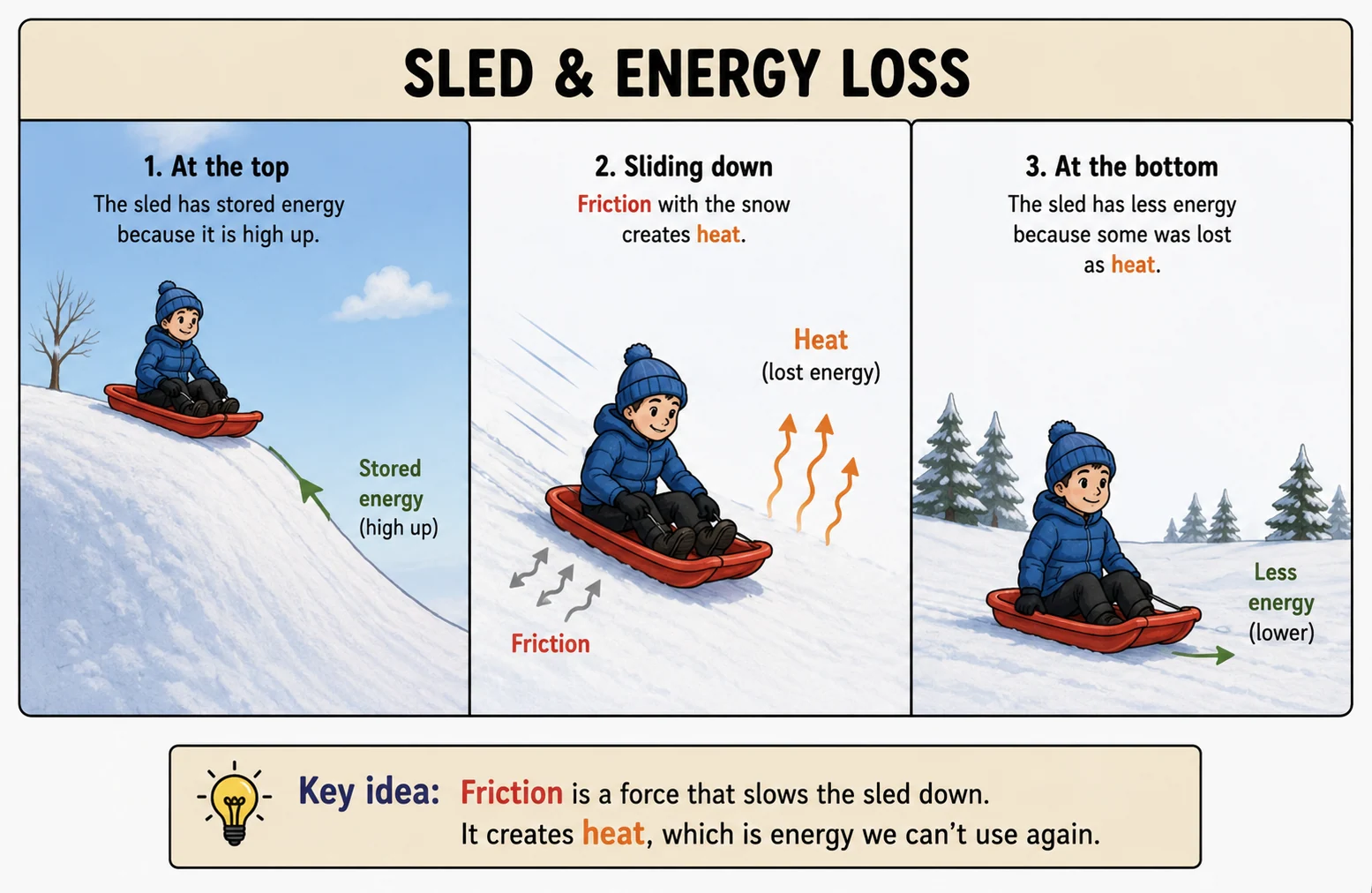
Sled & Energy Loss

Original illustration from Physics worksheet page 12
Original worksheet illustration · Page 12
Vocabulary Easy meaning / example
Gravitational potential energy Stored energy due to height
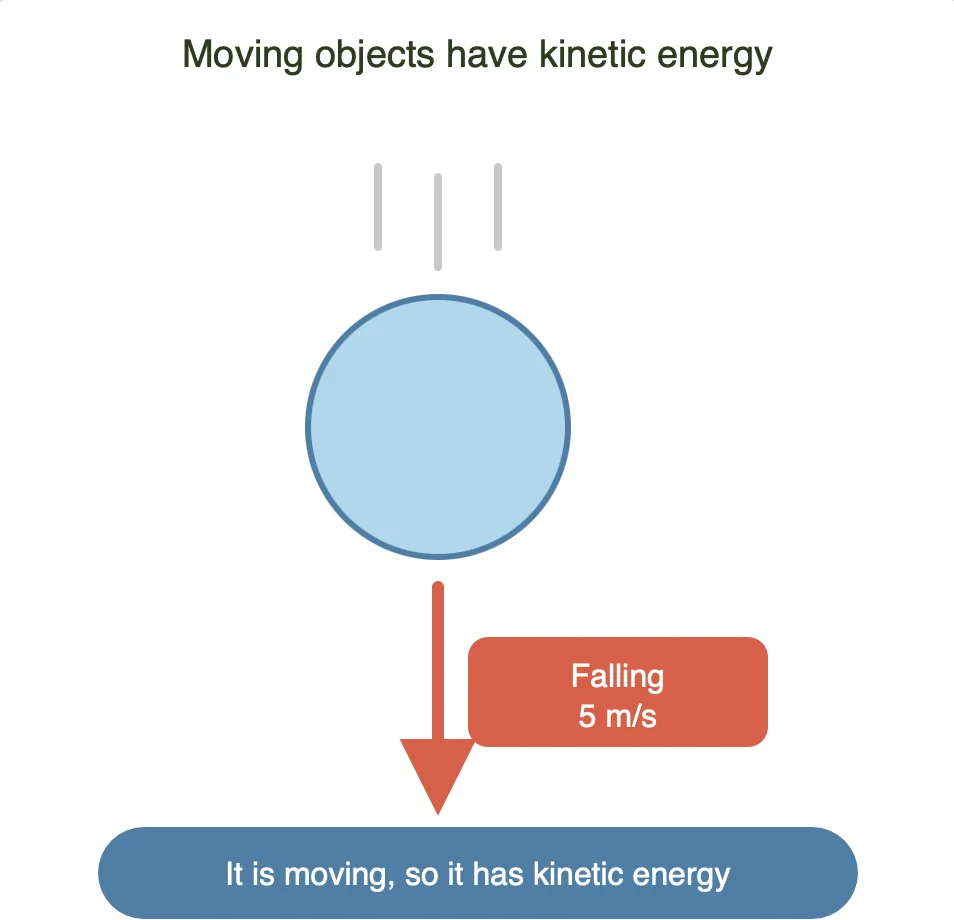
Kinetic energy Energy of motion
Friction A force opposing relative motion between surfaces

Easy explanation

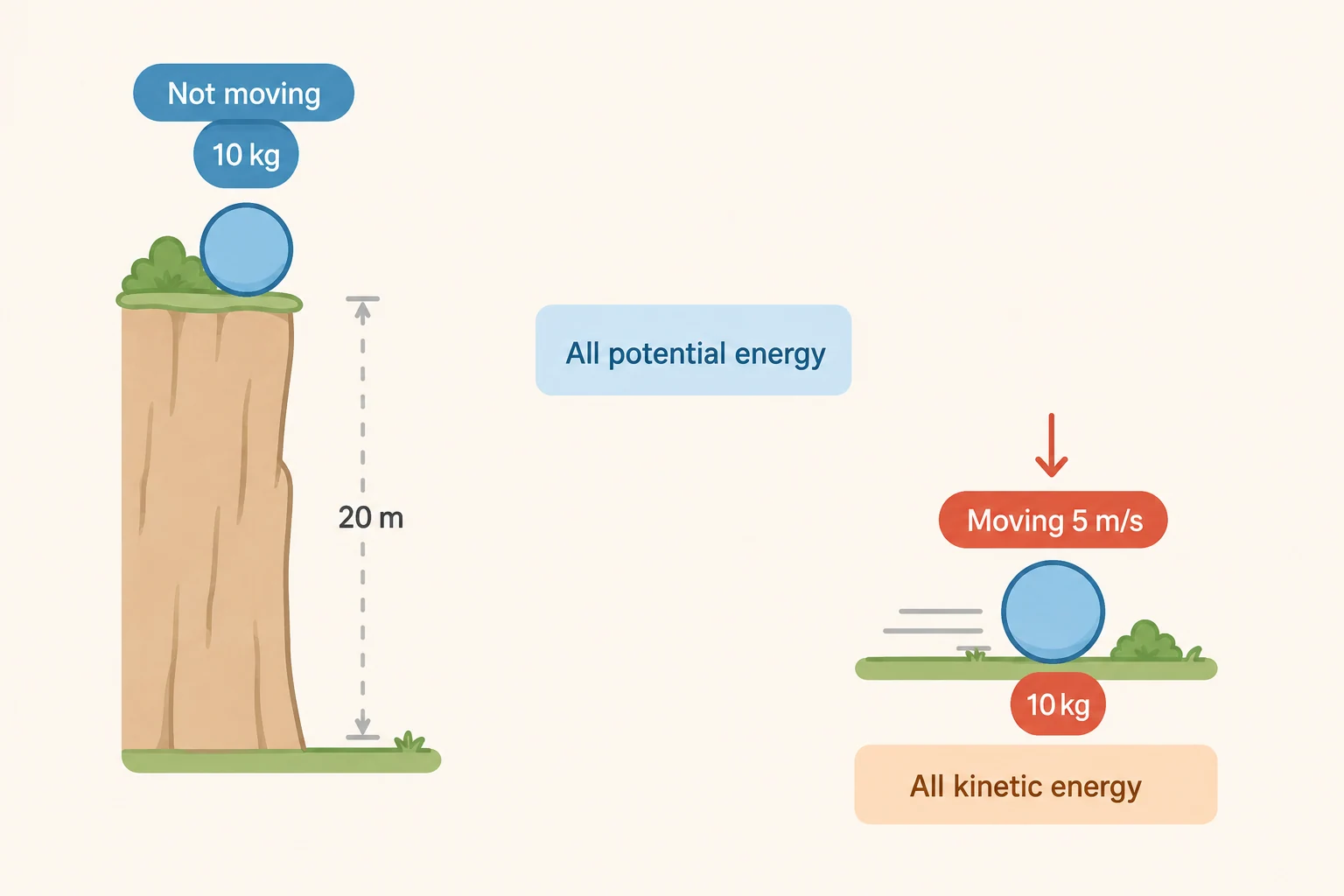
A sled starts with gravitational potential energy. As it slides, some energy becomes motion and heat due to friction.
Page 13

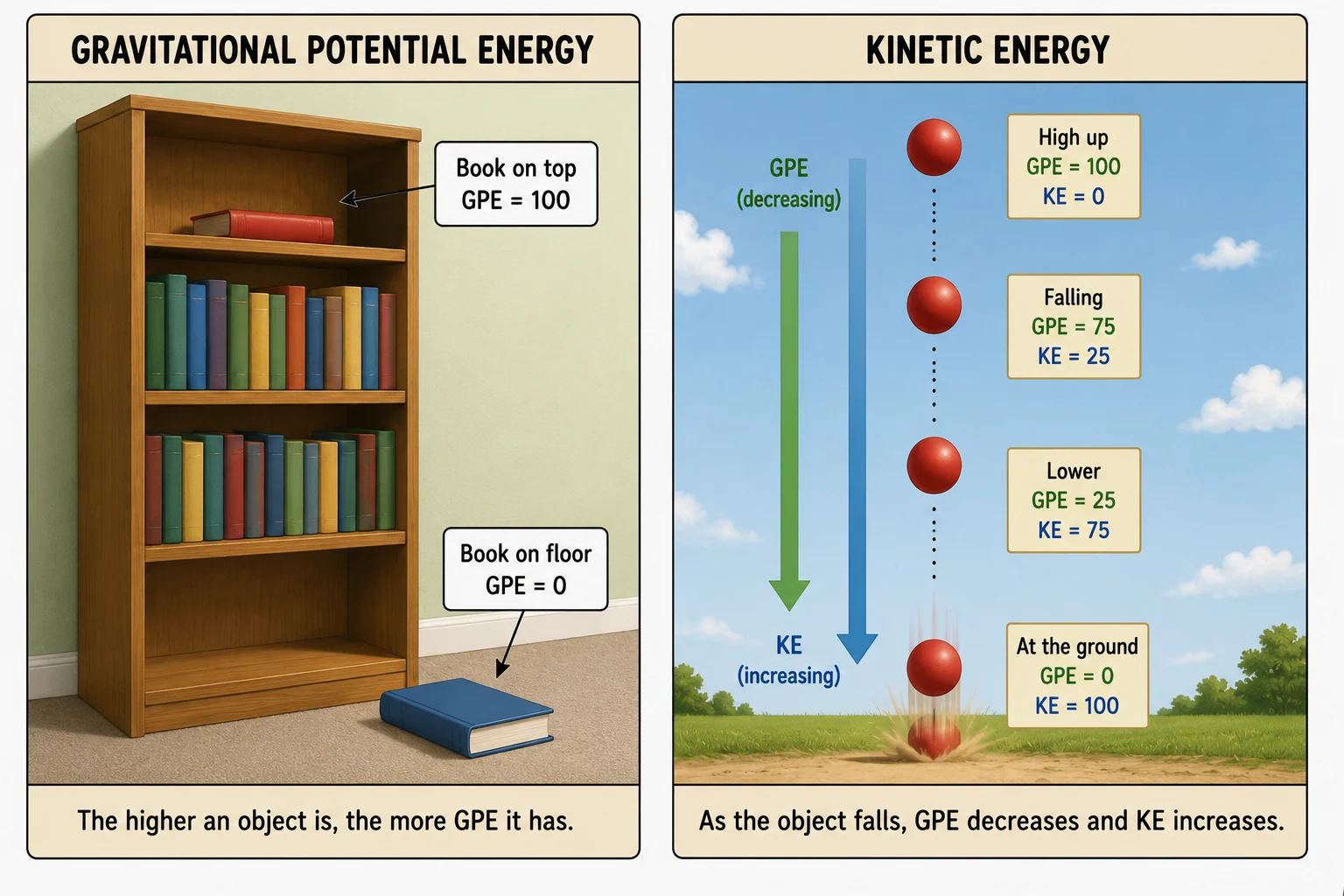
Gravitational potential vs. kinetic energy

Original illustration from Physics worksheet page 13
Original worksheet illustration · Page 13

Easy explanation

Higher objects have more gravitational potential energy; falling converts potential energy into kinetic energy.
Page 14

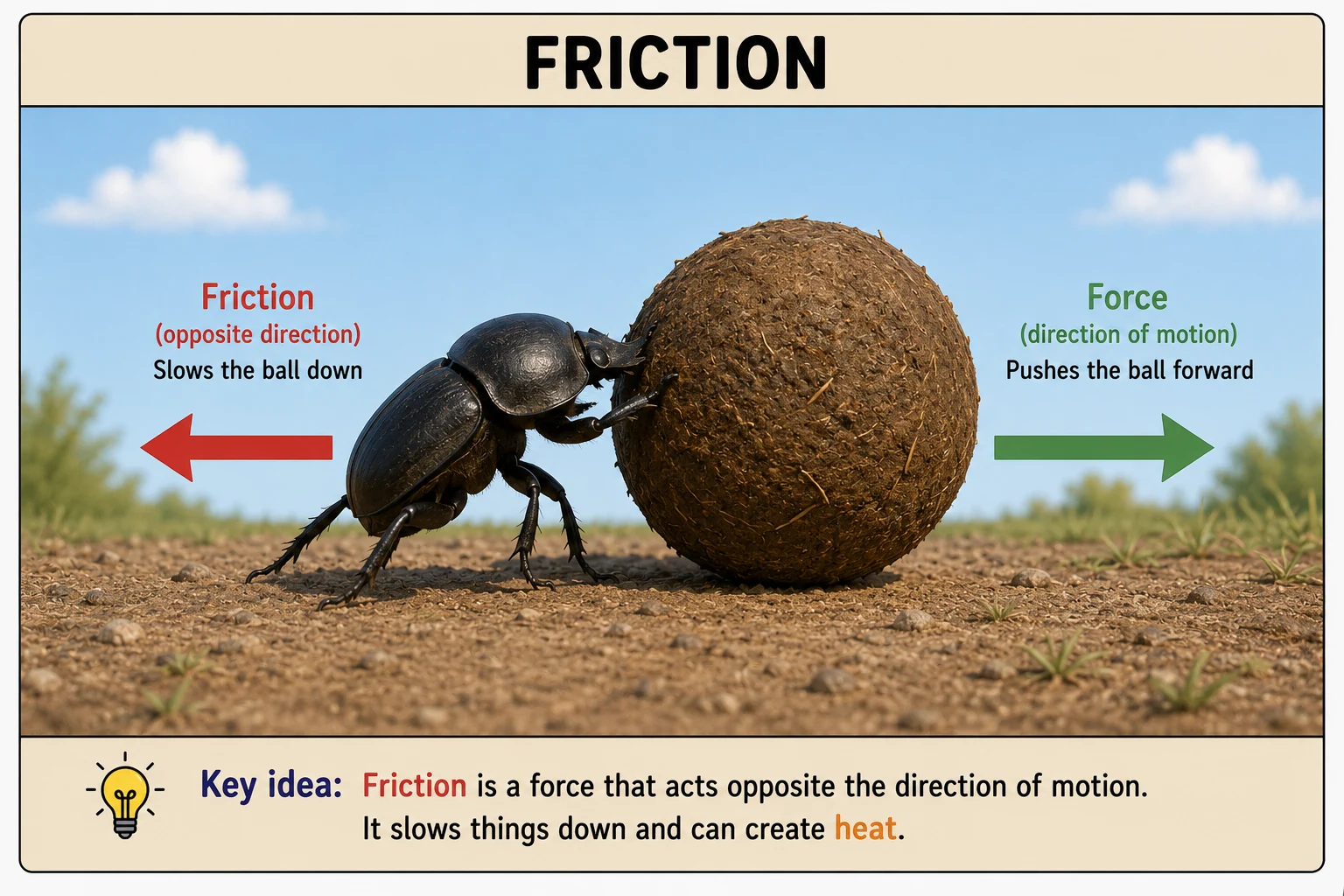
What is Friction?

Original illustration from Physics worksheet page 14
Original worksheet illustration · Page 14

Easy explanation

Friction acts against relative motion between surfaces.

Page 15

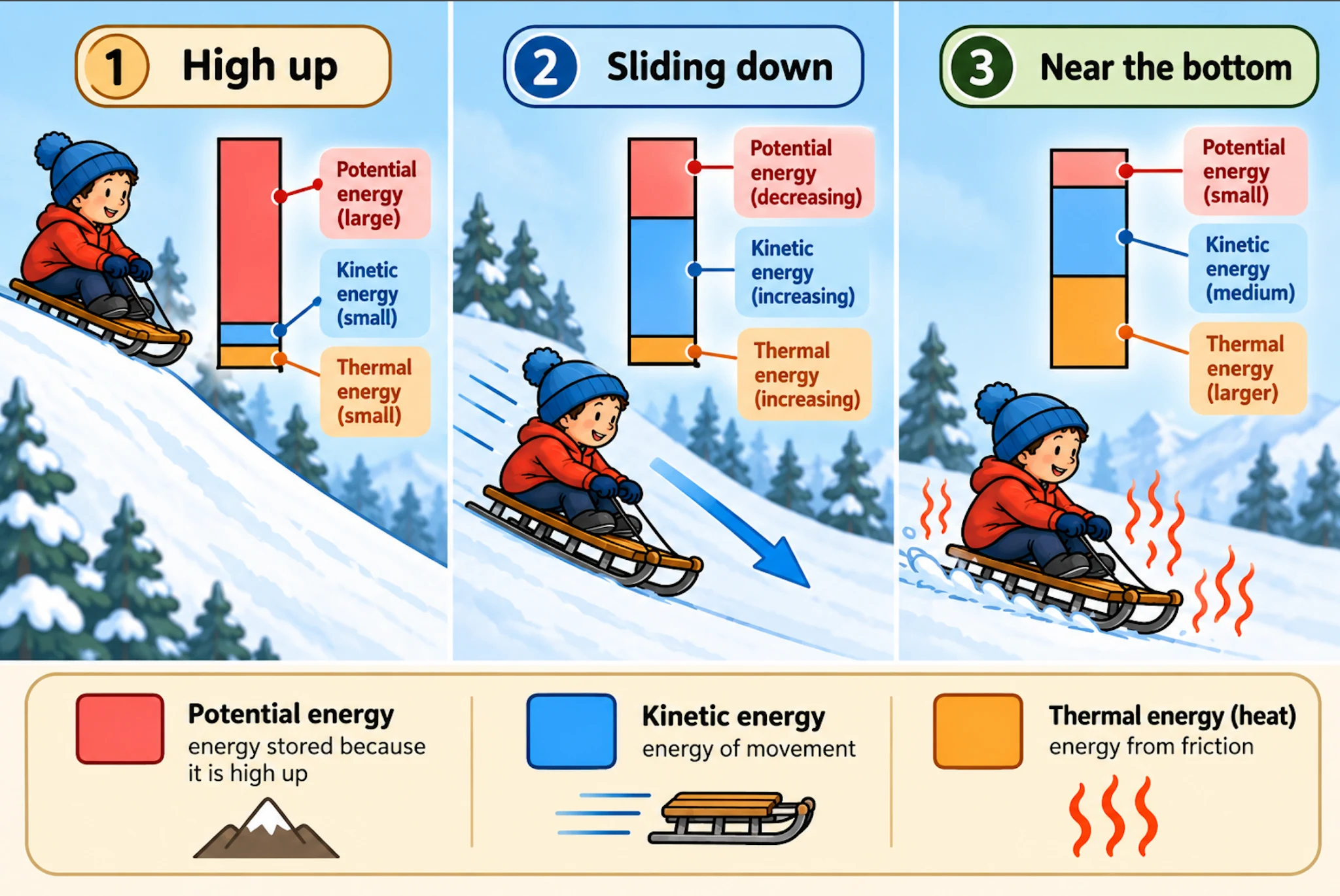
Sled: changing forms of energy

Original illustration from Physics worksheet page 15
Original worksheet illustration · Page 15

Easy explanation

As a sled moves downhill, its energy changes between potential, kinetic and thermal forms.

Page 16

Energy Equations

Original illustration from Physics worksheet page 16
Original worksheet illustration · Page 16
Vocabulary Easy meaning / example
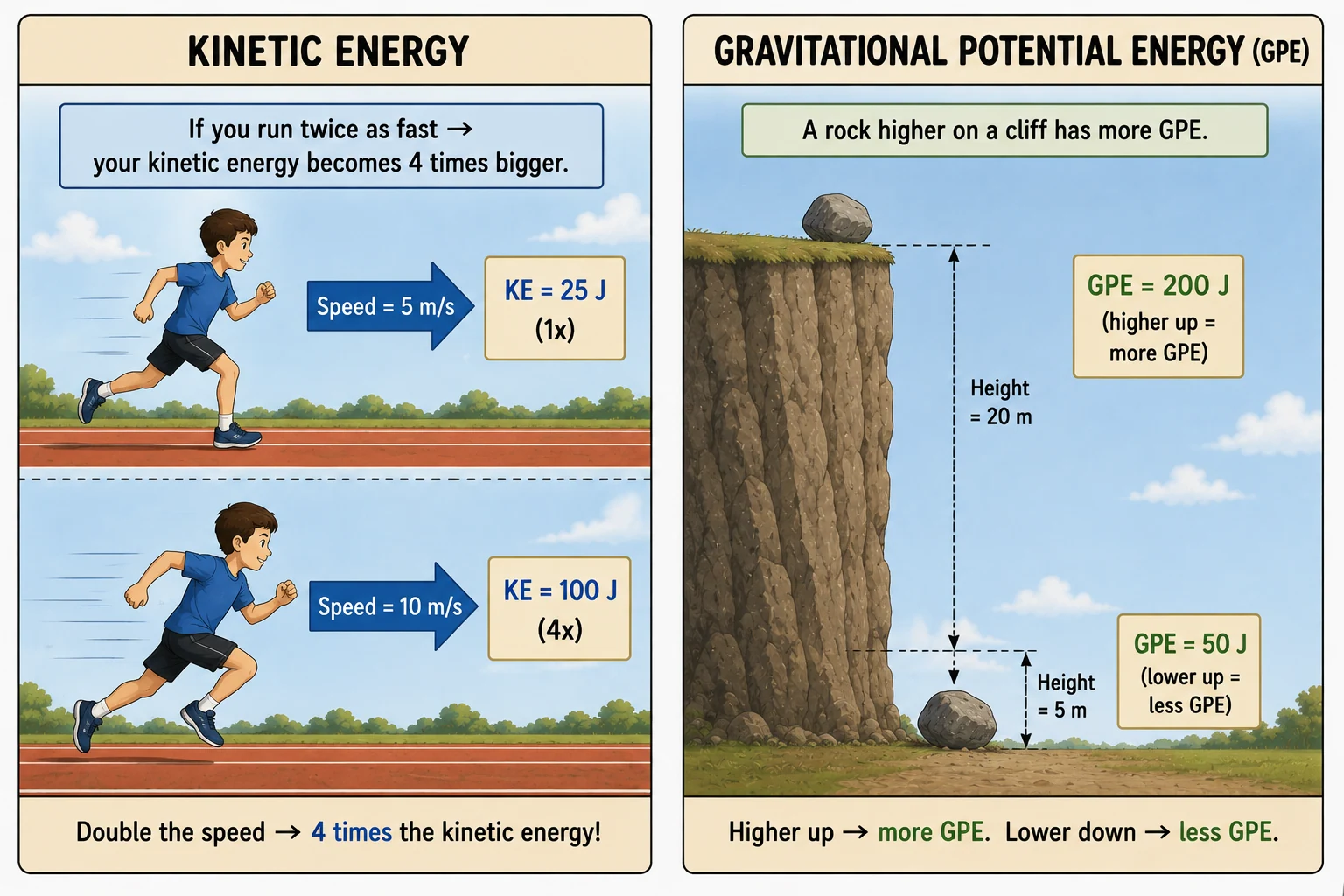
Gravitational potential energy Depends on mass, gravity and height
Kinetic energy Depends on mass and speed

Easy explanation

Gravitational potential energy depends on mass, gravity and height. Kinetic energy depends on mass and speed.

Page 17

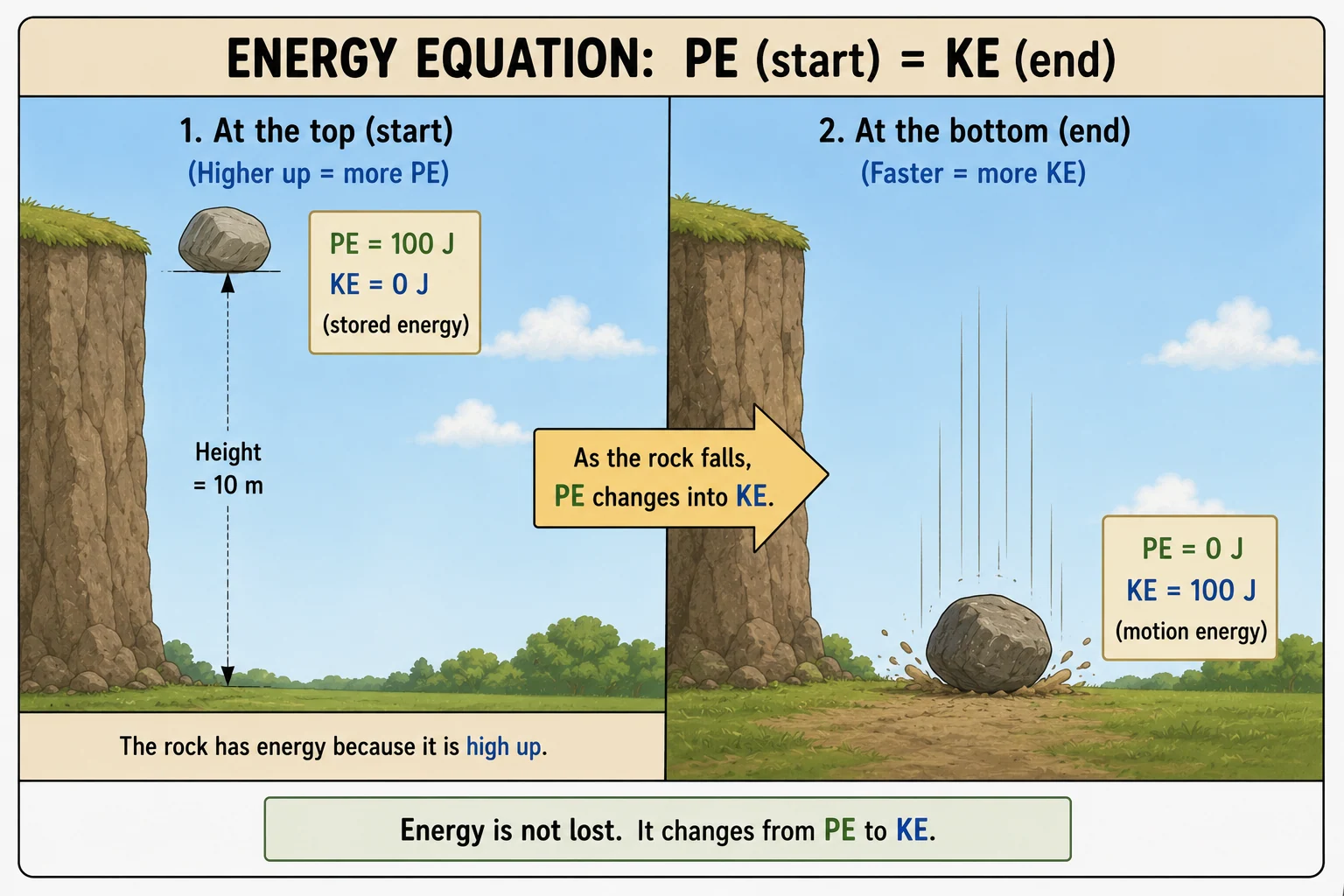
Energy Equation : PE (start) = KE (end)

Original illustration from Physics worksheet page 17
Original worksheet illustration · Page 17

Easy explanation

In the ideal example without energy loss, starting gravitational potential energy equals final kinetic energy.
Doubling speed makes kinetic energy four times as large.

Page 18

Why energy equations matter

Original illustration from Physics worksheet page 18
Original worksheet illustration · Page 18

Easy explanation

Energy equations help predict motion and energy changes.

Topic 07

Fuel Cells

Big Question: How can chemical energy power a vehicle?

Page 19

Fuel Cells

Original illustration from Physics worksheet page 19
Original worksheet illustration · Page 19
Vocabulary Easy meaning / example
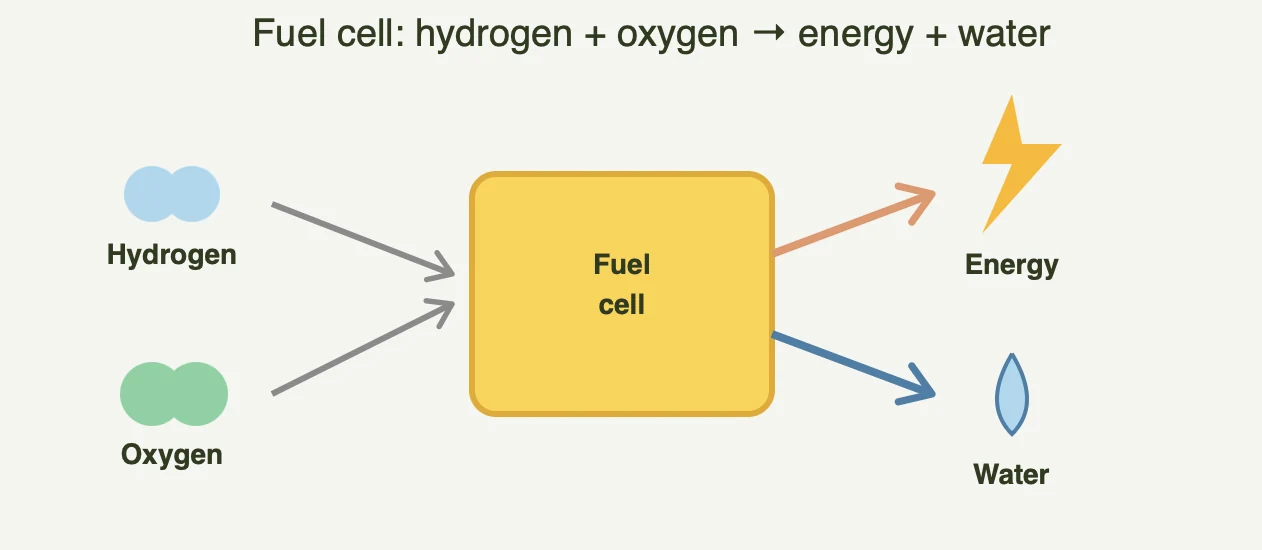
Fuel cell Device that converts chemical energy into electrical energy
Chemical energy Energy stored in a substance
Electrical energy Energy transferred electrically

Easy explanation

Fuel cells convert chemical energy from hydrogen and oxygen into electrical energy; water is produced.

Page 20

Why fuel cells matter

Easy explanation

The worksheet compares hydrogen fuel cells with gasoline vehicles.

Topic 08

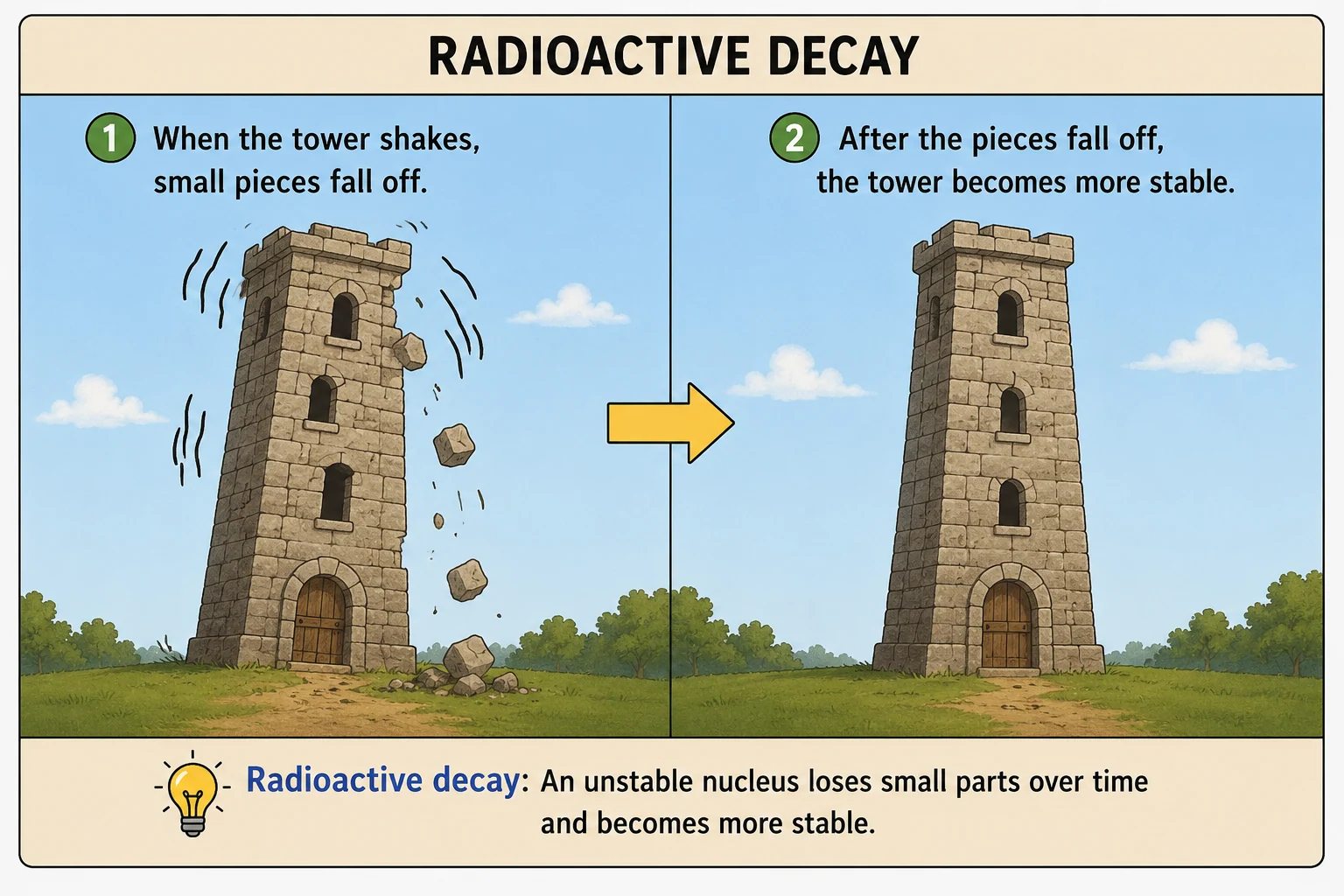
Radioactive Decay

Big Question: What happens when unstable nuclei change?

Page 21

Radioactive Decay (Alpha, Beta, Gamma)

Original illustration from Physics worksheet page 21
Original worksheet illustration · Page 21
Vocabulary Easy meaning / example
Neutron Neutral particle in the nucleus
Proton Positively charged particle in the nucleus
Electron Negatively charged particle
Nucleus Central part of an atom

Easy explanation

Unstable atomic nuclei can release particles or energy as they change.

Page 22

Alpha, beta and gamma decay

Vocabulary Easy meaning / example
Alpha decay Releases two protons and two neutrons
Beta-minus decay A neutron changes to a proton and releases an electron
Gamma decay Releases electromagnetic radiation

Easy explanation

Alpha decay releases a helium nucleus; beta-minus decay releases an electron; gamma decay releases electromagnetic energy.
Topic 09

Nuclear Fission and Fusion

Big Question: How do nuclei release energy?

Page 23

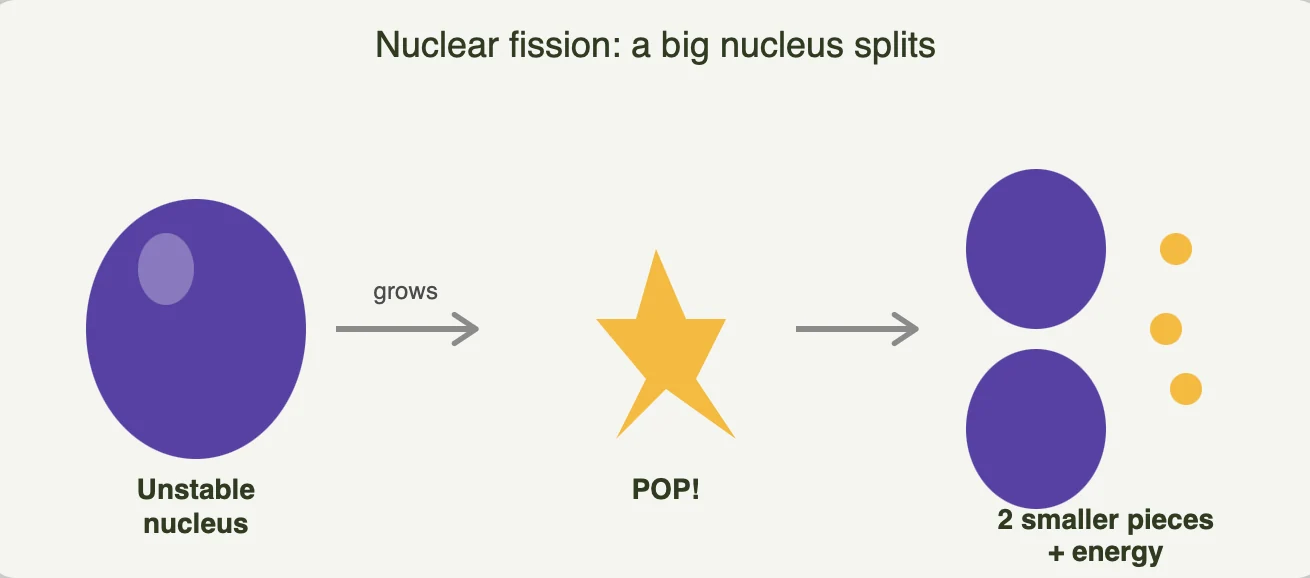
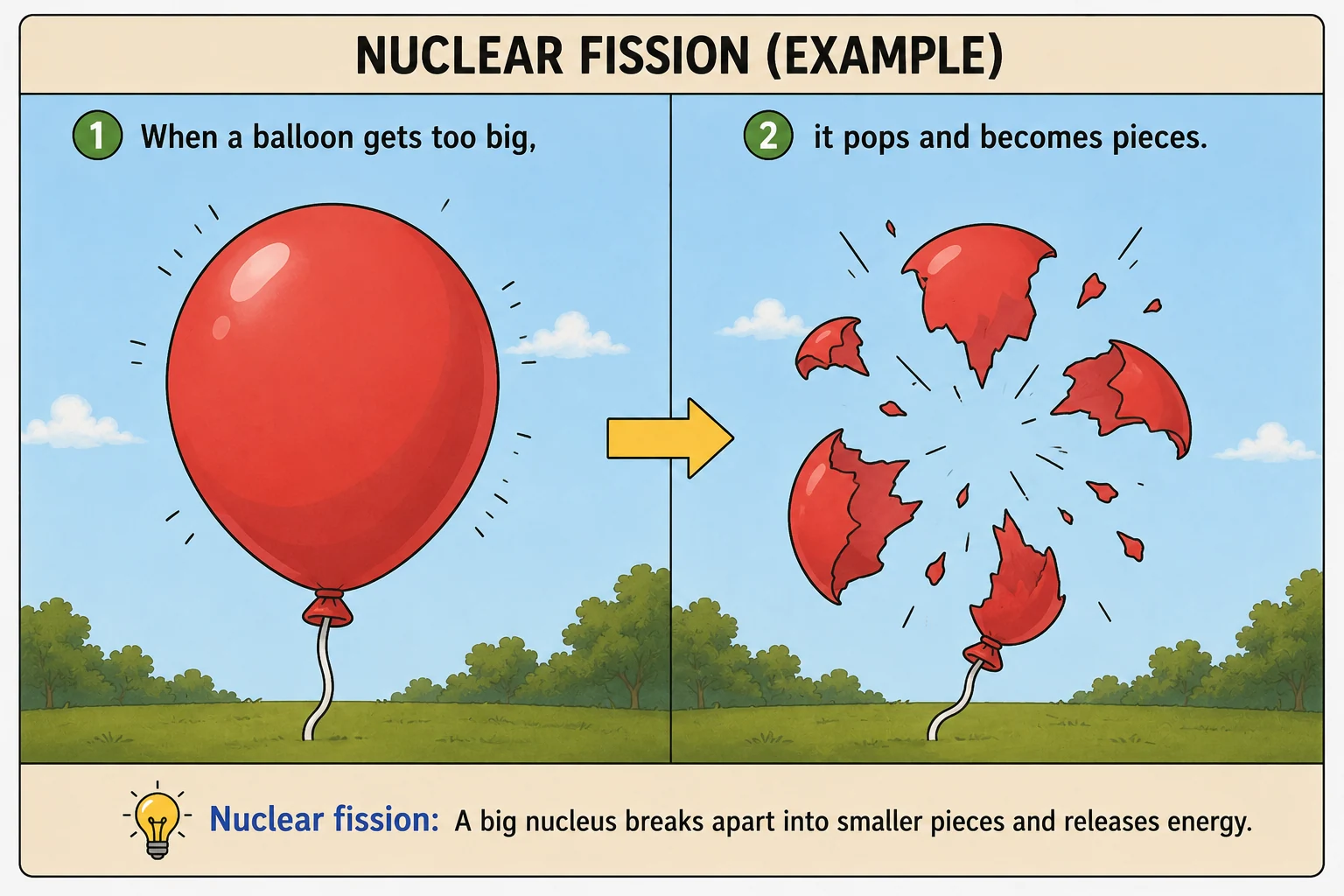
Nuclear Fission

Original illustration from Physics worksheet page 23
Original worksheet illustration · Page 23
Original illustration from Physics worksheet page 23
Original worksheet illustration · Page 23
Vocabulary Easy meaning / example
Nuclei Plural of nucleus

Easy explanation

Nuclear fission splits a large nucleus into smaller nuclei.

Page 24

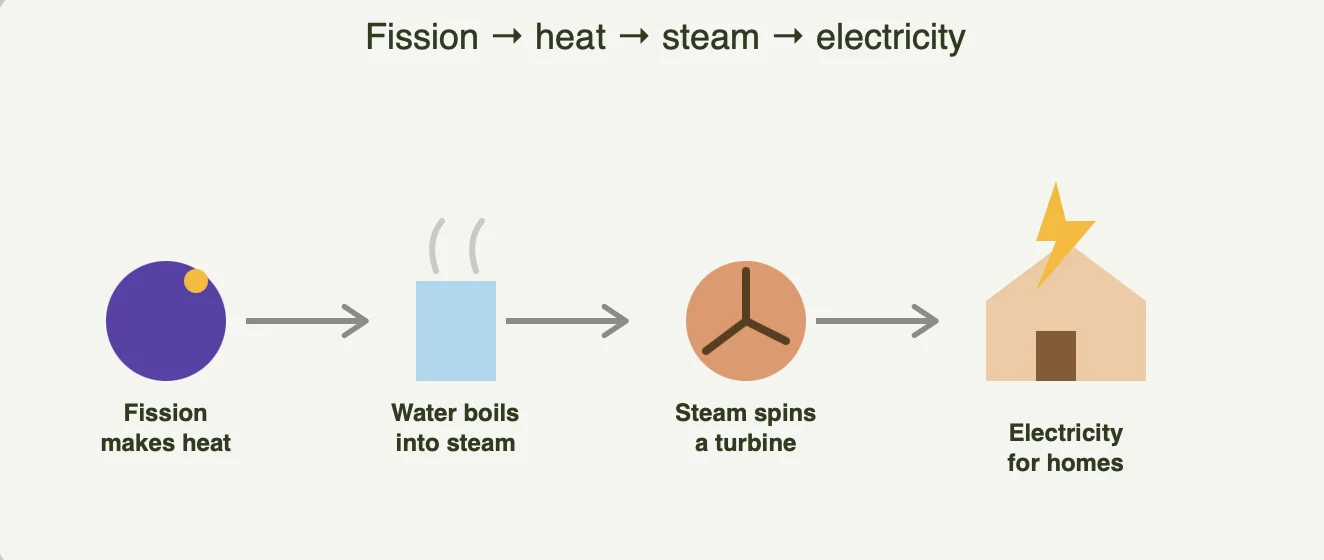
How nuclear fission generates electricity

Original illustration from Physics worksheet page 24
Original worksheet illustration · Page 24

Easy explanation

Nuclear power plants use heat from fission to produce steam and generate electricity.
Page 25

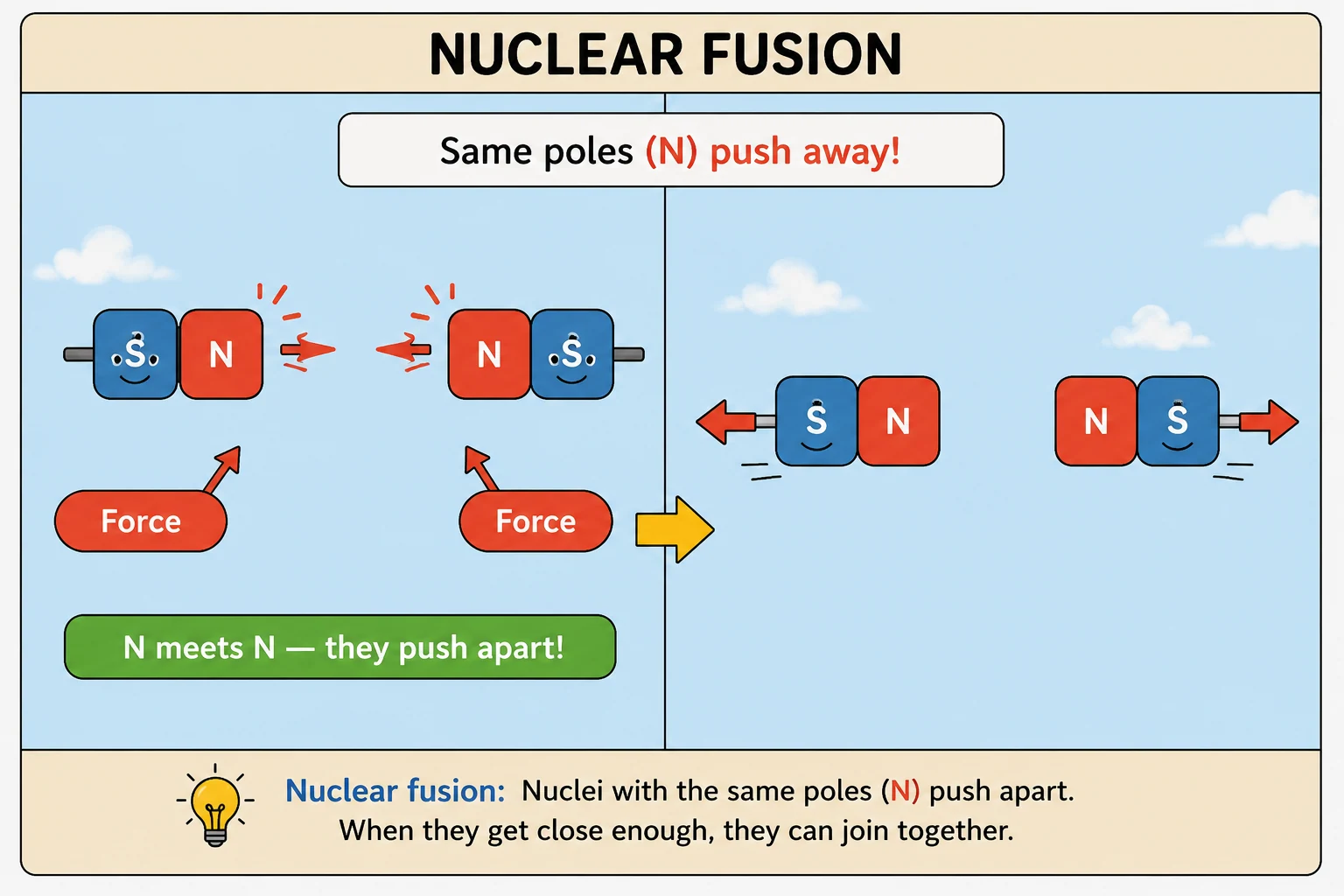
Nuclear Fusion

Original illustration from Physics worksheet page 25
Original worksheet illustration · Page 25
Original illustration from Physics worksheet page 25
Original worksheet illustration · Page 25

Easy explanation

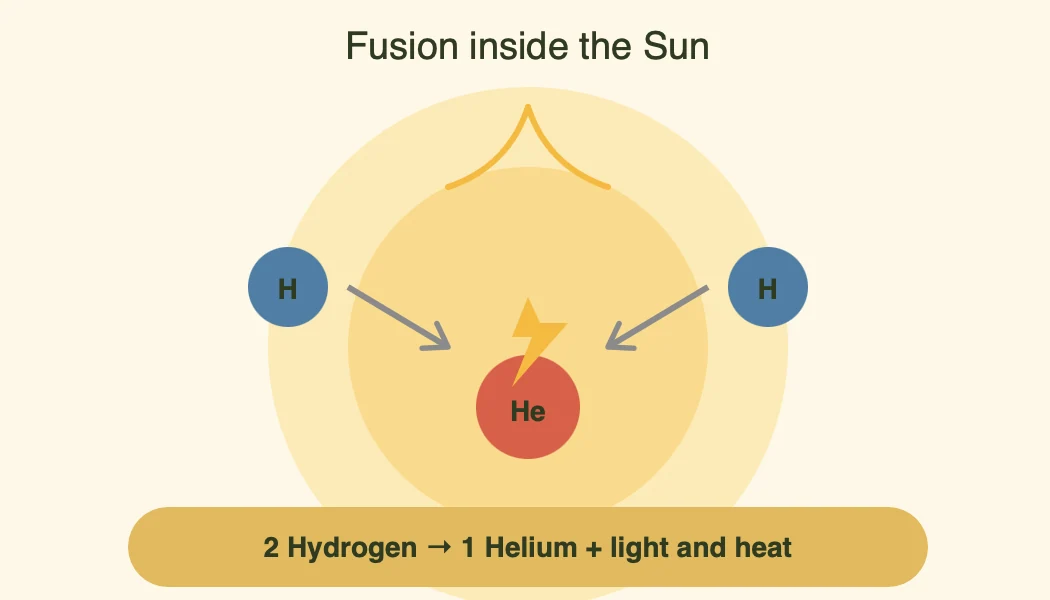
Fusion joins small nuclei and releases energy under extreme conditions.
Page 26

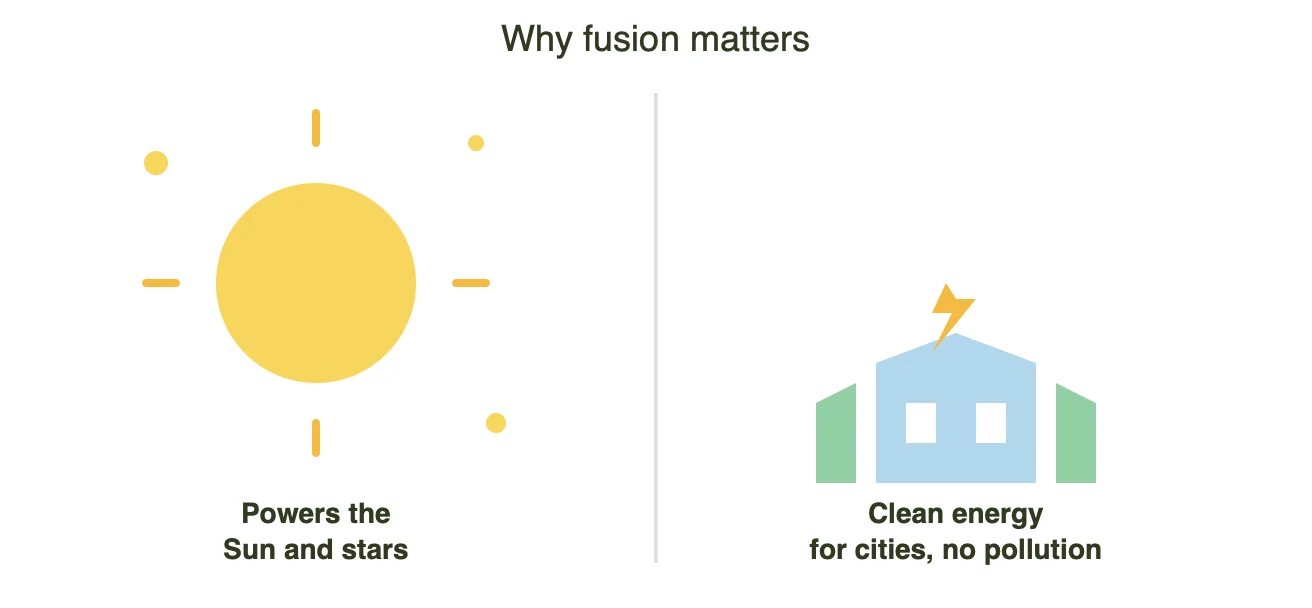
Why fusion matters

Original illustration from Physics worksheet page 26
Original worksheet illustration · Page 26

Easy explanation

Fusion powers stars, including the Sun. Scientists are researching fusion power on Earth.

Topic 10

Energy Sources on Earth

Big Question: Where does Earth get energy?

Page 27

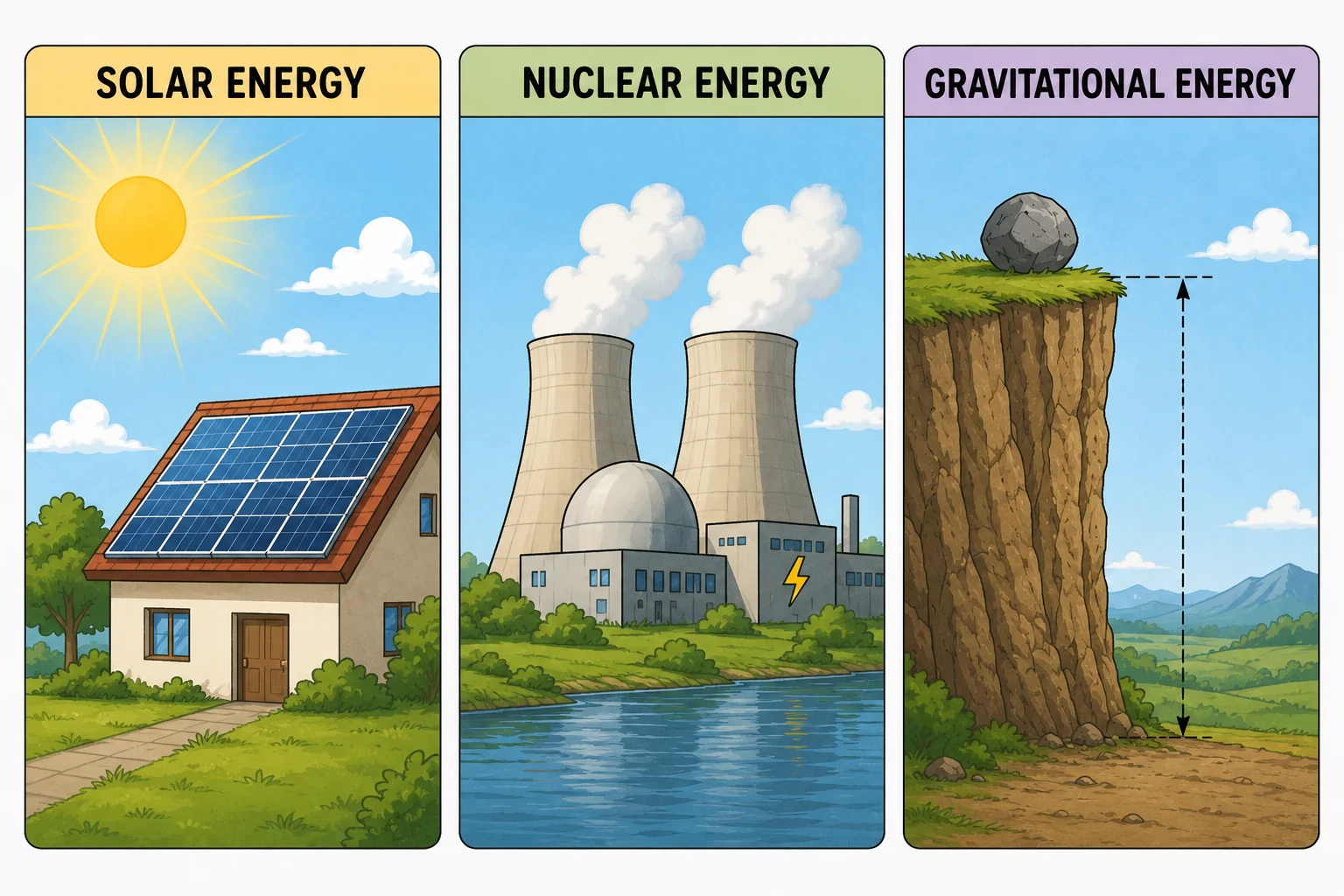
Solar, Nuclear, Gravitational Energy

Original illustration from Physics worksheet page 27
Original worksheet illustration · Page 27

Easy explanation

The worksheet introduces solar, nuclear and gravitational energy.

Page 28

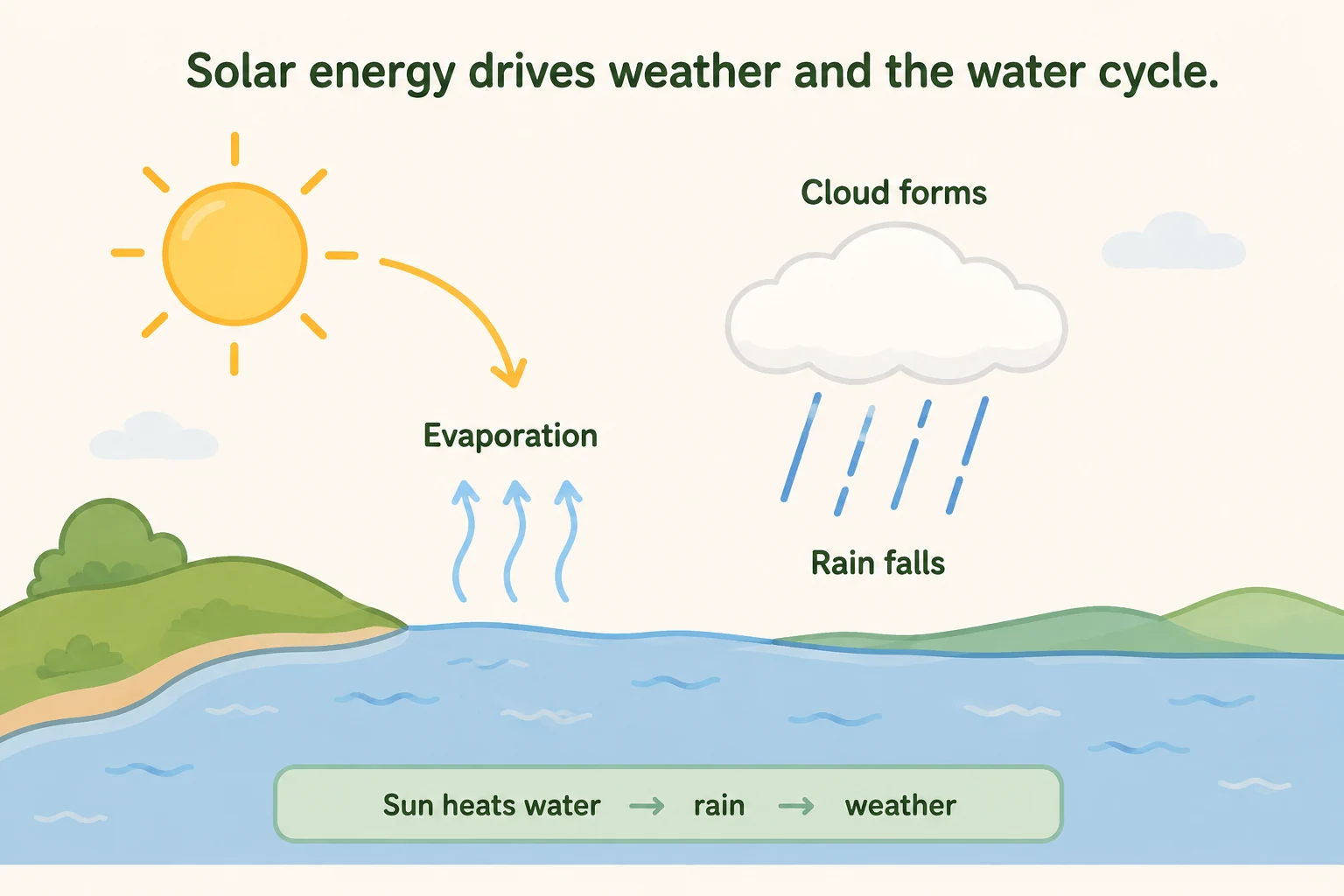
Solar energy and the water cycle

Original illustration from Physics worksheet page 28
Original worksheet illustration · Page 28

Easy explanation

Solar energy drives weather and the water cycle.

Topic 11

Heating Earth's Atmosphere and Energy Balance

Big Question: How does Earth gain and lose energy?

Page 29

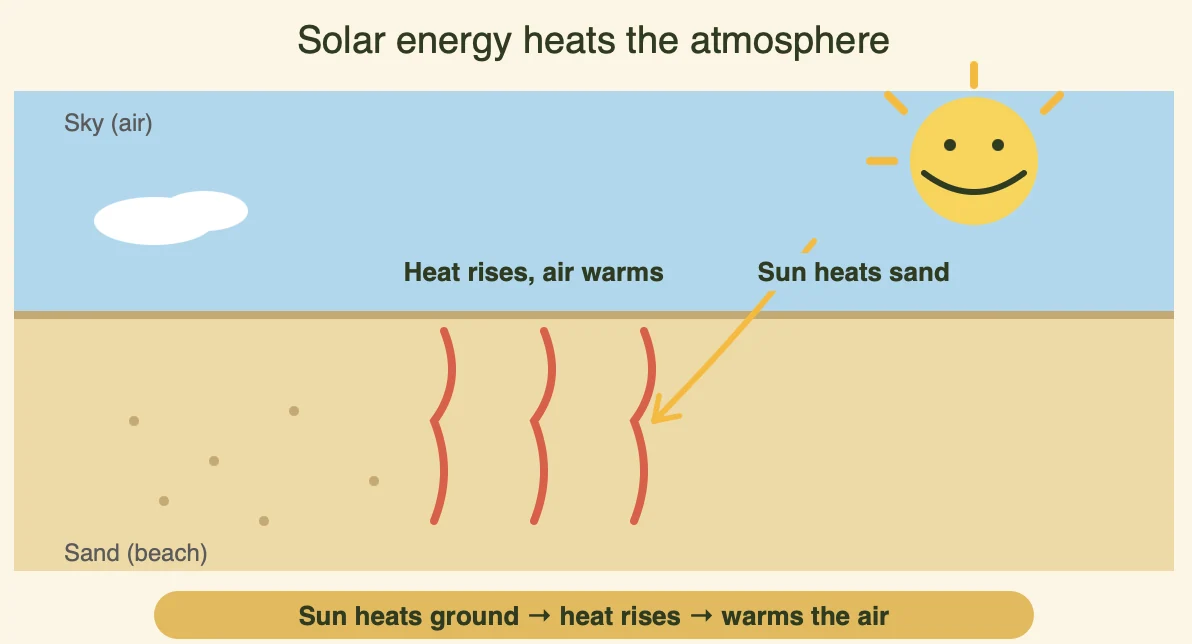
Heating Earth's Atmosphere

Original illustration from Physics worksheet page 29
Original worksheet illustration · Page 29

Easy explanation

Sunlight reaches Earth as radiation. Land and water absorb sunlight and warm the air.

Page 30

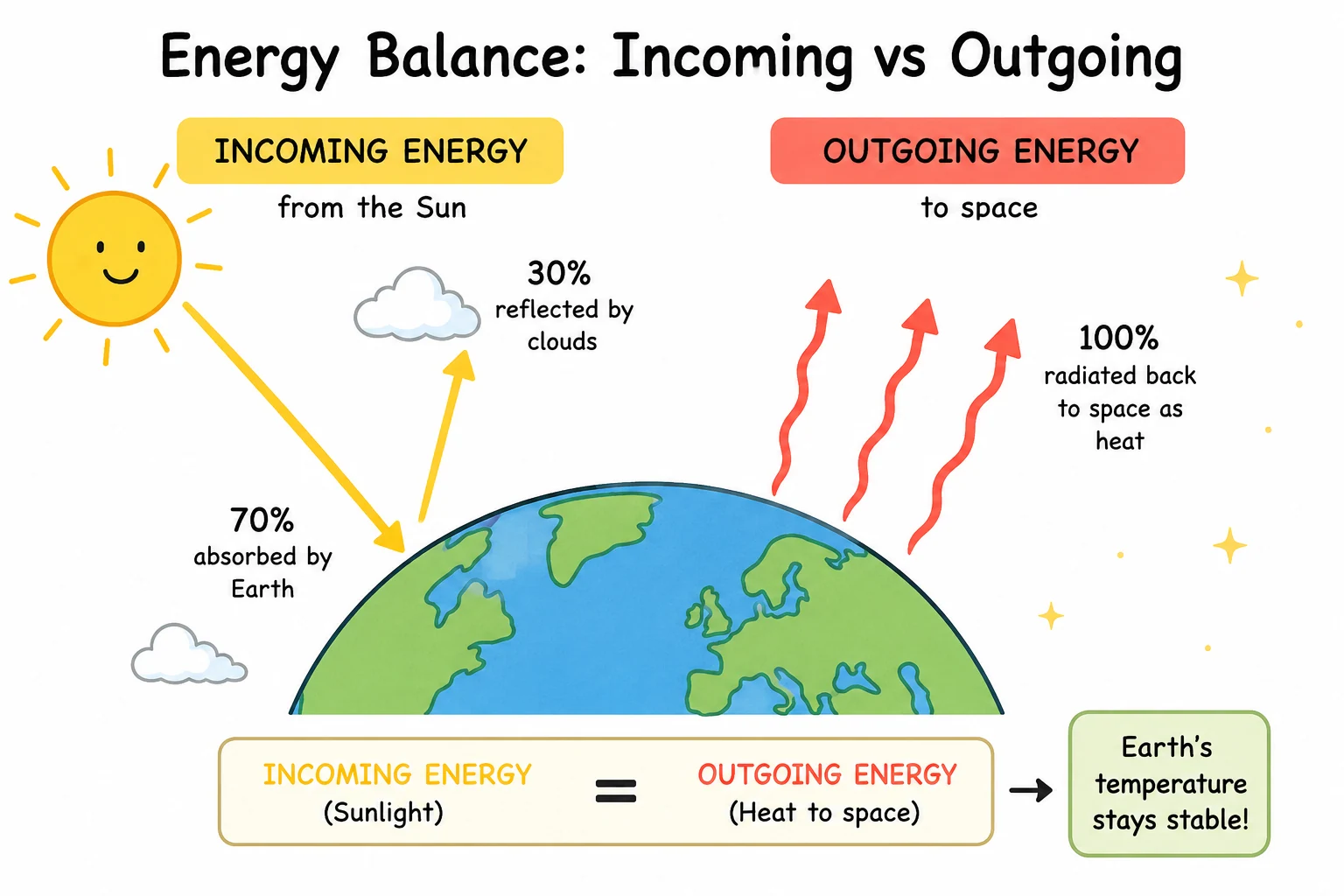
Energy Balance (Incoming vs Outgoing)

Original illustration from Physics worksheet page 30
Original worksheet illustration · Page 30
Vocabulary Easy meaning / example
Radiates Sends out energy as radiation

Easy explanation

Earth receives sunlight and emits energy back toward space. This balance affects temperature.

Topic 12

Water Cycle and Energy

Big Question: How does energy move water around Earth?

Page 31

Water Cycle & Energy

Original illustration from Physics worksheet page 31
Original worksheet illustration · Page 31

Easy explanation

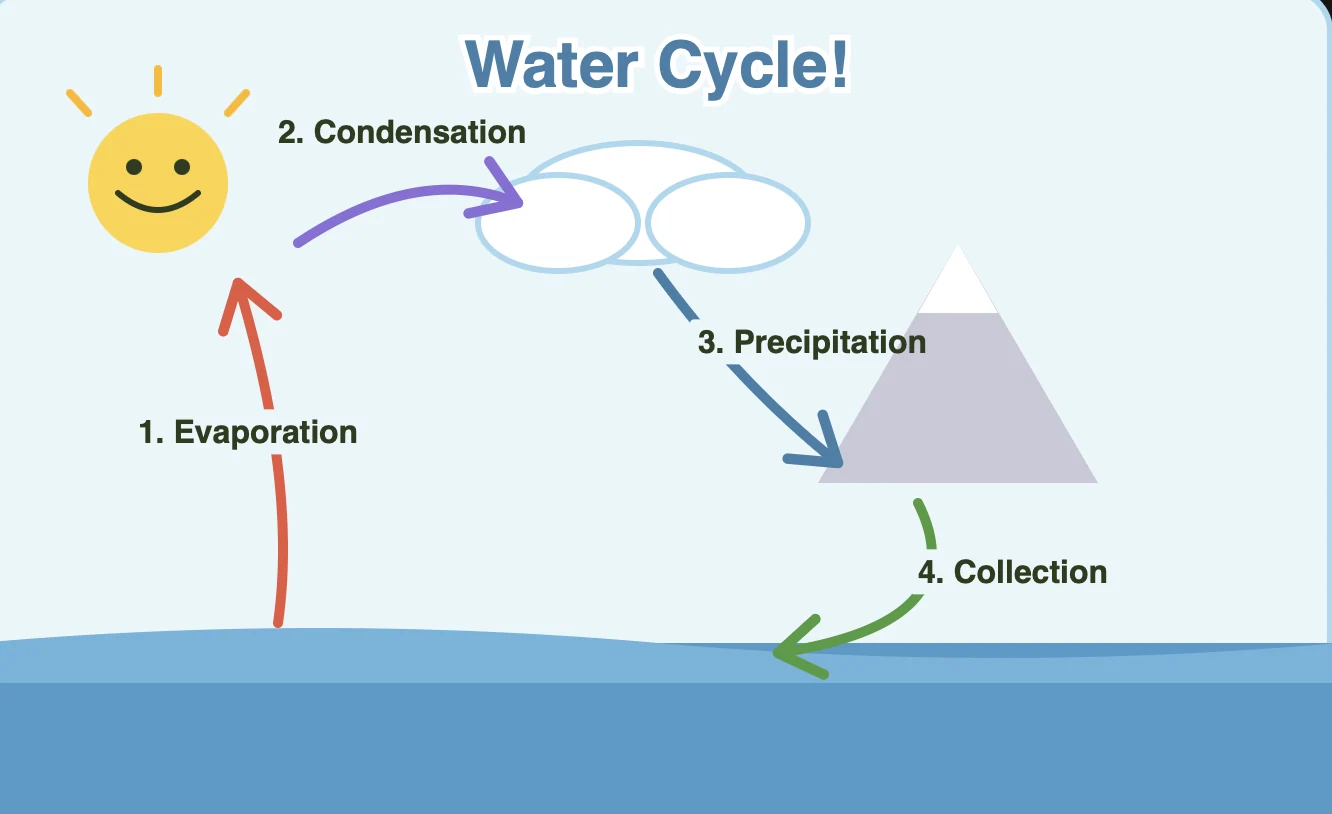
The water cycle includes evaporation, condensation, precipitation and collection.

Page 32

Water-cycle vocabulary

Process Meaning Visual
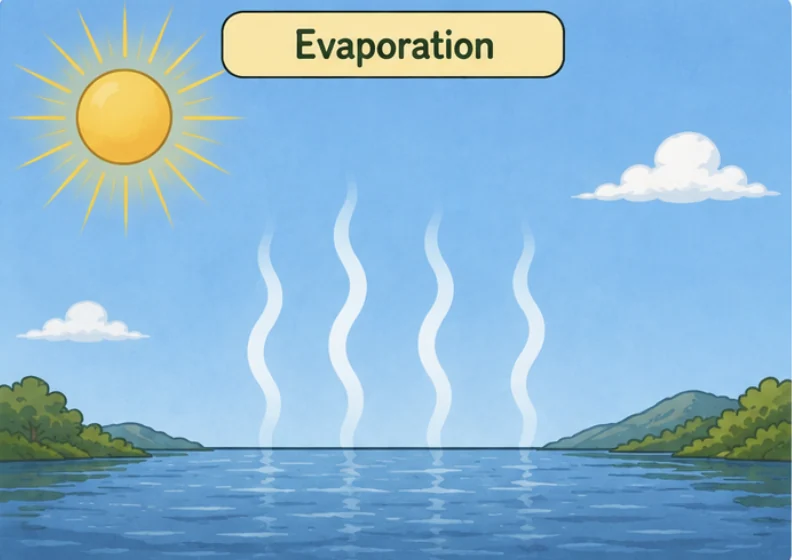
Evaporation Water heats up and becomes water vapour Evaporation diagram
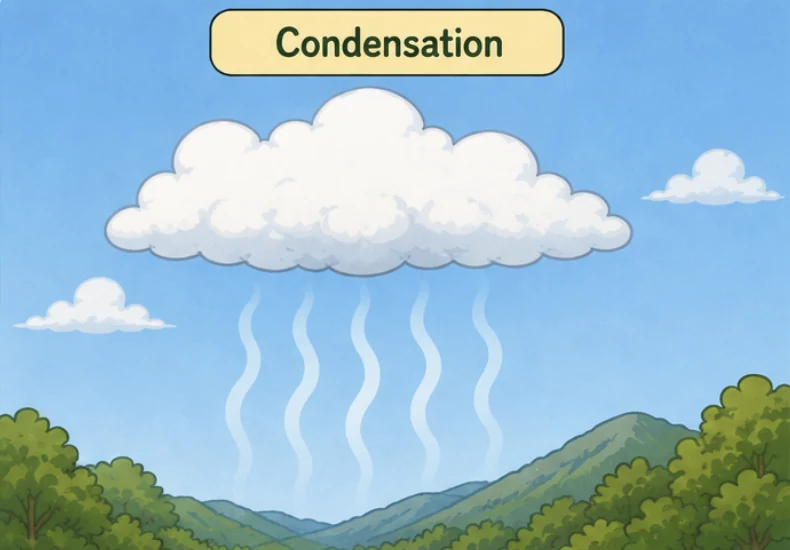
Condensation Water vapour cools and forms droplets Condensation diagram
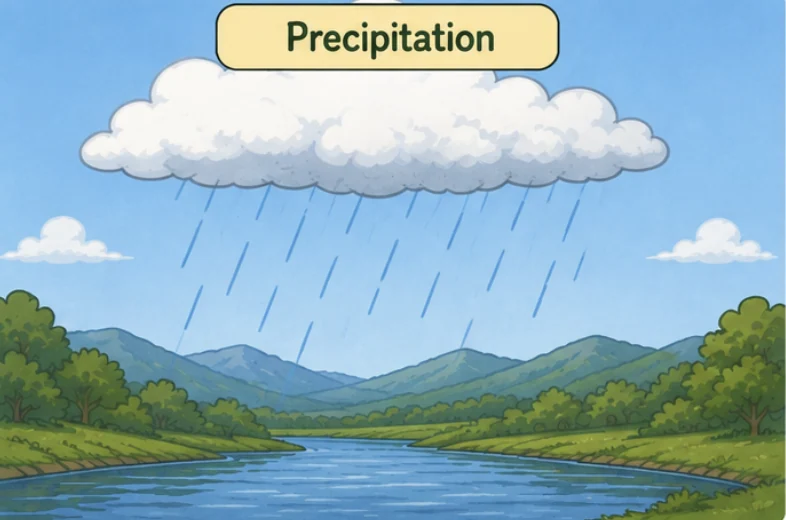
Precipitation Water falls as rain, snow or hail Precipitation diagram

Easy explanation

The worksheet illustrates evaporation, condensation and precipitation.

Page 33

Energy moving through the water cycle

Easy explanation

The Sun heats water, causing evaporation. Energy moves with water through the water cycle.

Topic 13

Radiation, Conduction and Convection

Big Question: How does heat travel?

Page 34

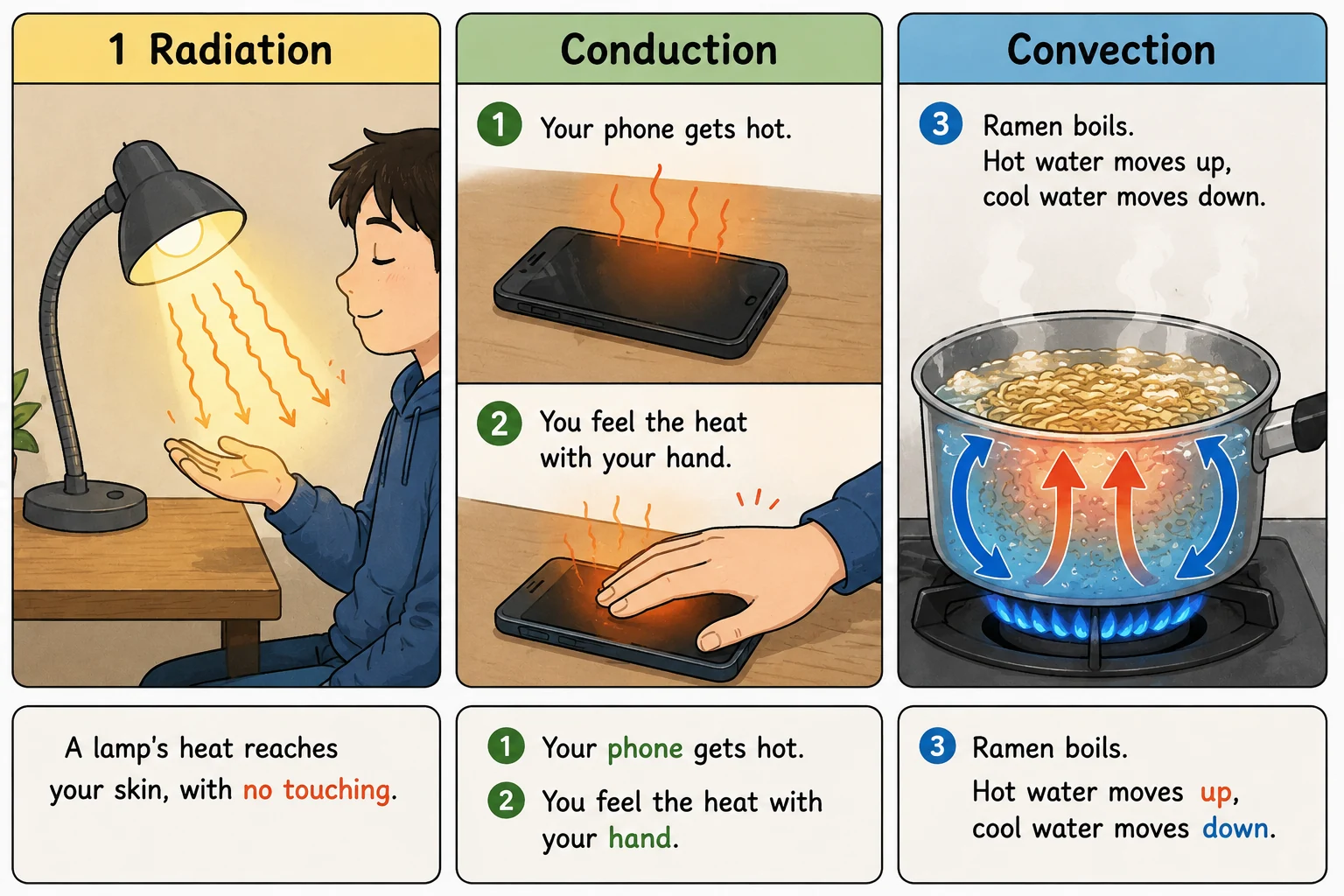
Radiation, Conduction, Convection

Method Description Visual
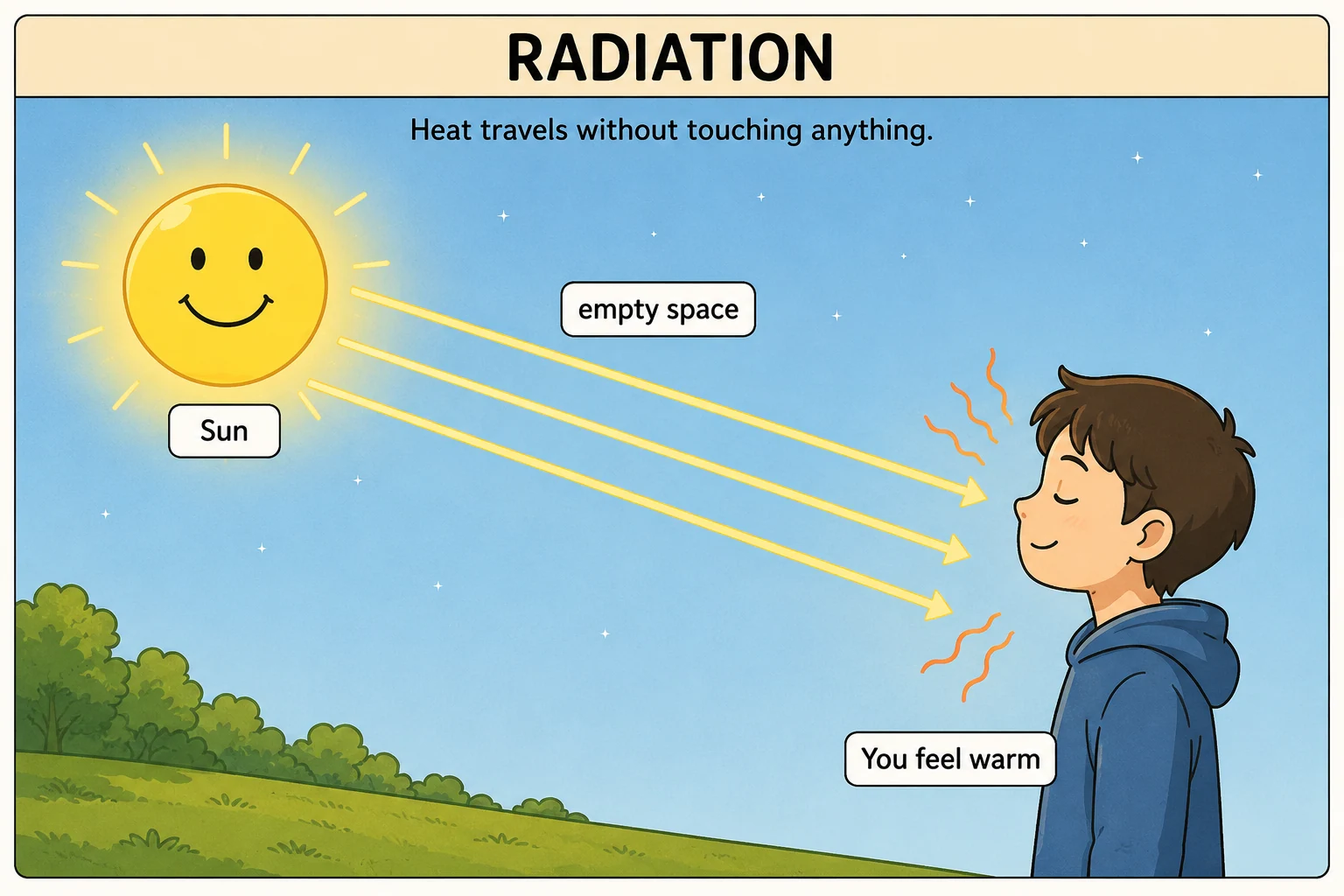
Radiation Heat travels as electromagnetic waves; no contact needed Radiation illustration
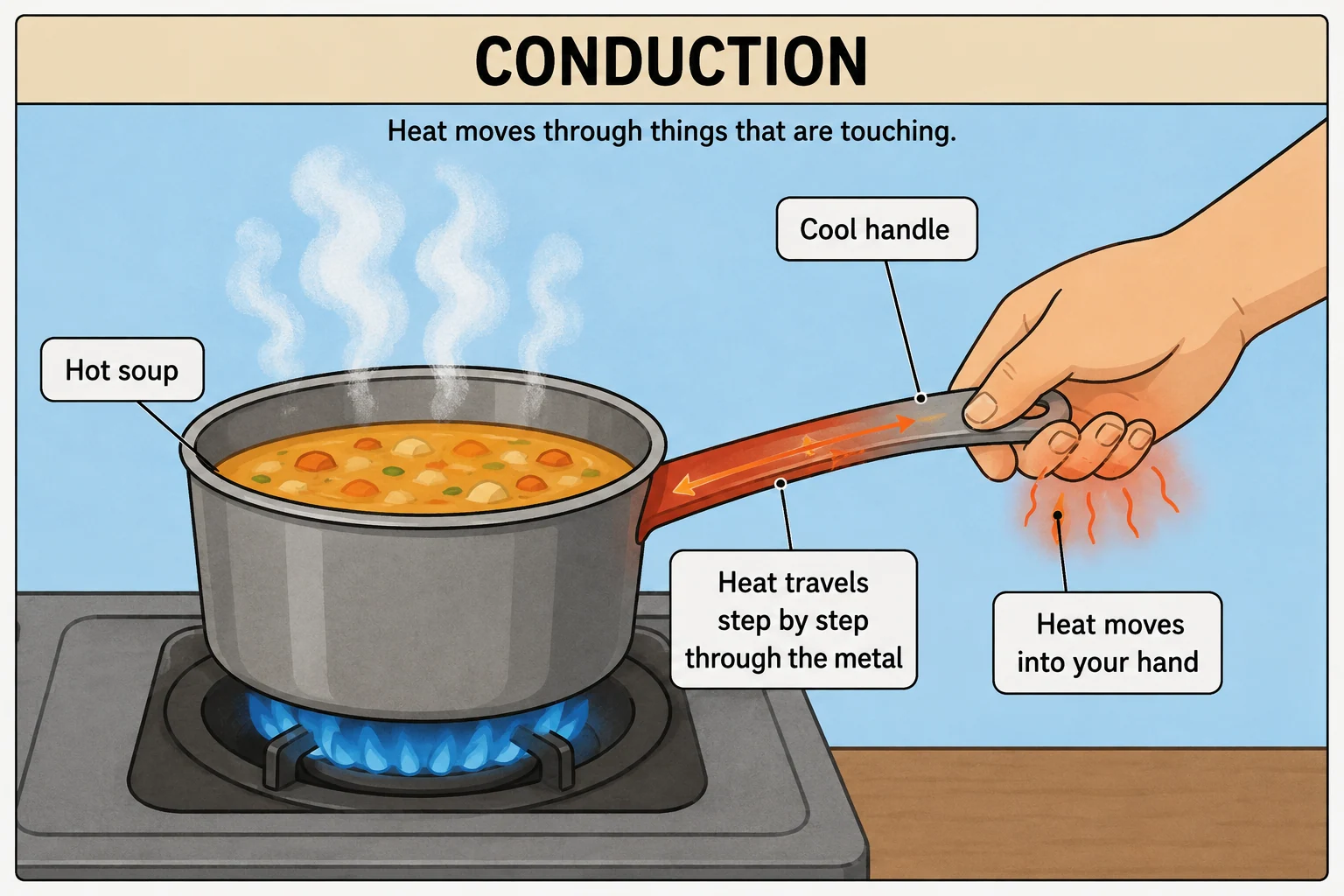
Conduction Heat transfers through direct contact Conduction illustration
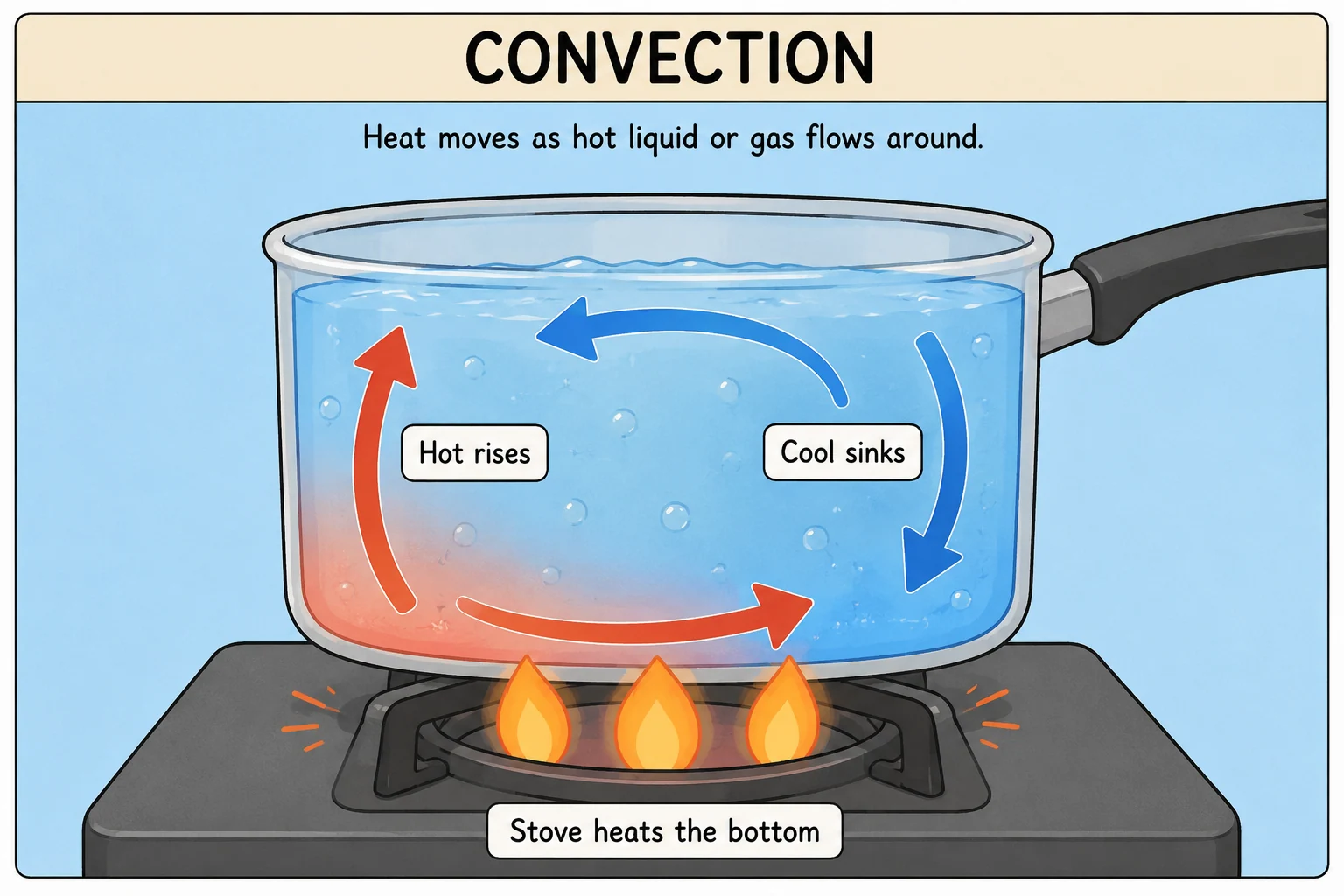
Convection Heat transfers as liquid or gas circulates Convection illustration

Easy explanation

Radiation transfers energy through space. Conduction transfers heat through contact. Convection transfers heat through moving fluids.

Page 35

Heat transfer in everyday life

Original illustration from Physics worksheet page 35
Original worksheet illustration · Page 35

Easy explanation

Examples include a lamp, a warm phone and boiling water.

Topic 14

Human Use of Energy

Big Question: How has energy use changed?

Page 36

Human Use of Energy (Timeline)

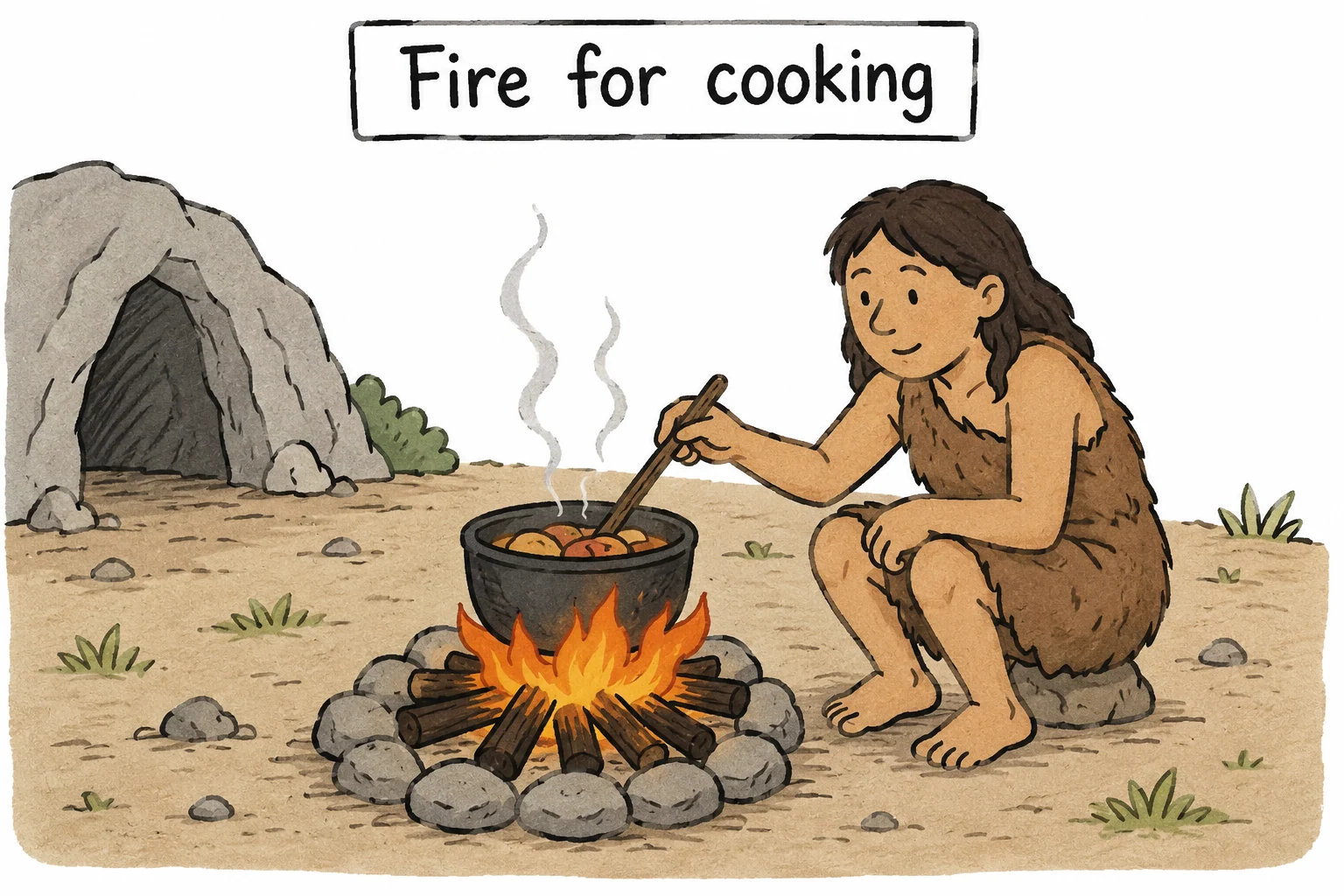
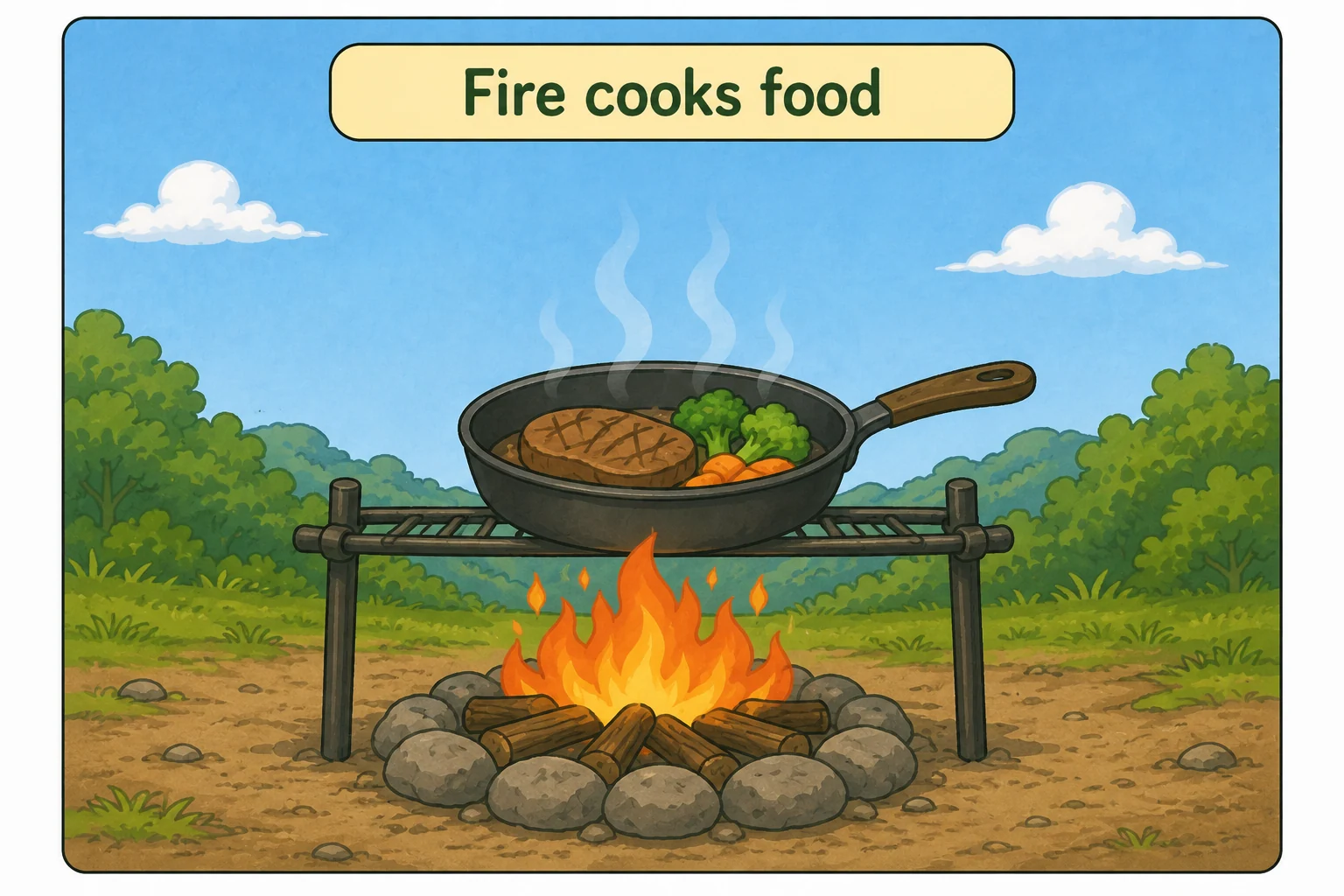
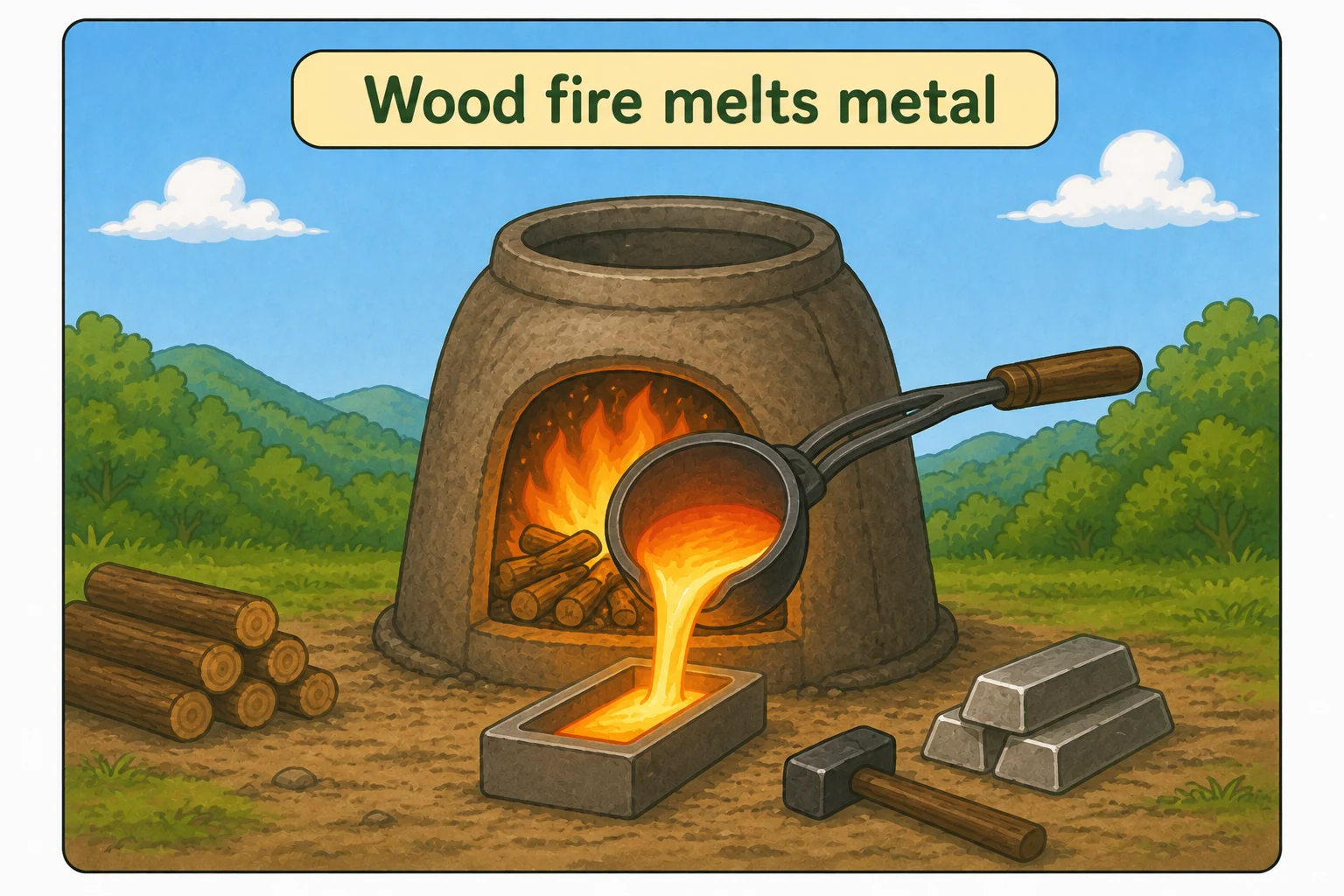
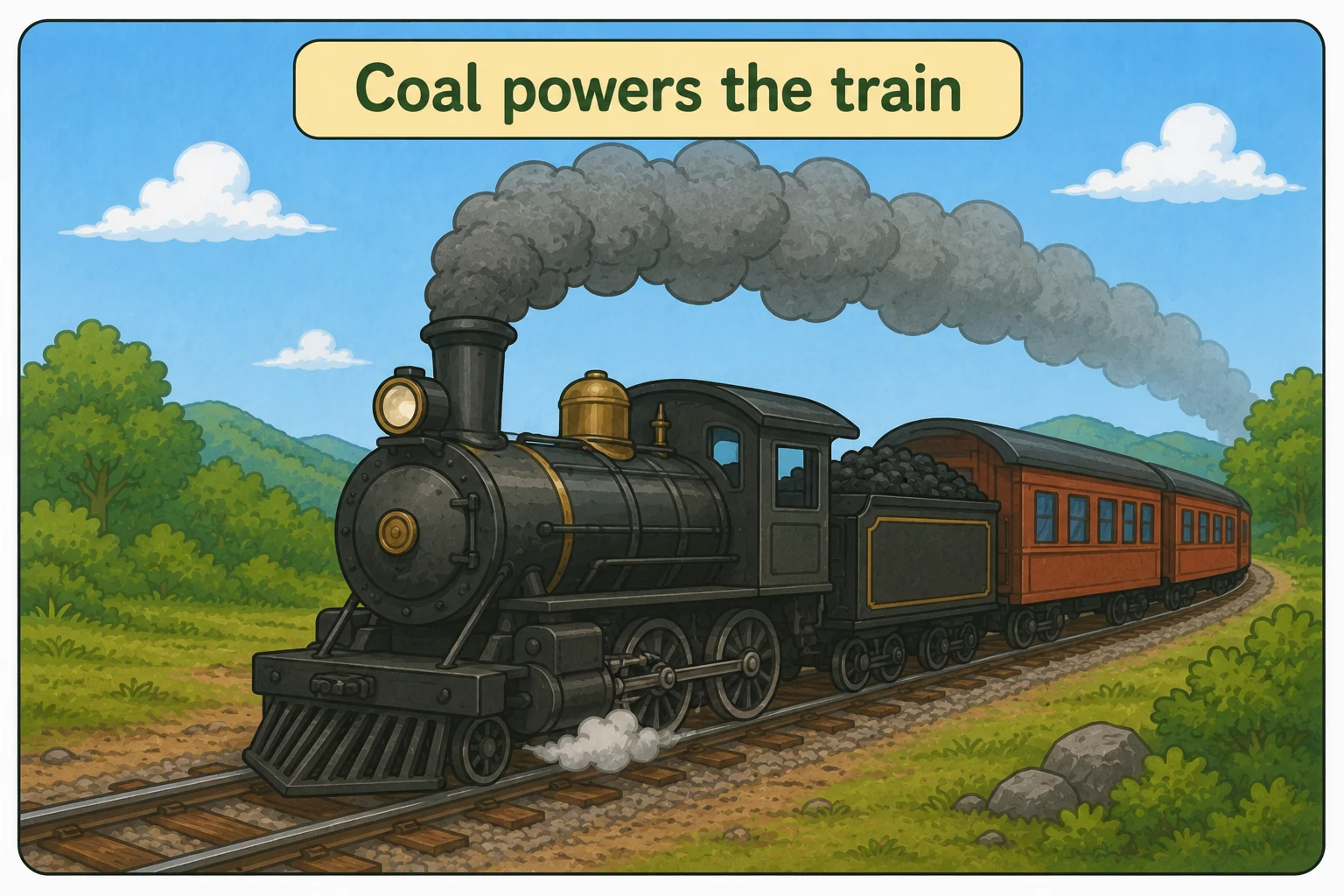
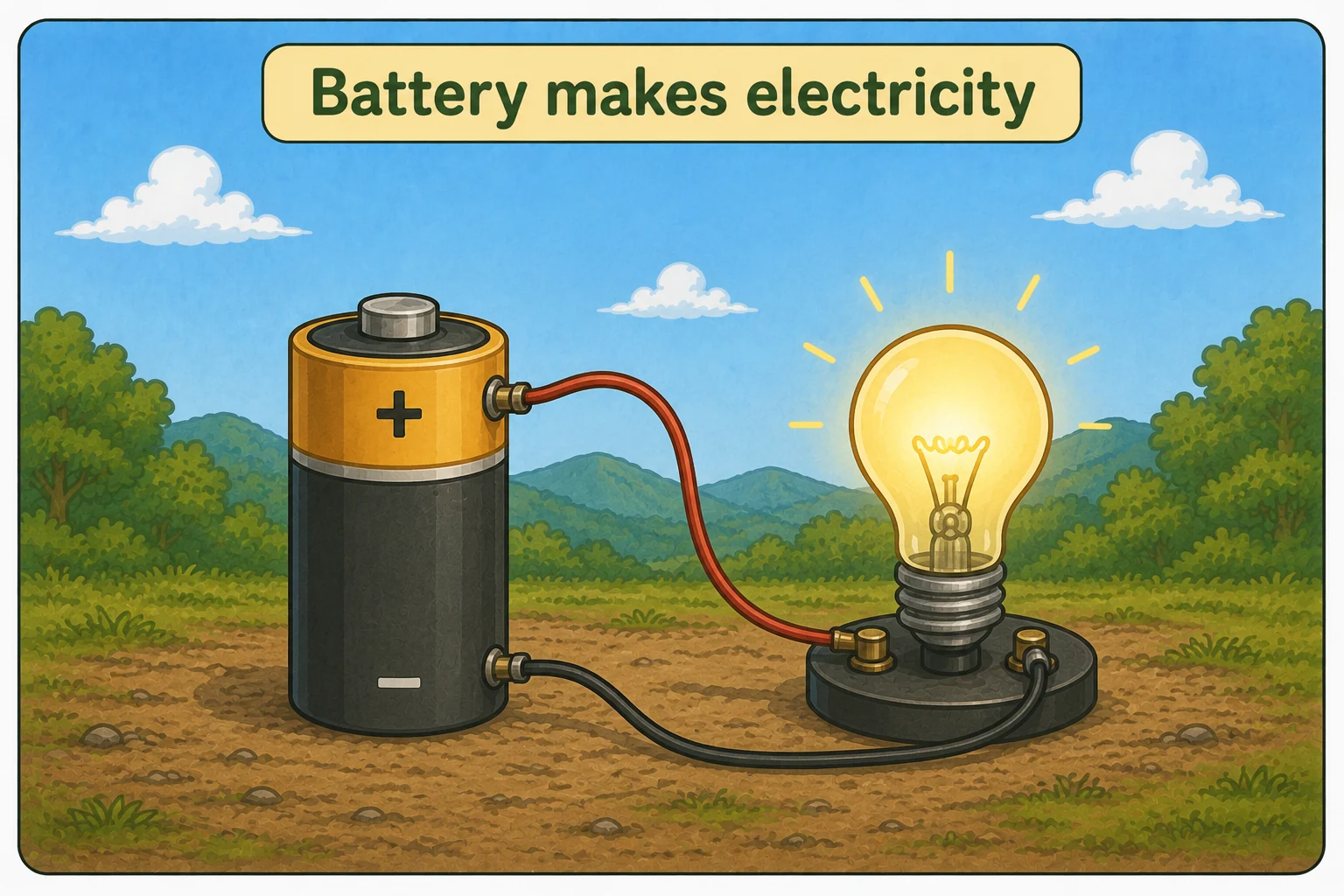
Historical human use of fire
Use Example Visual
Cooking with fire Fire cooks food Cooking food with fire
Melting metal Wood fire melts metal Wood fire melting metal
Steam trains Coal powers the train Coal train illustration
Batteries Battery provides electrical energy Battery lighting a bulb

Easy explanation

The worksheet shows energy use for cooking, metalworking, transport and batteries.

Topic 15

Nuclear Waste and Indigenous Perspectives

Big Question: How can energy decisions affect communities?

Page 37

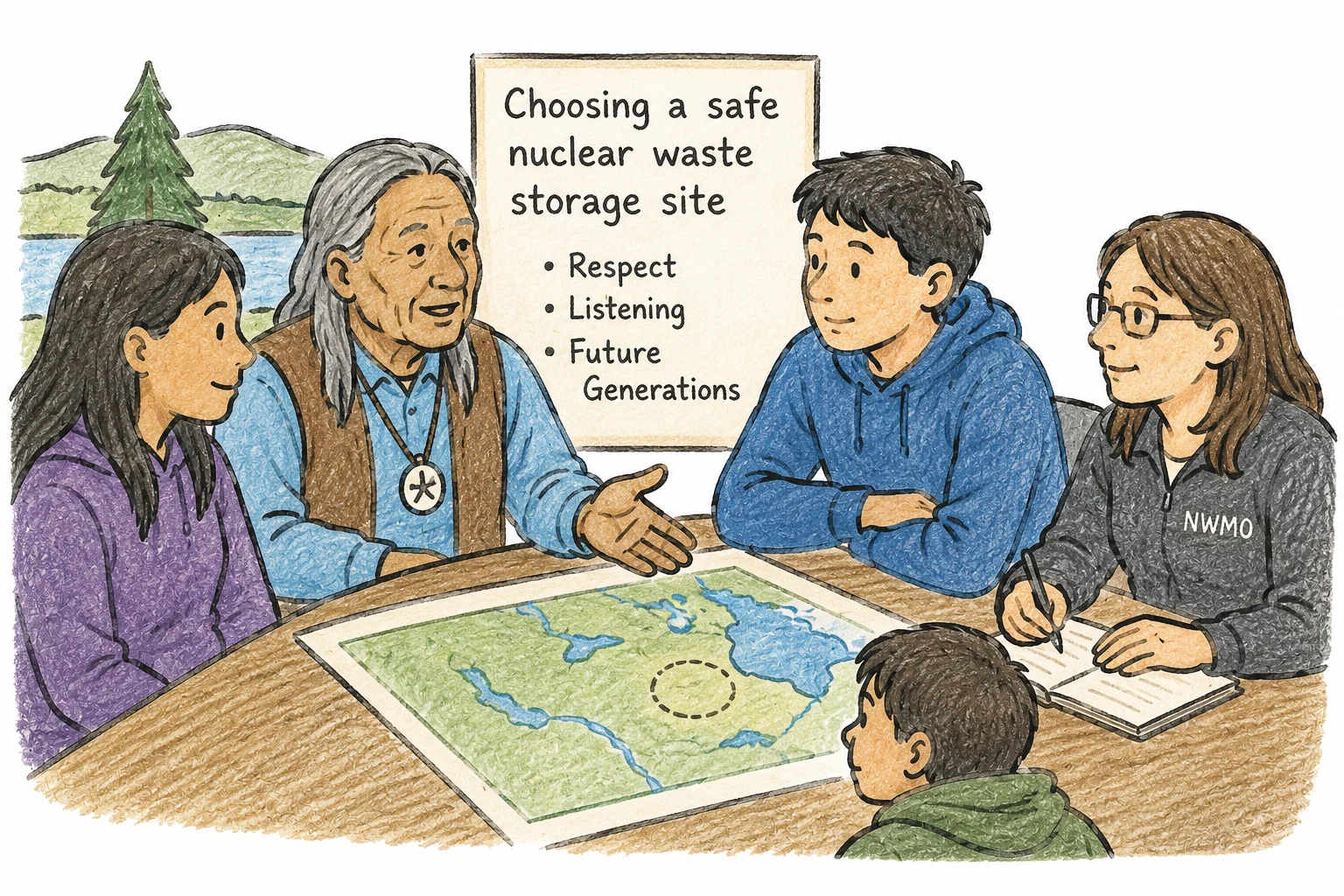
Nuclear Waste & Indigenous Perspectives

Original illustration from Physics worksheet page 37
Original worksheet illustration · Page 37
Vocabulary Easy meaning / example
NWMO Canadian Nuclear Waste Management Organization

Easy explanation

The worksheet discusses nuclear waste storage and Indigenous perspectives on land and decision-making.

Page 38

Why community perspectives matter

Easy explanation

Energy decisions affect land, people and future generations.

Keep learning

Download the Physics worksheet

Open the complete illustrated 38-page worksheet or save it to study offline.

Download the Physics Unit Test

Test your understanding of energy, nuclear reactions, heat transfer, and Earth's energy systems.

To use a Supabase-hosted PDF instead, replace physics-source.pdf with the public Supabase Storage URL.

← Back to Science↑ Back to Top