BC SCIENCE 10 · BIOLOGY

Learn biology
piece by piece.

Visual, ELL-friendly lessons based on the MOSAIC Biology worksheet. Read the material directly on the website, then open the printable PDF whenever you need it.

Choose a topic

Topic 3.1

DNA, Cells, and Variation

Big Question: How does DNA help explain why living things are different?

Page 2

Why Are Living Things Different?
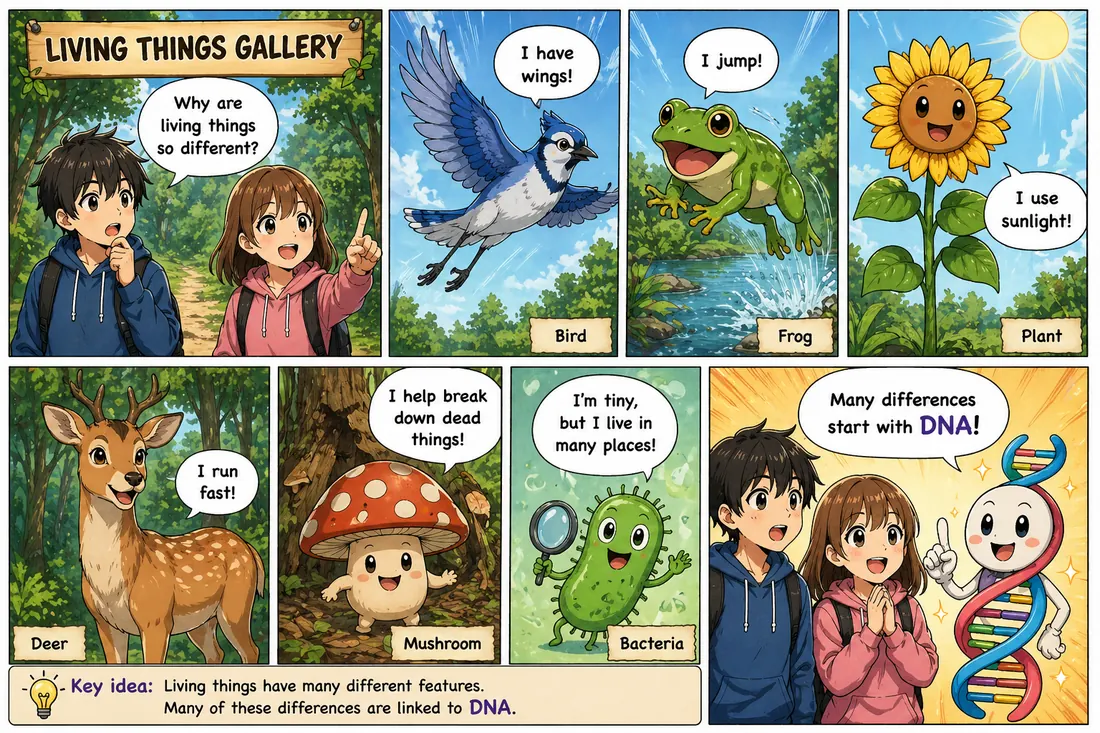
Cartoon gallery showing different living things and examples of variation.
Visual from the original MOSAIC Biology worksheet, page 2.
VocabWhat it means
VariationThe presence of differences in characteristics

Easy explanation

Living things are different. Some fly. Some jump. Some grow leaves. Some are microscopic(small). These differences are called variation. Many variations are linked to DNA.
Page 3

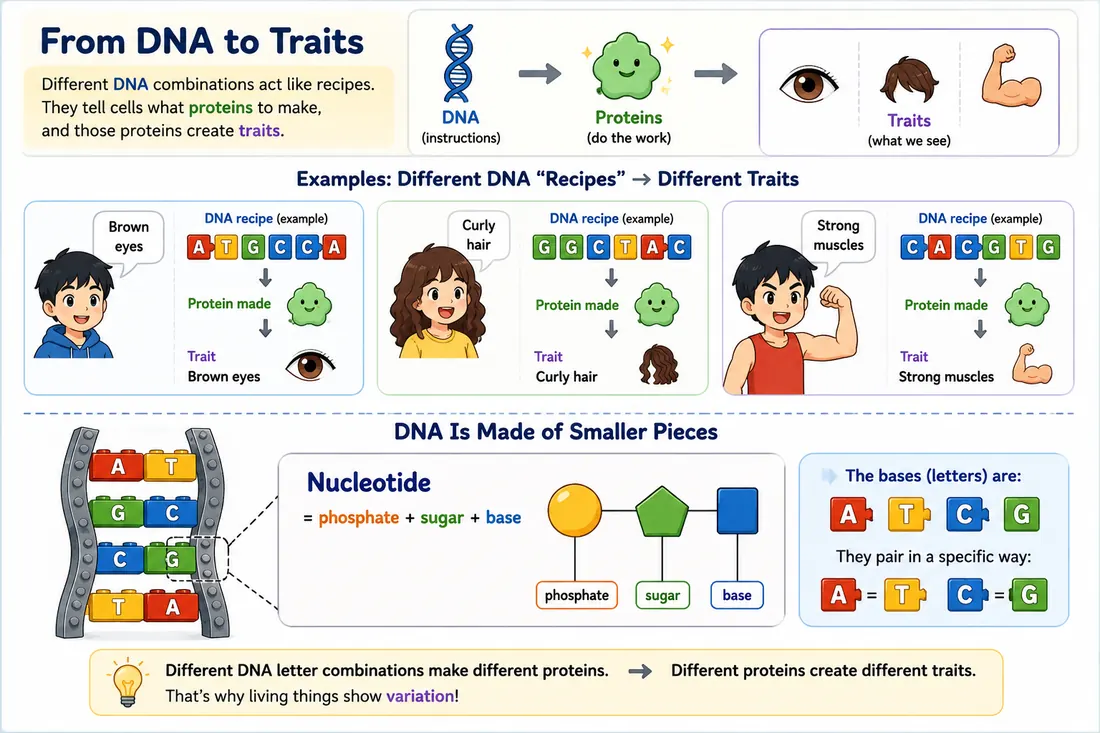
DNA as Instructions

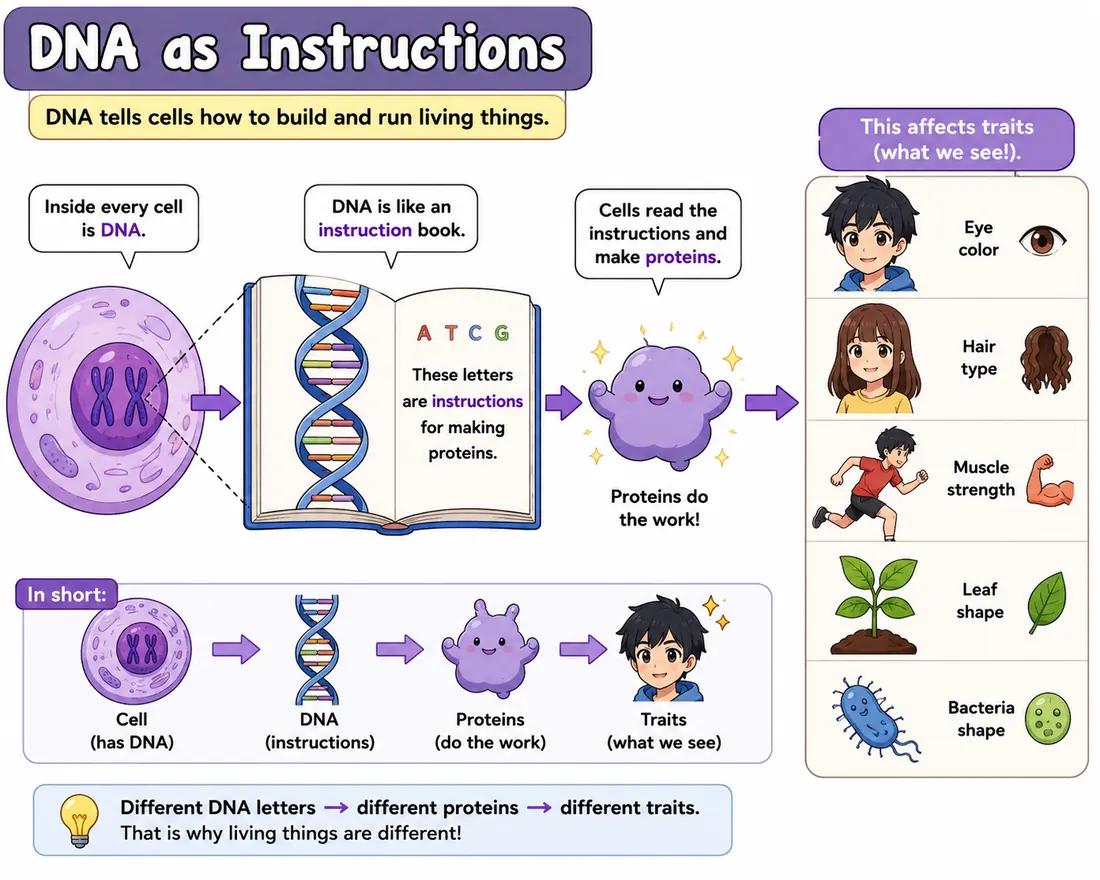
Diagram showing DNA instructions leading to proteins and observable traits.
Visual from the original MOSAIC Biology worksheet, page 3.

DNA as instructions DNA is inside every cell DNA is like an instruction book *A T C G These letters are instructions for making proteins Cells read the instructions and make proteins (Proteins do the work) → It leads to traits (what we see)

VocabWhat it means
DNAinstruction inside cells
Traita feature of a living thing
Variationdifferences between living things
Organisma living thing
Page 4

Easy explanation

DNA is like an instruction book. It gives cells information. Cells use this information to build and run living things. DNA can affect traits. *Different DNA letters → Different proteins → Different traits

Page 5

DNA and Variation

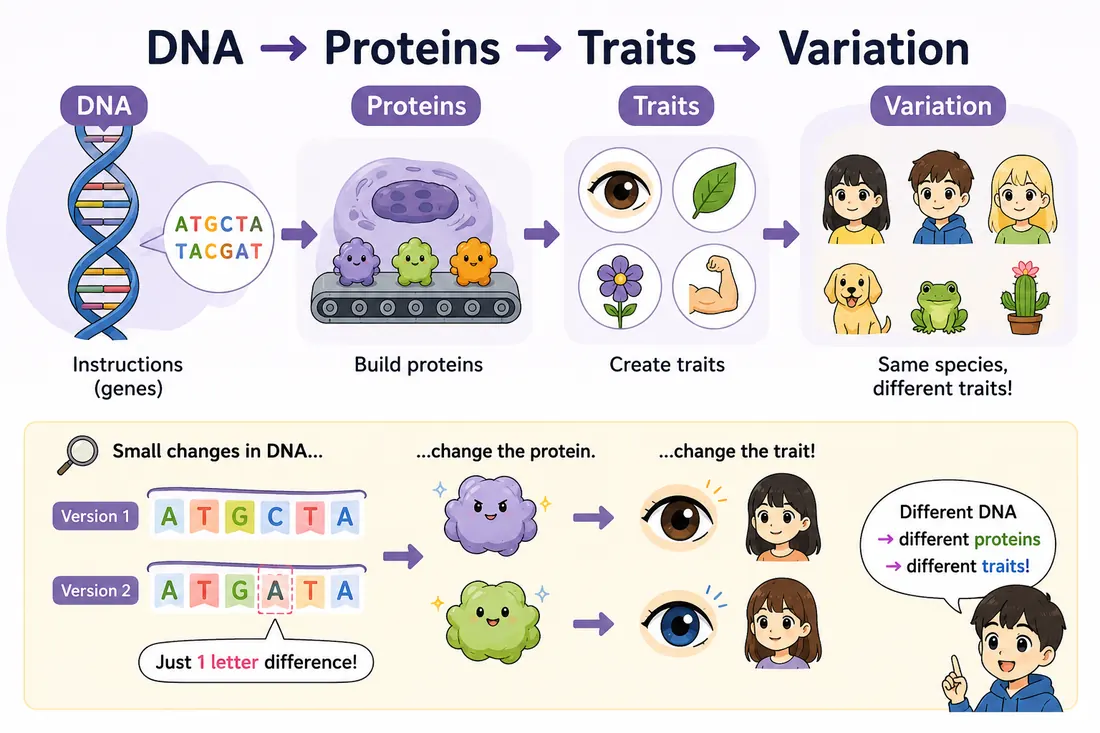
Diagram showing DNA changes leading to different proteins, traits, and variation.
Visual from the original MOSAIC Biology worksheet, page 5.

*Change in just one letter (in DNA) can change the trait Why? : Different DNA → Different proteins → Different traits

Easy explanation

Organisms in the same group can still be different. Plants are not all the same. Animals are not all the same. Tiny organisms are not all the same. DNA helps create many of these differences.

Page 6

DNA Is Made of Smaller Pieces

Diagram of a nucleotide with phosphate, sugar, and base, plus DNA bases A, T, C, and G.
Visual from the original MOSAIC Biology worksheet, page 6.

Easy explanation

DNA is made of small pieces. Each piece is called a nucleotide. A nucleotide has: 1. phosphate 2. sugar 3. base The bases are DNA letters. They are: A, T, C, G

Page 7

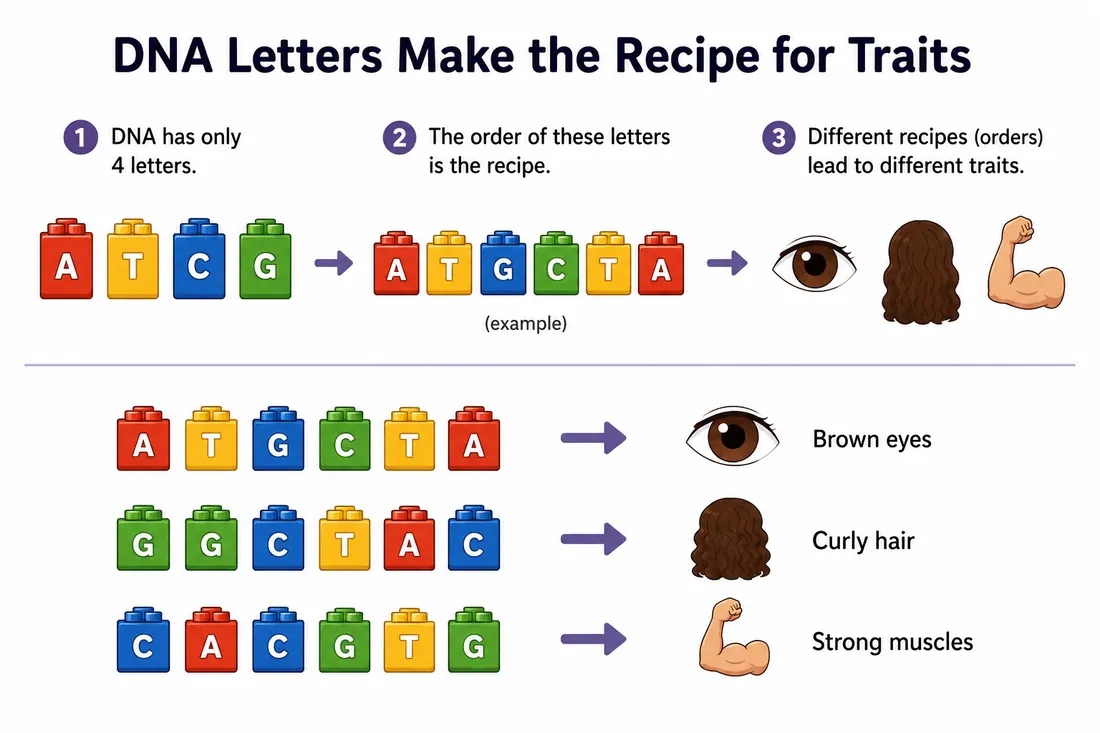
DNA Letters Make the Recipe for Traits

Diagram showing how different orders of DNA bases can lead to different traits.
Visual from the original MOSAIC Biology worksheet, page 7.

DNA has only 4 letters The order of these letters is the recipe Different recipes (orders) lead to different traits

Page 8

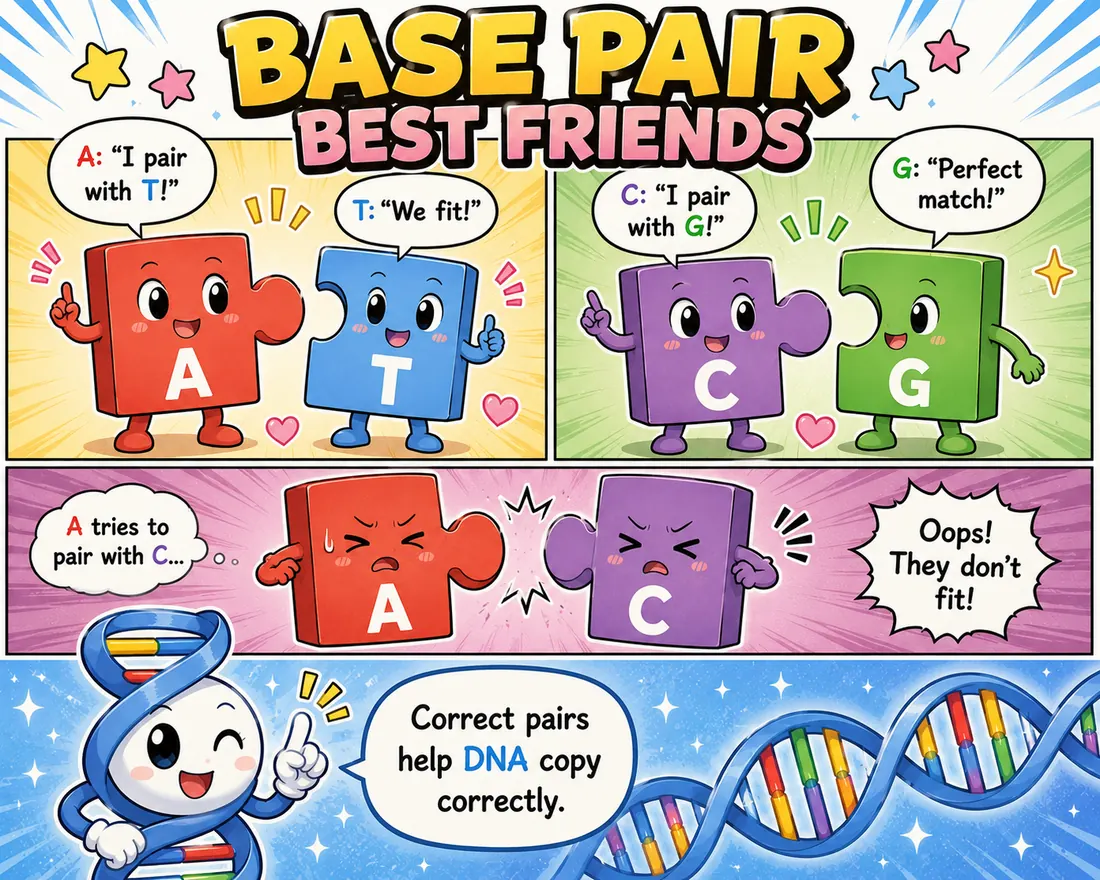
Base Pairing

Cartoon showing complementary base pairing: A with T and C with G.
Visual from the original MOSAIC Biology worksheet, page 8.
VocabWhat it means
Complementary base pairingA pairs with T, C pairs with G

Easy explanation

DNA bases pair in a specific way. A pairs with T. C pairs with G. This is called complementary base pairing. It is like puzzle pieces. Only the correct pieces fit.

Page 9

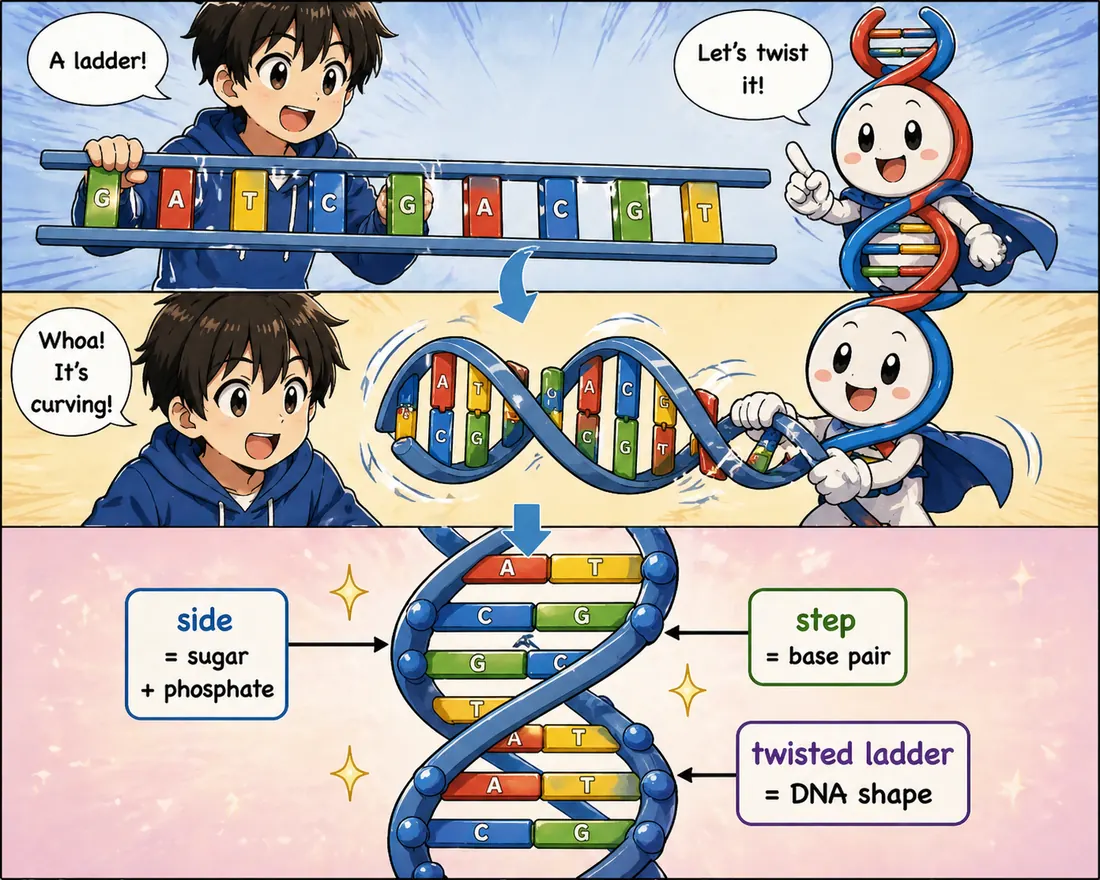
Twisted Ladder

Cartoon comparing DNA to a twisted ladder with sugar-phosphate sides and base-pair steps.
Visual from the original MOSAIC Biology worksheet, page 9.

Easy explanation

DNA has two strands. It looks like a twisted ladder. The sides are made of sugar and phosphate. The steps are base pairs. A—T C—G

Page 10

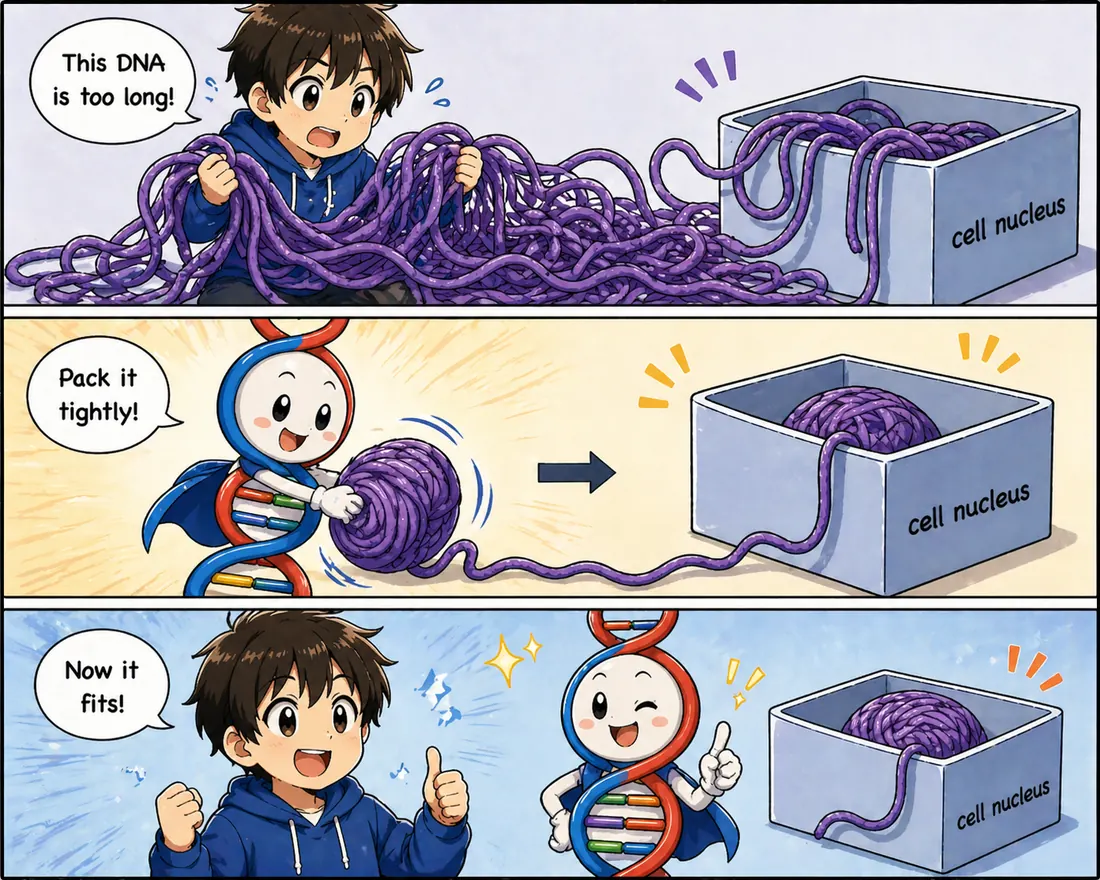
How Does Long DNA Fit Inside a Cell?

Cartoon showing long DNA being packed tightly inside a cell nucleus.
Visual from the original MOSAIC Biology worksheet, page 10.
VocabWhat it means
Chromosome(s)Packed DNA

Easy explanation

DNA is very long. Cells are very small. So DNA must be packed. Packed DNA forms chromosomes.

Page 11

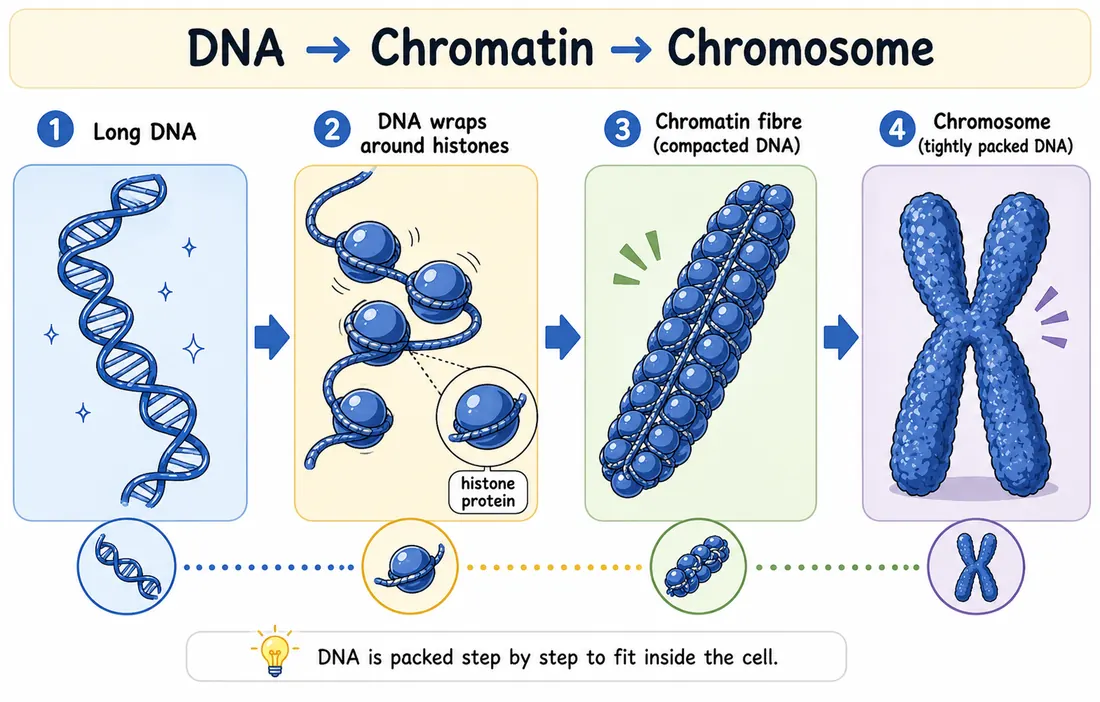
DNA → Chromatin → Chromosome

Diagram showing DNA wrapping around histones to form chromatin and then chromosomes.
Visual from the original MOSAIC Biology worksheet, page 11.

DNA Chromatin Chromosome Long DNA DNA wraps around histones Chromatin fibre (Compacted DNA) Tightly packed DNA *DNA is packed step by step to fit inside the cell

Easy explanation

DNA can be loose. Loose DNA is called chromatin. Before cell division, DNA packs tightly. Tightly packed DNA is called a chromosome.

Page 12

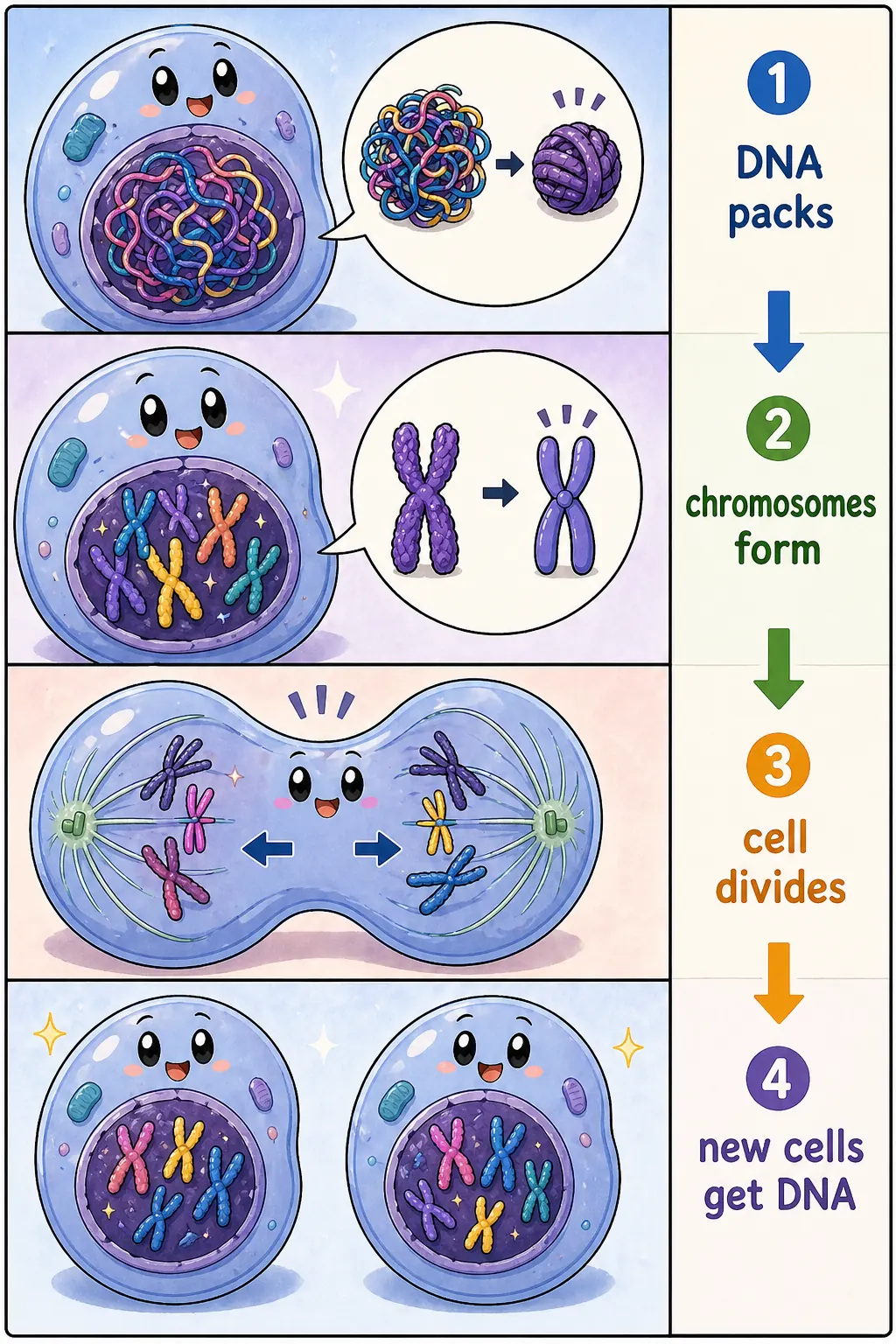
Chromosomes and Cell Division

Diagram showing DNA packing, chromosome formation, cell division, and new cells receiving DNA.
Visual from the original MOSAIC Biology worksheet, page 12.

Cell Division (1)DNA packs (2)Chromosomes form (3)Cell divides (4)New cells get DNA

Easy explanation

Cells divide to make new cells. Before cell division, DNA must be organized. Chromosomes help DNA move correctly into new cells. This connects to mitosis and meiosis (later)

Page 13

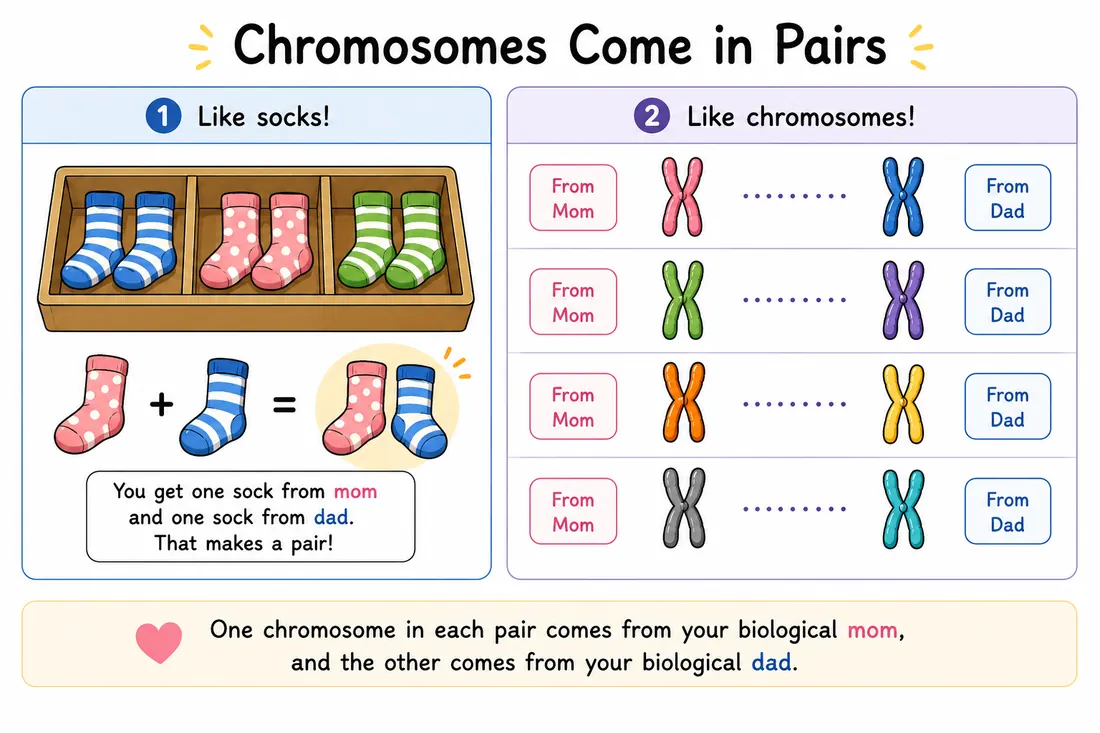
Chromosomes Come in Pairs

Cartoon analogy showing chromosome pairs, with one chromosome from each biological parent.
Visual from the original MOSAIC Biology worksheet, page 13.

Easy explanation

Human body cells usually have chromosome pairs. One chromosome in a pair comes from the biological mother. One chromosome in a pair comes from the biological father. Pairs help explain inheritance. Inheritance means traits can pass from parents to offspring.

Page 14

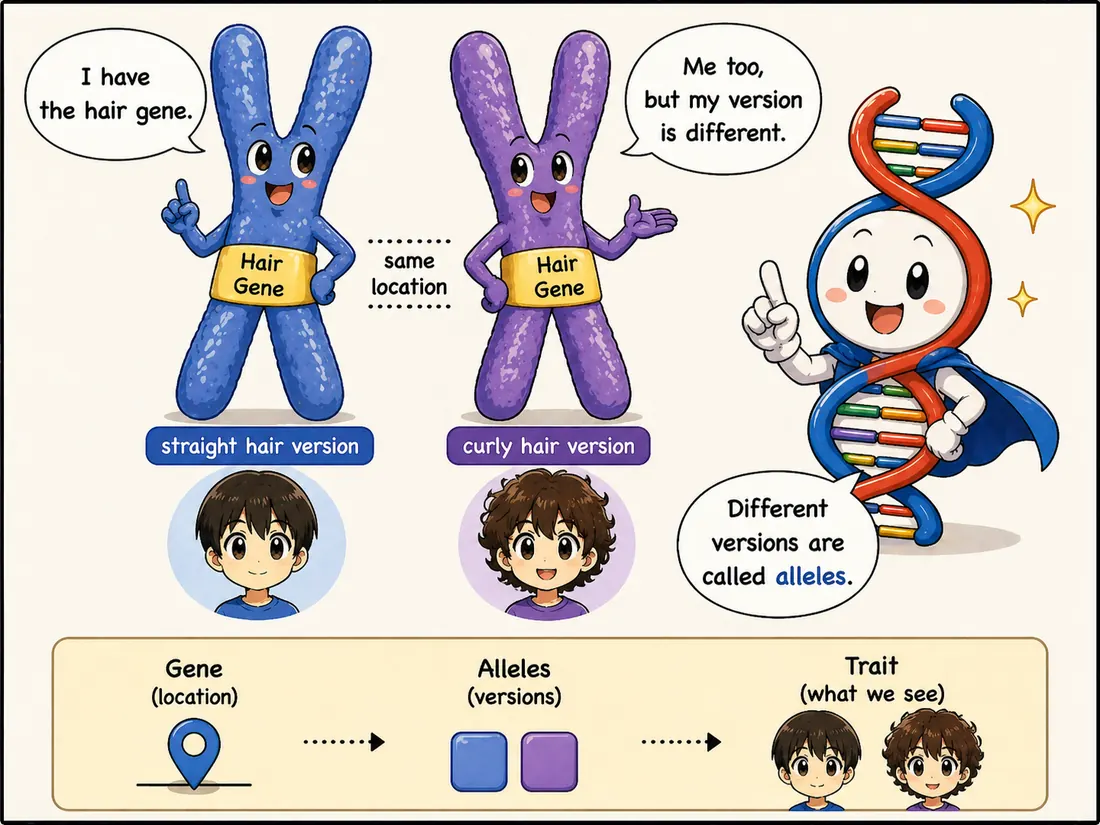
Genes and Alleles

Diagram showing a gene as a location on DNA and alleles as different versions of that gene.
Visual from the original MOSAIC Biology worksheet, page 14.
VocabWhat it means
Genea section of DNA
Allelea version of a gene
Page 15

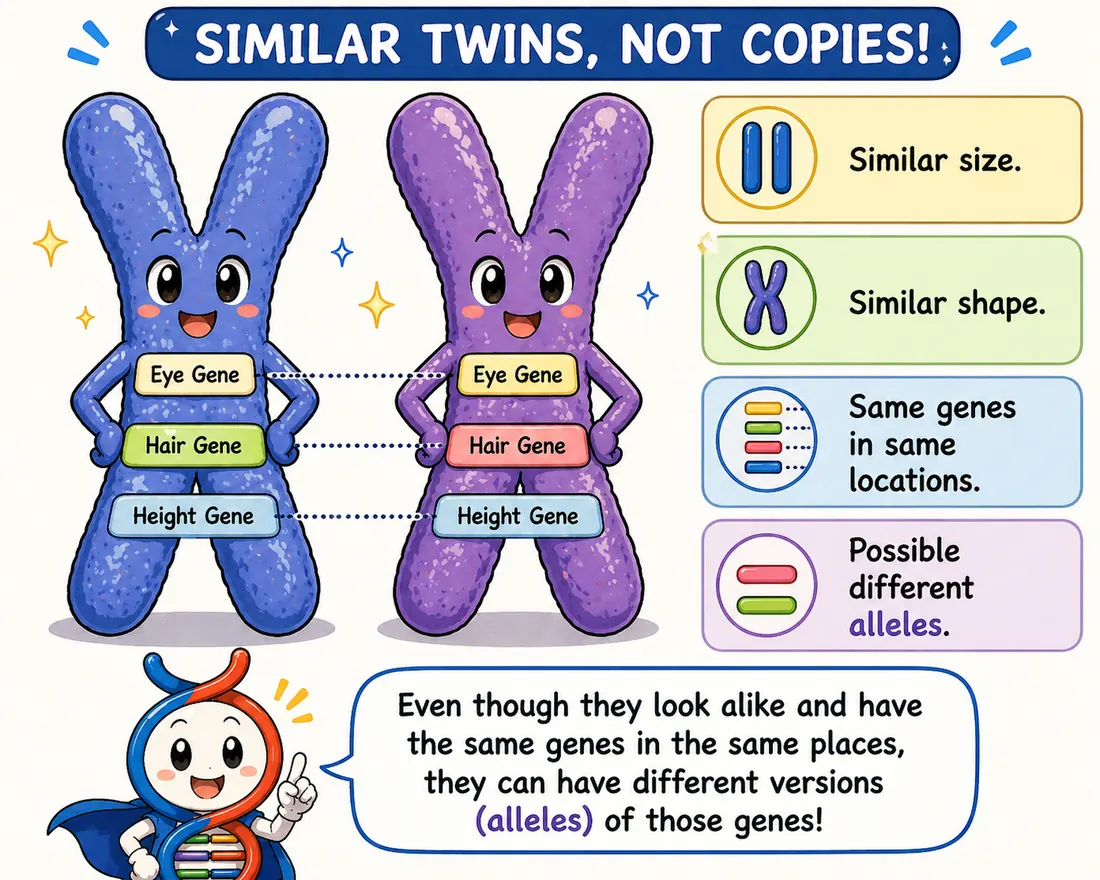
Homologous Chromosomes

Cartoon of homologous chromosomes showing same gene locations but potentially different alleles.
Visual from the original MOSAIC Biology worksheet, page 15.

Short explanation

Homologous chromosomes are a pair. They are similar. They have the same genes in the same places. But they may have different alleles. So they are not exact copies.

Page 16

Summary

Short explanation

DNA stores instructions. Nucleotides build DNA. Base pairs help DNA keep its order. DNA packs into chromosomes. Chromosomes contain genes. Genes can have different alleles. This helps explain variation.
Topic 3.2

DNA, Heredity, and Biodiversity

Big Question: How is genetic information passed on and shown in living things?

Page 18

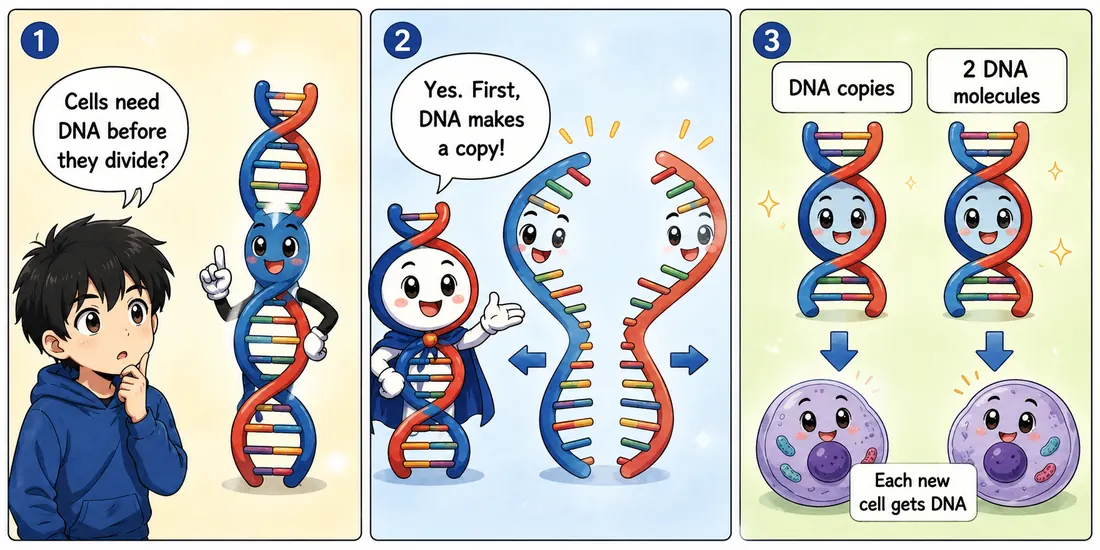
“How Can One DNA Make Two Copies?”

Cartoon showing DNA replication before cell division.
Visual from the original MOSAIC Biology worksheet, page 18.
VocabWhat it means
DNA replicationBefore a cell divides, DNA must copy itself
Replicationmaking a copy

Easy explanation

Before a cell divides, DNA must copy itself. This is called DNA replication. Replication means making a copy. One DNA molecule becomes two DNA molecules. Each new cell needs DNA instructions.

Page 19

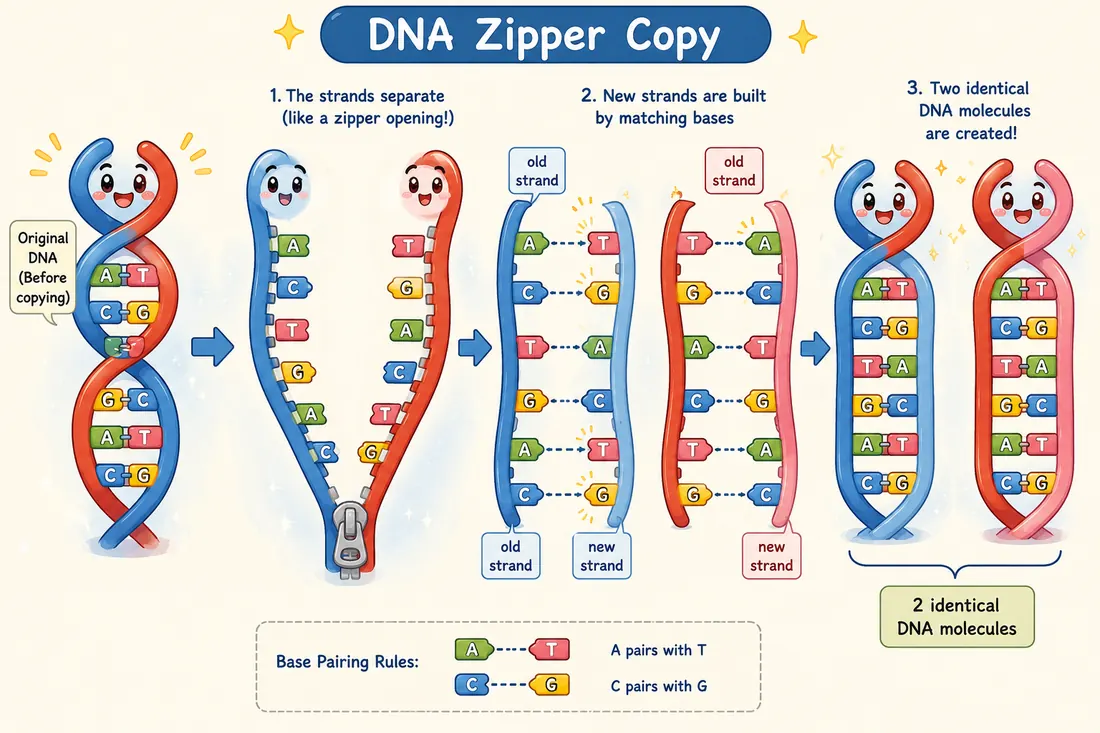
DNA Replication: The Copying Rule

Diagram showing DNA strands separating and complementary bases building two DNA molecules.
Visual from the original MOSAIC Biology worksheet, page 19.

DNA Zipper Copy Original DNA (Before copying) 1. the strands separate (like a zipper opening) 2. New strands are built by matching bases (old line + new line = DNA 1) (old line + new line = DNA 2) 3. Two identical DNA molecules are created! → DNA 1 = DNA 2

Easy explanation

DNA has two strands. The strands separate. Each old strand becomes a guide. New bases match the old bases. A pairs with T. C pairs with G. This creates two DNA molecules.

Page 20

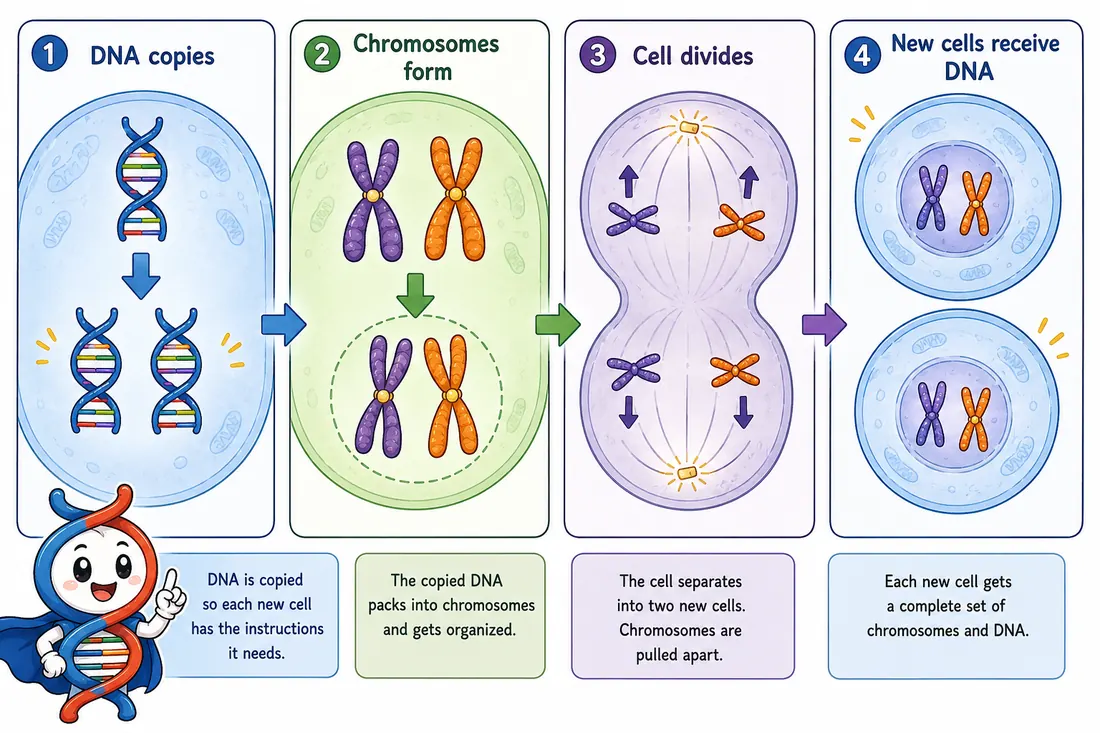
Why DNA Copying Matters

Four-step diagram showing why DNA copying matters before cell division.
Visual from the original MOSAIC Biology worksheet, page 20.

Why DNA copying matters 1. DNA copies DNA is copied so each new cell has the instructions it needs 2. Chromosomes form The copied DNA packs into chromosomes and gets organized 3. Cell divides The cell separates into two new cells. Chromosome are pulled apart 4. New cells receive DNA Each new cell gets a complete set of chromosomes and DNA

Easy explanation

Each new cell receives DNA. That is why DNA structure is important. It helps genetic information pass on correctly.
Page 21

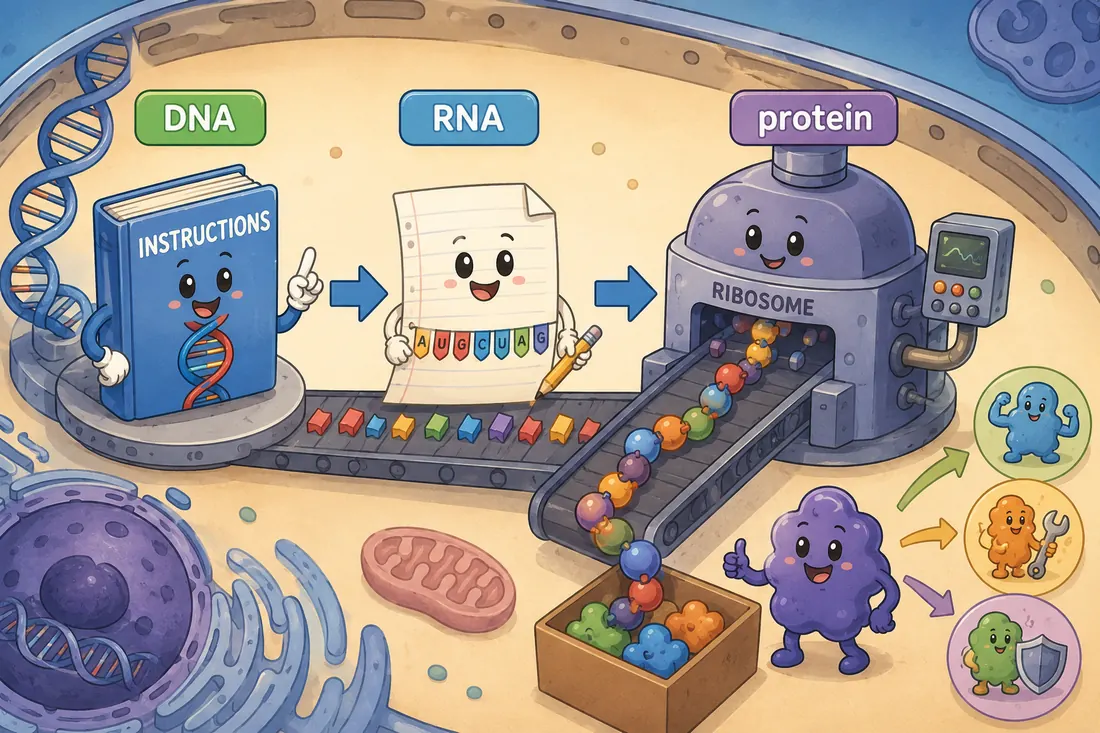
DNA → RNA → Protein

Diagram showing information flow from DNA to RNA to protein.
Visual from the original MOSAIC Biology worksheet, page 21.

Easy explanation

DNA stores instructions. A cell can make an RNA copy of one gene. The RNA copy helps make a protein. Proteins help cells work. Proteins can affect traits.

Key Idea

DNA does not directly make traits. DNA gives instructions. Cells use the instructions to make proteins. Proteins help create body features and cell functions.

Page 22

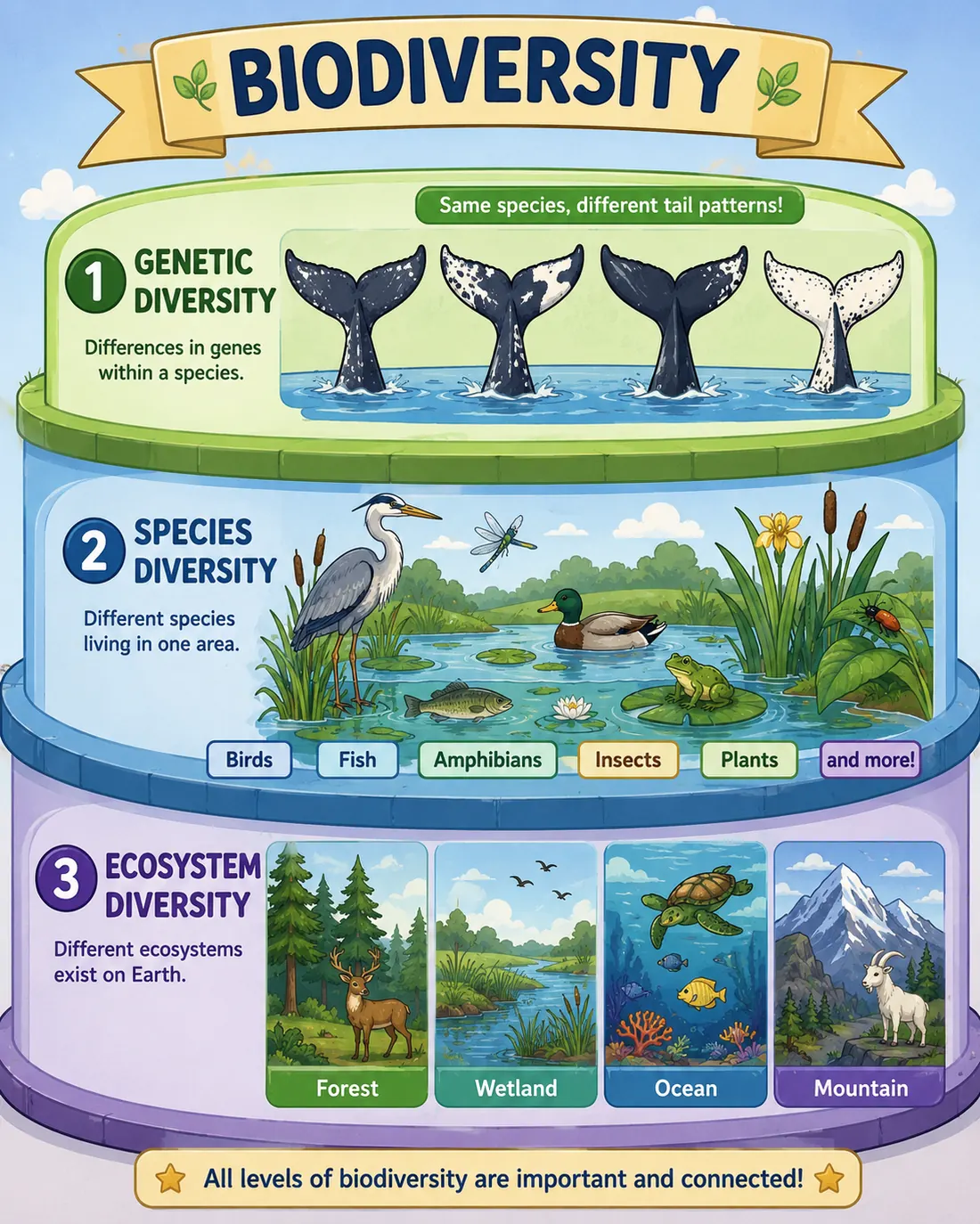
Biodiversity: “Life Has Many Levels”

Diagram showing genetic, species, and ecosystem diversity as levels of biodiversity.
Visual from the original MOSAIC Biology worksheet, page 22.
VocabWhat it means
Genetic diversitydifferences in genes within a species
Species diversitydifferent species living in one area
Ecosystem diversitydifferent ecosystems exist on Earth

Easy explanation

Biodiversity means the variety of life. It has different levels.

Page 23

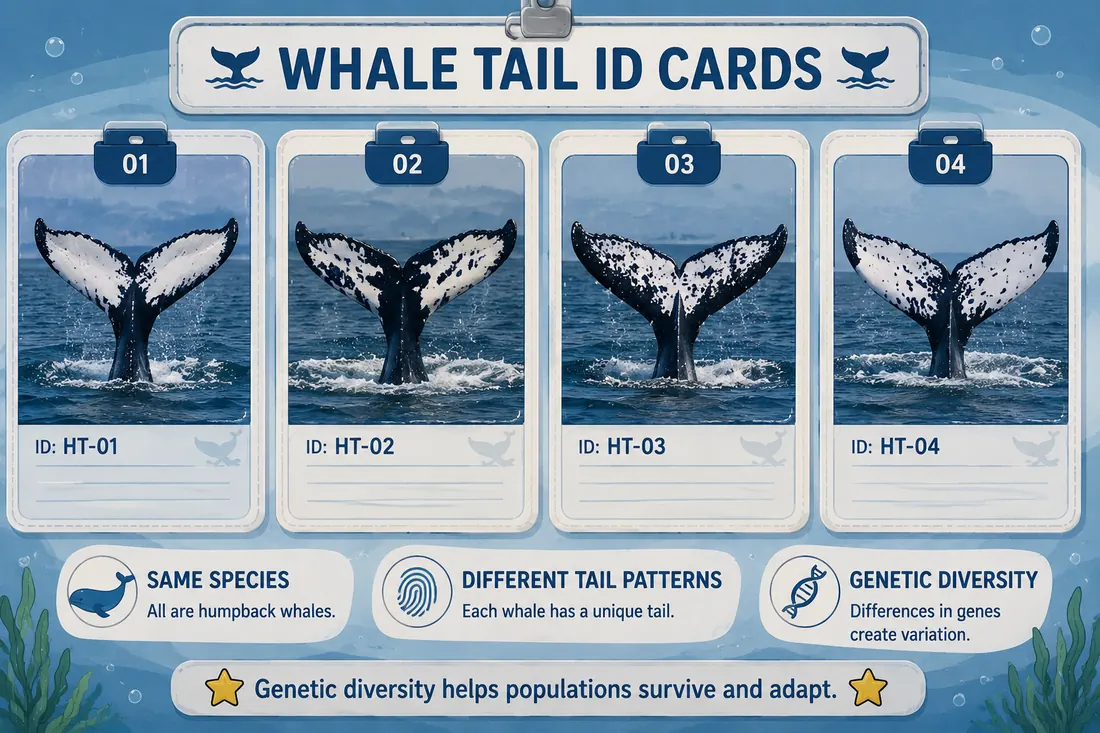
Genetic Diversity

Whale tail identification cards illustrating genetic diversity within one species.
Visual from the original MOSAIC Biology worksheet, page 23.

Easy explanation

Members of the same species can still be different. They may have different inherited traits. Example: Humpback whales can have different tail patterns. This is genetic diversity. Genetic diversity helps populations survive changes.

Page 24

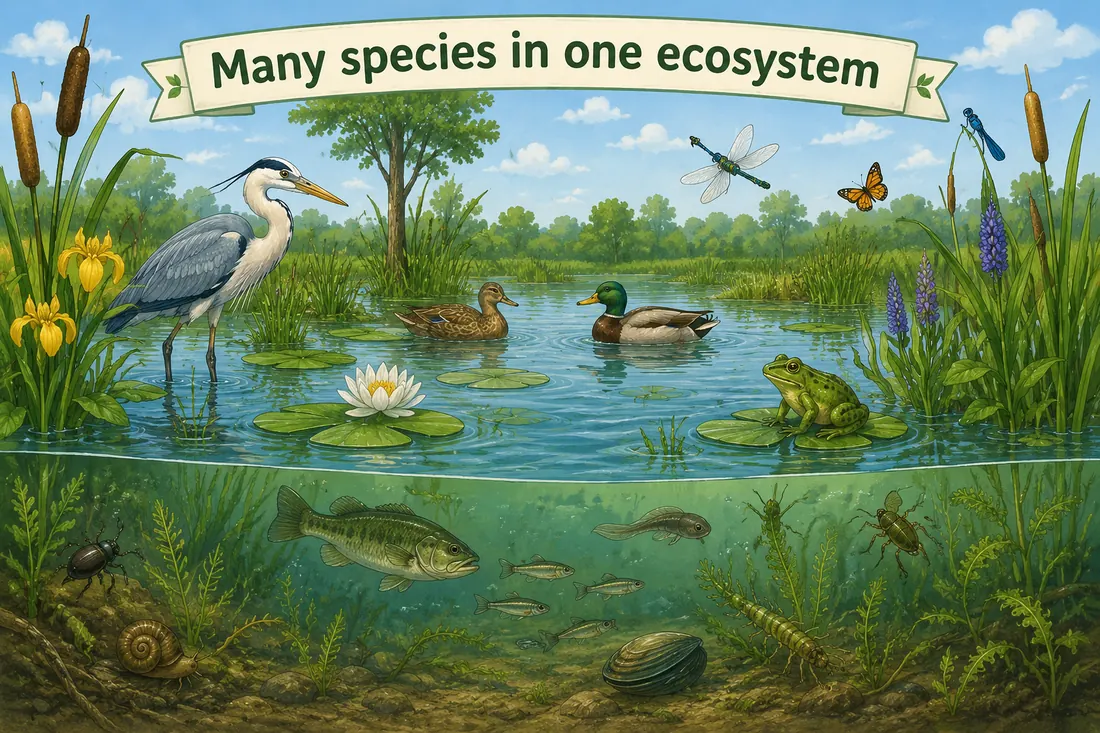
Species Diversity

Wetland illustration showing many different species living in one ecosystem.
Visual from the original MOSAIC Biology worksheet, page 24.

Easy explanation

Species diversity means many different species live in an area. A wetland can have: birds fish frogs plants insects bacteria More species can make an ecosystem stronger.

Page 25

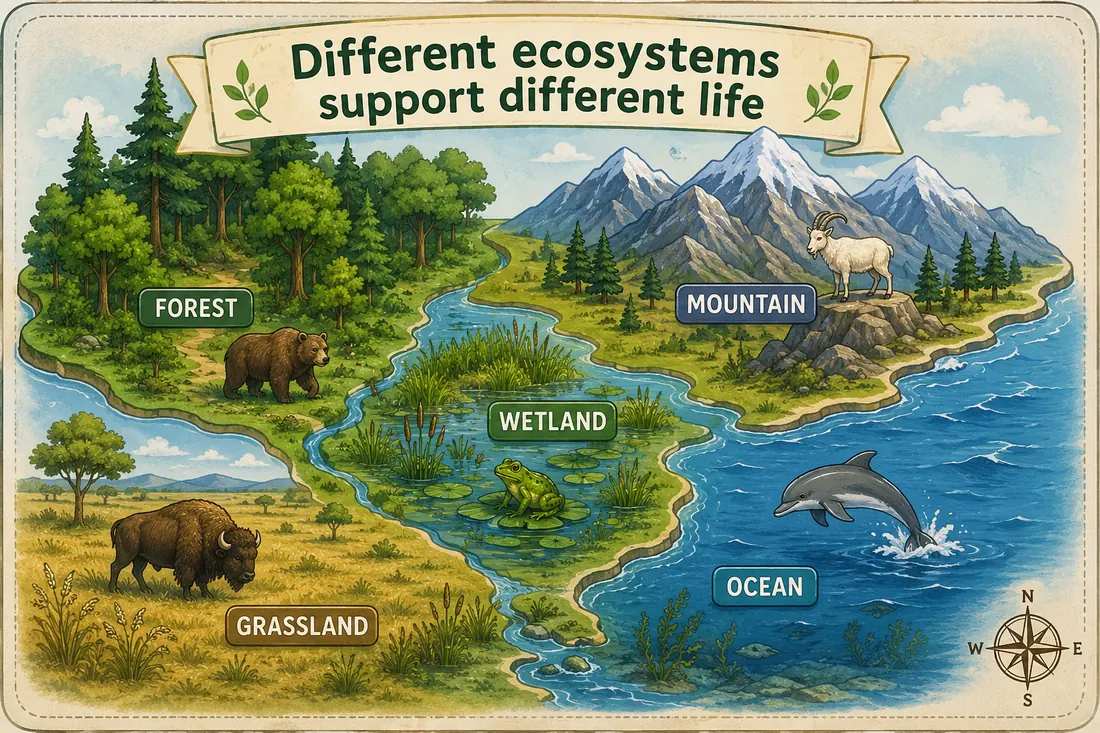
Ecosystem Diversity

Landscape map showing different ecosystem types including forest, wetland, grassland, mountain, and ocean.
Visual from the original MOSAIC Biology worksheet, page 25.

Easy explanation

Ecosystem diversity means Earth has many kinds of ecosystems. Different ecosystems have different conditions. Examples: temperature water light soil food Different conditions support different organisms.

Page 26

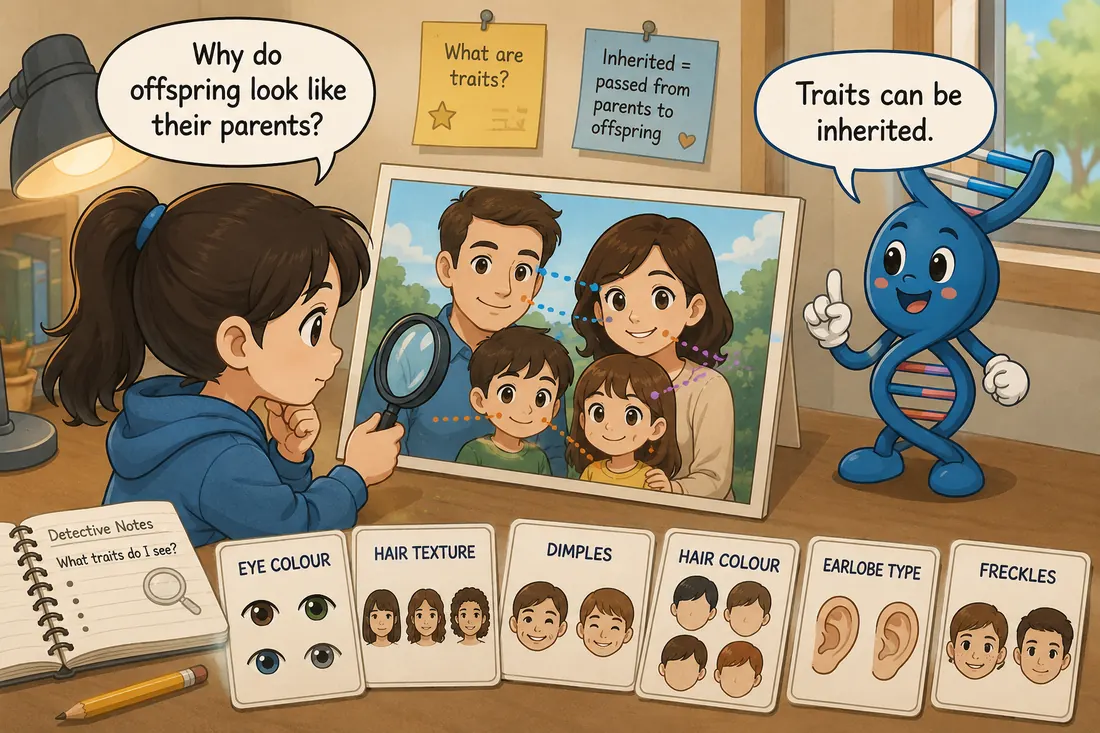
“Why Do Children Look Like Parents?”

Cartoon explaining heredity by comparing offspring traits with parental traits.
Visual from the original MOSAIC Biology worksheet, page 26.
VocabWhat it means
geneticsstudy of heredity
hereditypassing traits from parents to offspring
offspringchild or new organism

Easy explanation

Offspring often look similar to their parents. This happens because parents pass on genes. This is called heredity. Heredity means traits pass from parents to offspring.

Page 27

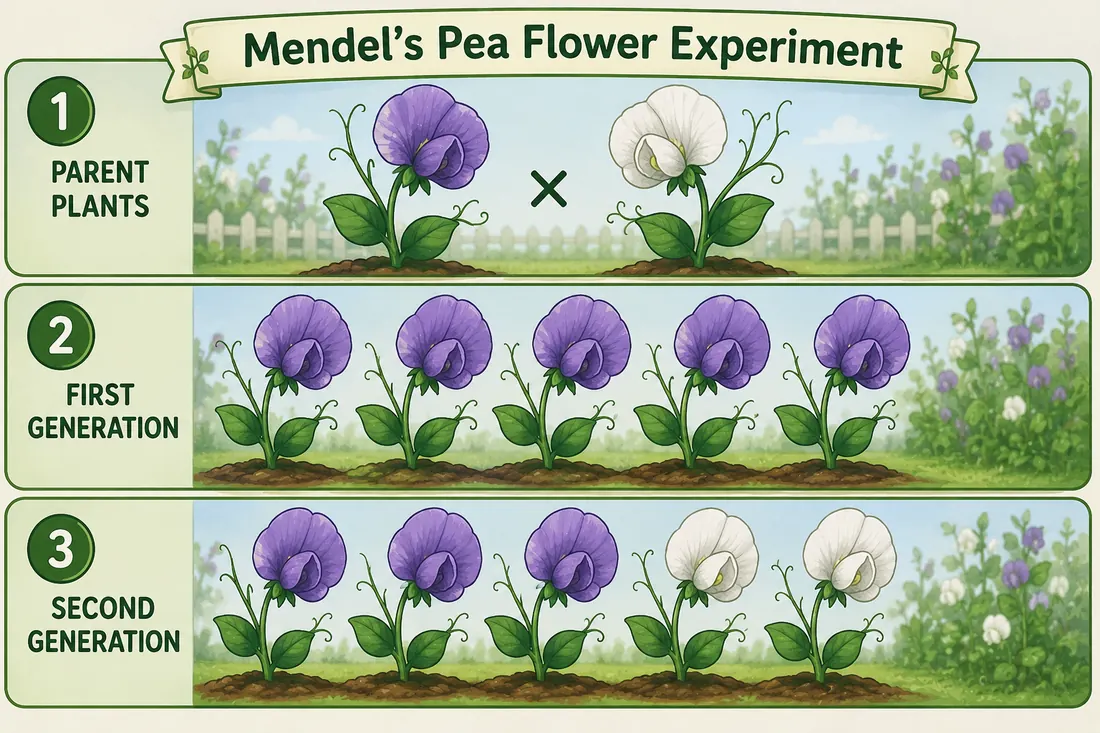
Mendel and Pea Plants

Diagram of Mendel's pea-flower experiment across generations.
Visual from the original MOSAIC Biology worksheet, page 27.

Easy explanation

Gregor Mendel studied pea plants. He looked at traits like flower colour. He crossed purple-flowered plants with white-flowered plants. In the first generation, the flowers were purple. Later, white flowers appeared again. This showed that traits can be hidden and reappear.

Page 28

Dominant and Recessive Alleles

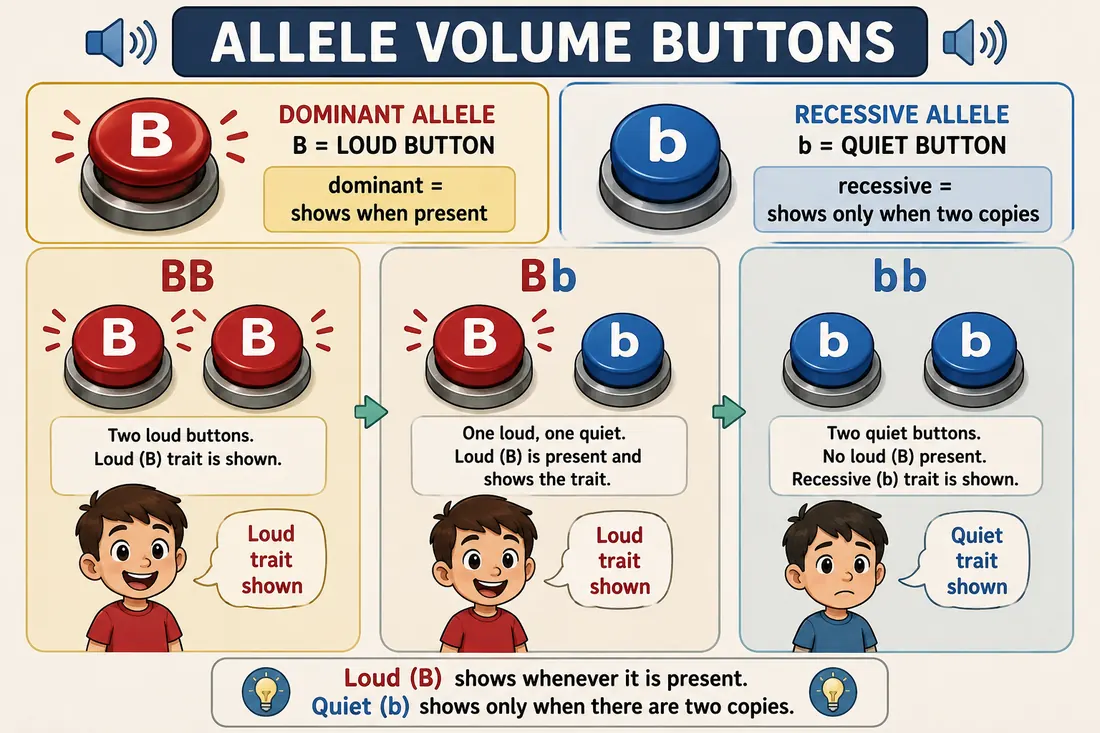
Button analogy for dominant and recessive alleles.
Visual from the original MOSAIC Biology worksheet, page 28.

Dominant Allele (strong allele) B = Loud button Recessive Allele b = Quiet button BB Two loud buttons → Loud trait shown Bb One loud, one quiet → Loud trait shown (B is stronger than b) (Dominant allele is stronger than recessive allele) bb Two quiet buttons → Quiet trait shown

Easy explanation

An allele is a version of a gene. Some alleles are dominant. A dominant allele shows its trait if it is present. Some alleles are recessive. A recessive trait shows only when there are two recessive alleles.

Page 29

Genotype and Phenotype

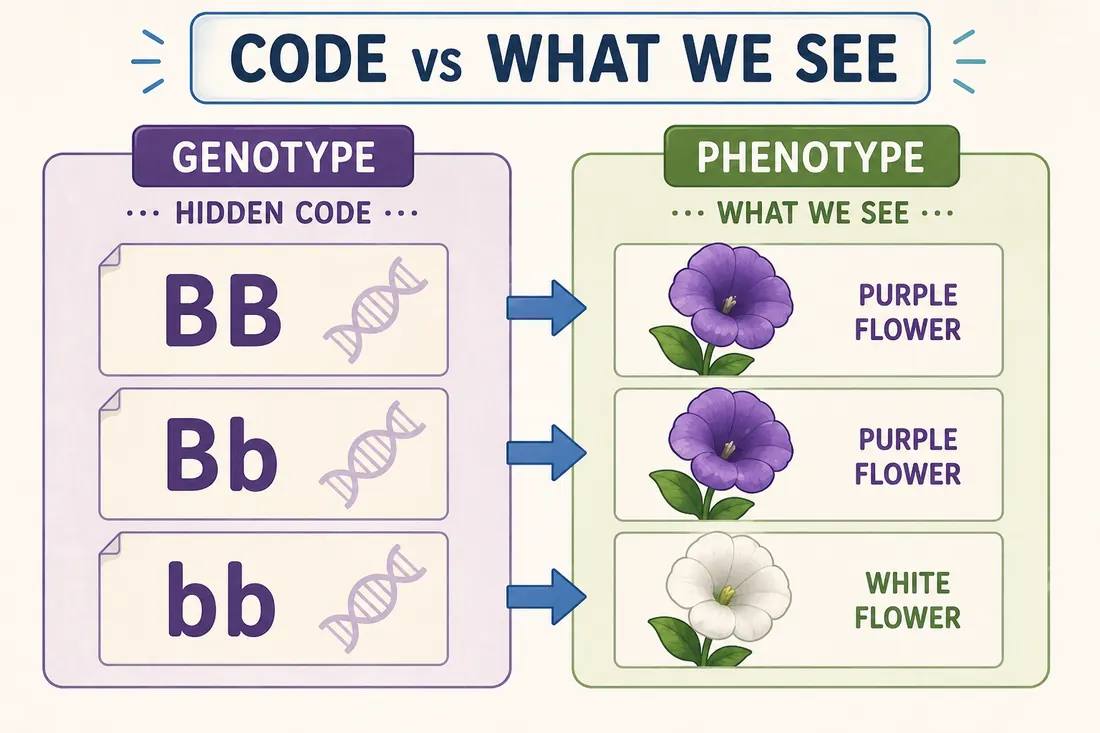
Diagram comparing genotype letter combinations with visible phenotype.
Visual from the original MOSAIC Biology worksheet, page 29.
VocabWhat it means
Genotypethe allele combination (alphabet/letters)
Phenotypethe trait we can see (explanation)

Easy explanation

Genotype Examples: BB Bb bb Phenotype means the trait we can see. Examples: purple flower white flower

Page 30

Homozygous and Heterozygous

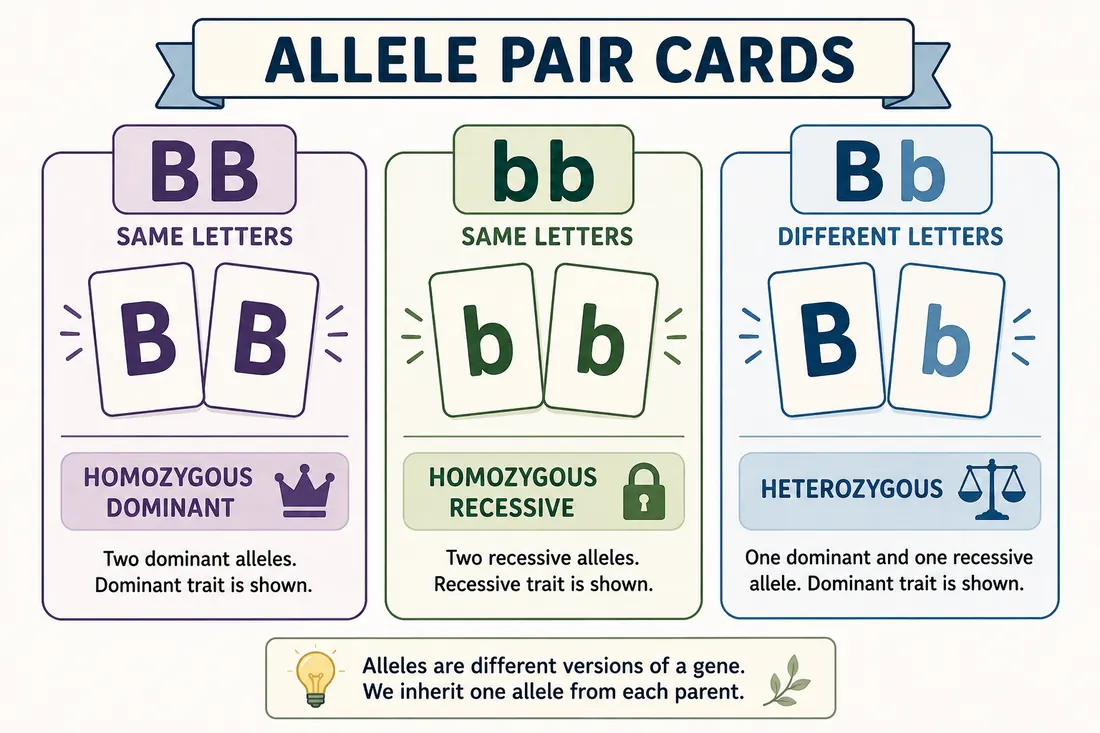
Cards comparing homozygous and heterozygous allele pairs.
Visual from the original MOSAIC Biology worksheet, page 30.
VocabWhat it means
Homozygoustwo alleles are the same
Heterozygoustwo alleles are different

Easy explanation

Homozygous means two alleles are the same. BB is homozygous. bb is homozygous. Heterozygous means two alleles are different. Bb is heterozygous.

Page 31

Dominant Does Not Mean “Common”

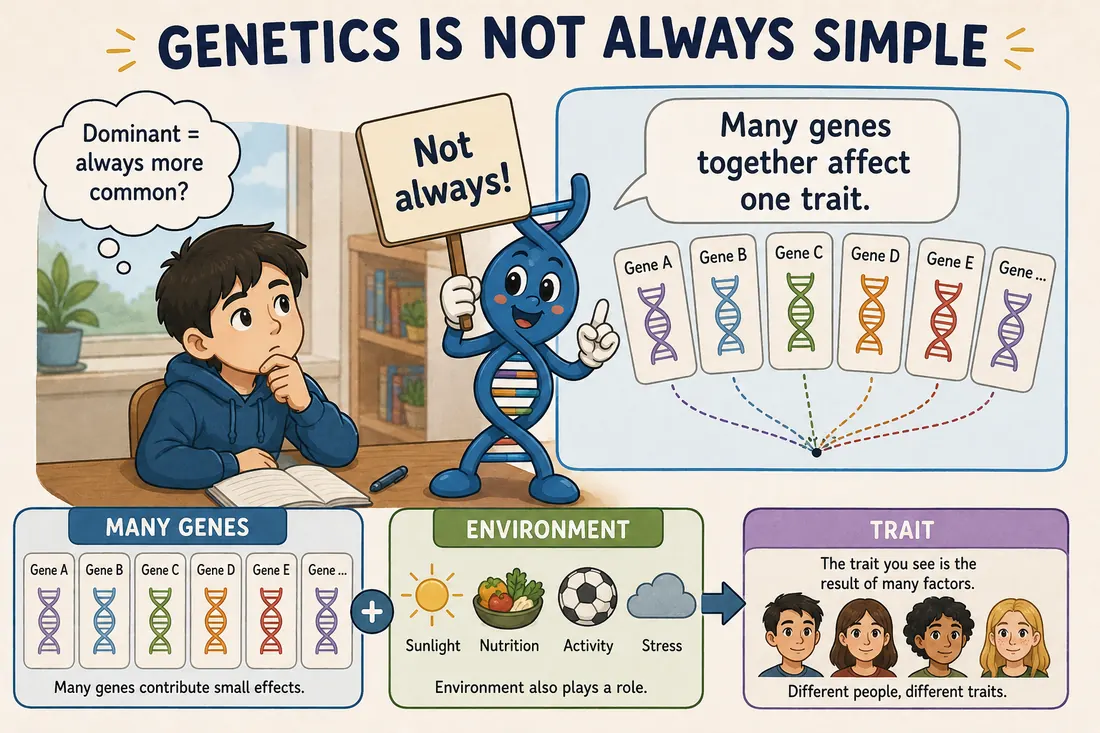
Diagram explaining that dominance is not the same as common and that many traits involve many genes and environment.
Visual from the original MOSAIC Biology worksheet, page 31.

Short explanation

Dominant does not always mean common. Dominant does not always mean better. Some traits are controlled by one gene. But many human traits are controlled by many genes. Environment can also affect traits.

Page 32

Summary

Easy explanation

DNA can copy itself. Genes are sections of DNA. Parents pass genes to offspring. Alleles are versions of genes. Alleles affect traits. Different traits create variation. Variation helps create biodiversity.
Topic 3.3

Inheritance, Variation, and Population Change

Big Question: How is genetic information passed on, and how can populations change over time?

Page 34

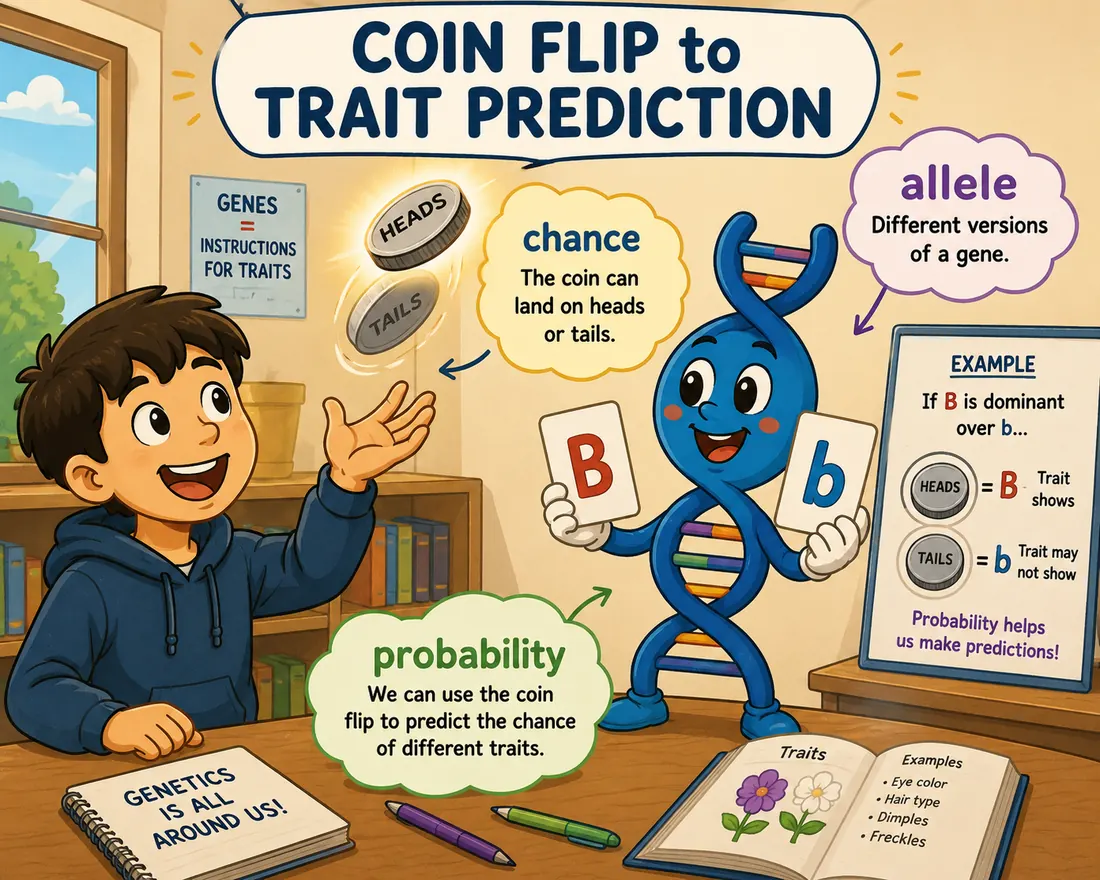
Punnett squares show the probability of traits

Coin-flip analogy connecting probability to allele combinations.
Visual from the original MOSAIC Biology worksheet, page 34.
VocabWhat it means
chancethe coin can land on heads or tails
alleledifferent versions of a gene
probabilitywe can use the coinflip to predict the chance of different traits

Easy explanation

Probability means chance. A coin flip has two possible results. Heads or tails. Alleles also have possible combinations. A Punnett square helps predict those combinations.

Page 35

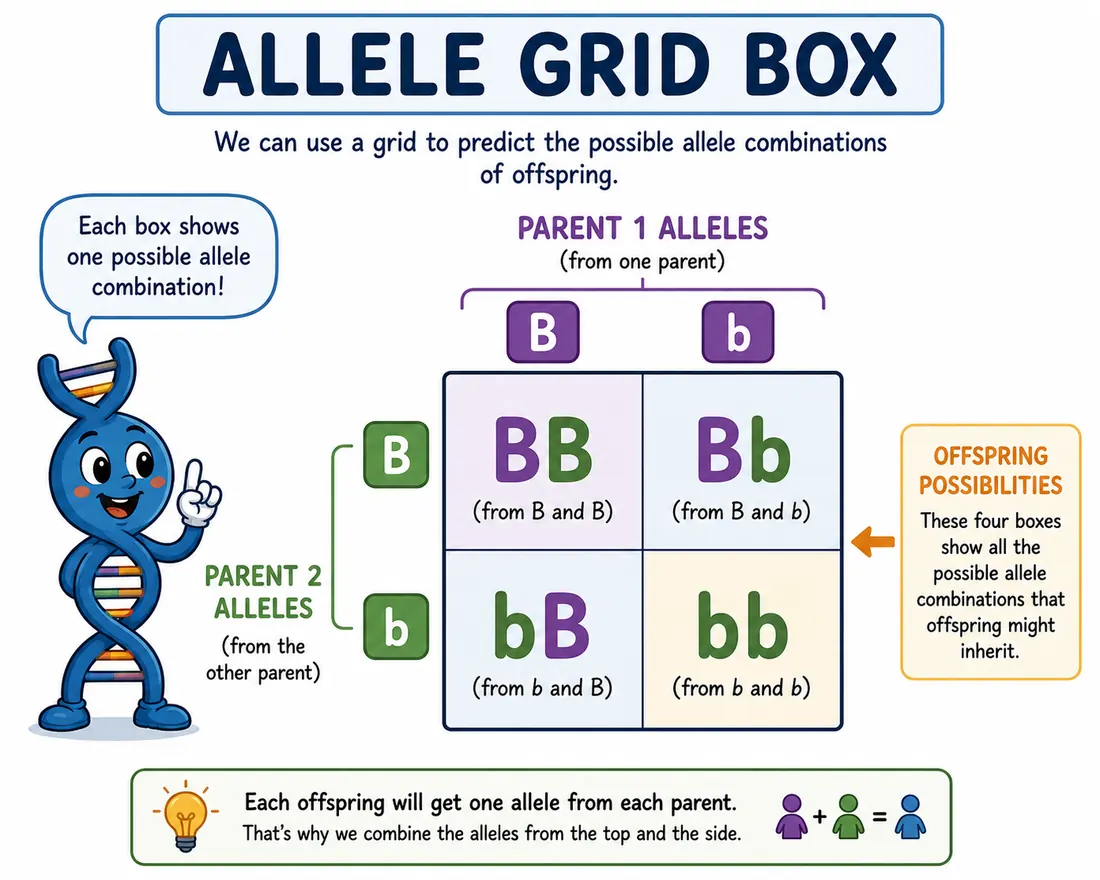
What Is a Punnett Square?

Punnett square diagram showing parent alleles and possible offspring genotypes.
Visual from the original MOSAIC Biology worksheet, page 35.

Easy Explanation

A Punnett square is a prediction tool. It shows possible allele combinations. The top (purple letters) shows alleles from one parent. The side (green letters) shows alleles from the other parent.

Page 36

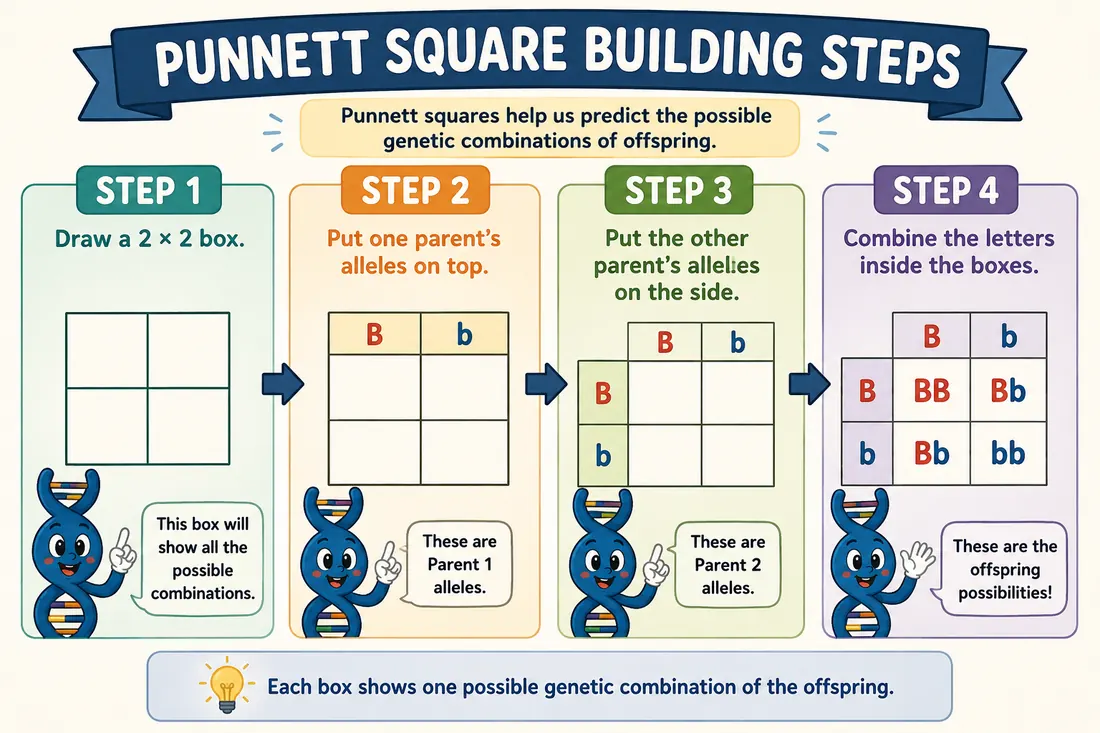
How to Fill a Punnett Square

Four-step diagram showing how to fill a Punnett square.
Visual from the original MOSAIC Biology worksheet, page 36.

Easy Explanation

Step 1: Draw a box with four squares. Step 2: Write one parent’s alleles (letters) on top. Step 3: Write the other parent’s alleles (letters) on the side. Step 4: Combine the letters in each square. Each square is one possible genotype.

Page 37

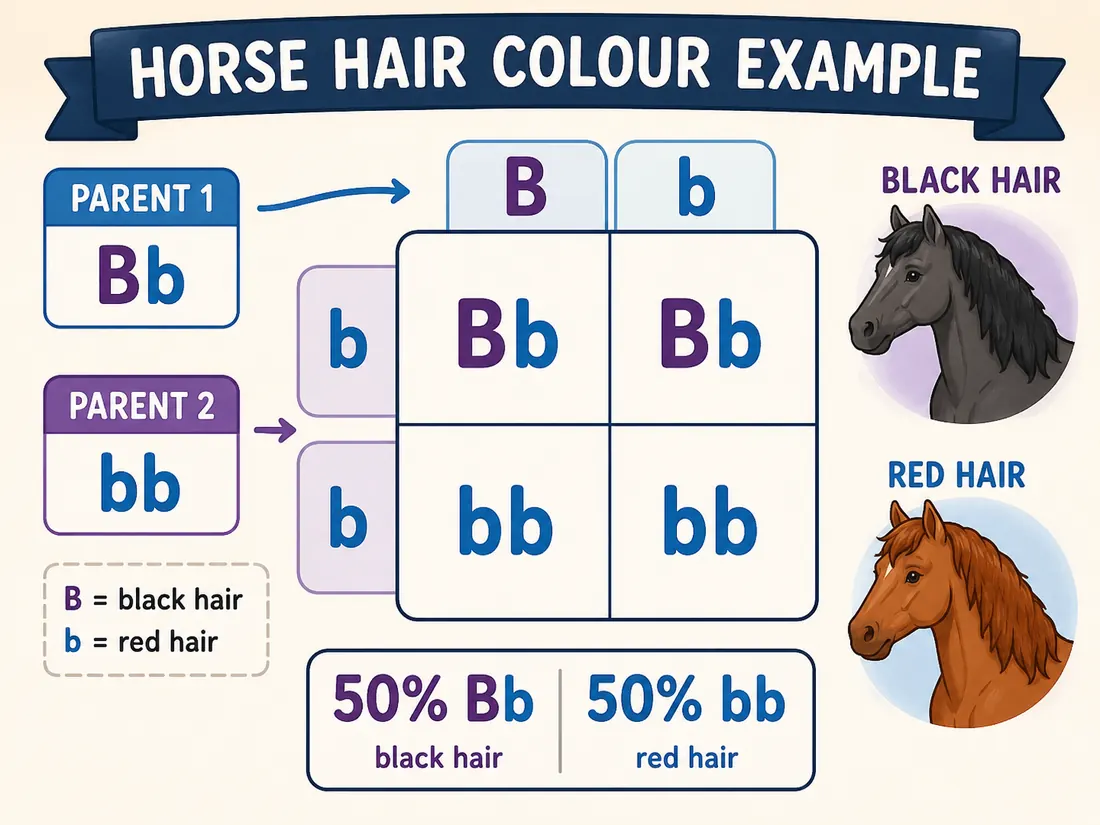
Example: Bb × bb

Horse hair-colour Punnett square example for Bb crossed with bb.
Visual from the original MOSAIC Biology worksheet, page 37.

Explanation

B = black hair allele. b = red hair allele. B is dominant. b is recessive. Bb shows black hair. bb shows red hair. This cross predicts: 50% Bb 50% bb So half may show black hair.

Page 38

Half may show red hair.

Page 39

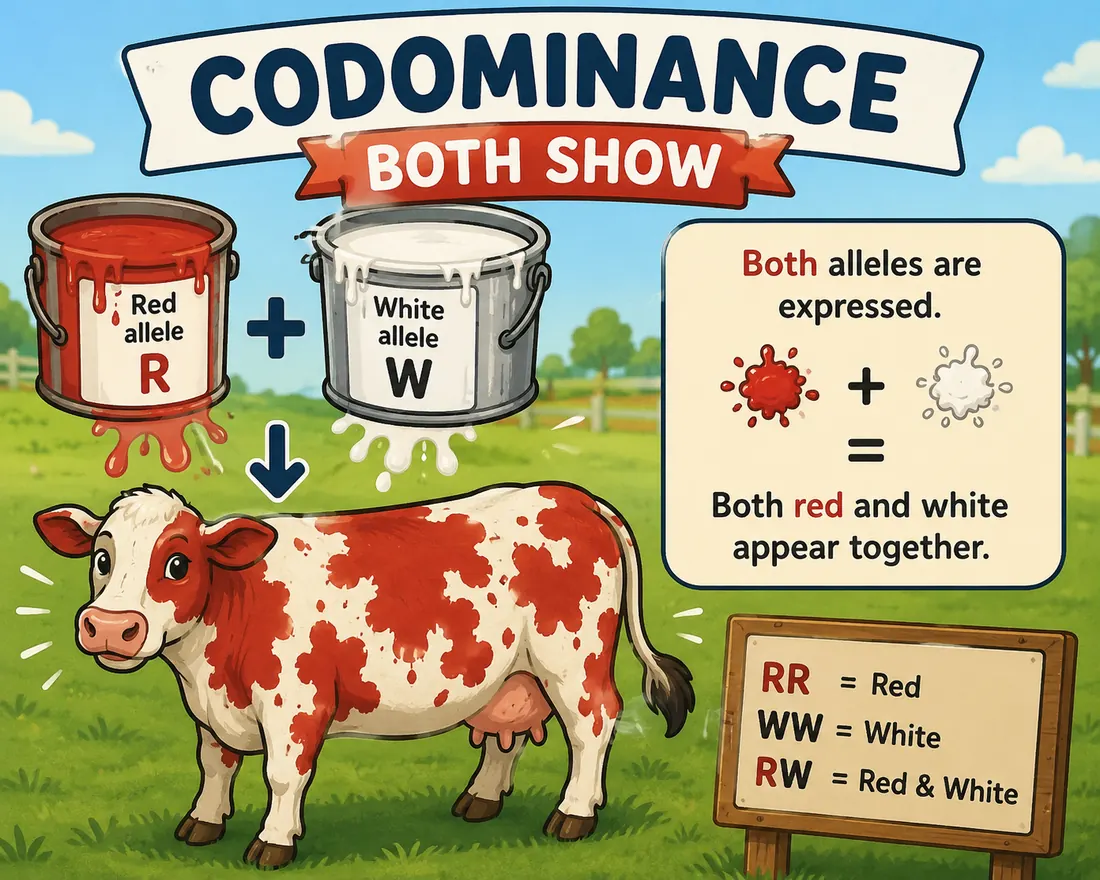
Codominance: Both Alleles Show

Cow coat-colour illustration showing codominance, with red and white appearing together.
Visual from the original MOSAIC Biology worksheet, page 39.
VocabWhat it means
DominanceOnly one alleles are expressed
BB → B (loud)
Bb → B (loud)
bb → b (quiet)
CodominanceBoth alleles are expressed
RR → R (red)
WW → W (white)
RW → RW (red + white at the same time)

Easy Explanation

In codominance, both alleles show. One allele does not hide the other.

Page 40

Example:

Red hair allele + white hair allele Both red and white hairs appear. This can make a roan animal.

Page 41

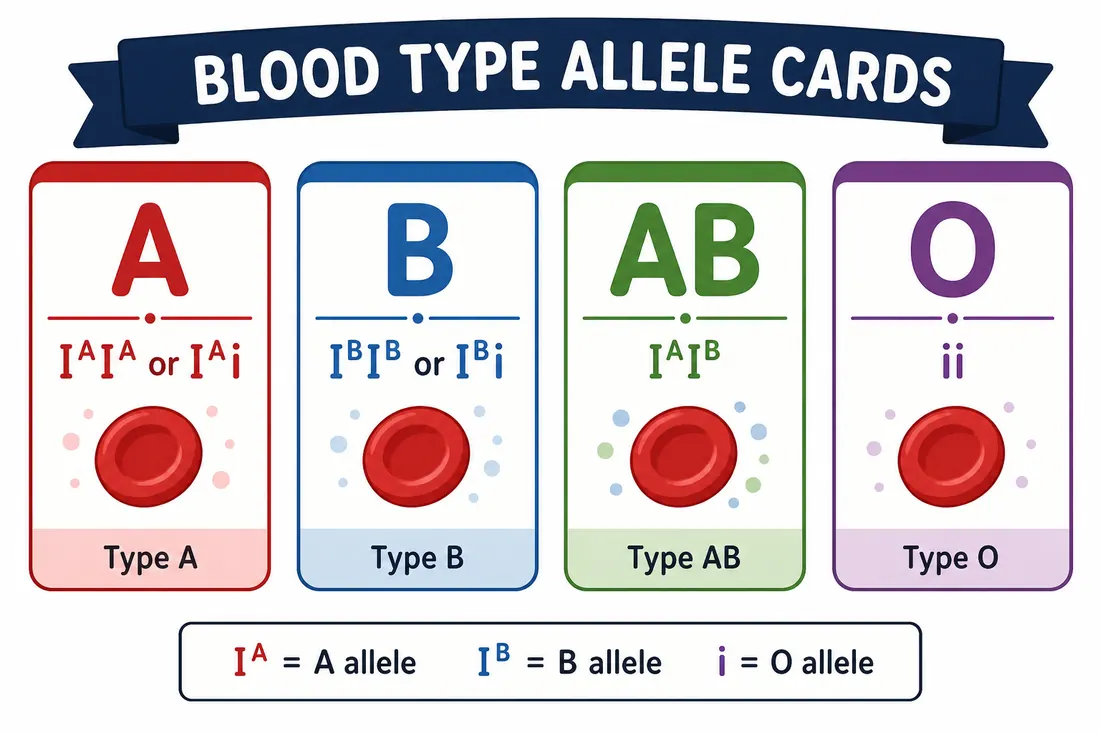
Codominance Example: Blood Type

Blood-type allele cards showing A, B, AB, and O.
Visual from the original MOSAIC Biology worksheet, page 41.

Easy explanation

Blood type is controlled by alleles. A and B are codominant. That means both can show together. Type AB shows both A and B. O is recessive. Type O appears when the genotype is ii.

Page 42

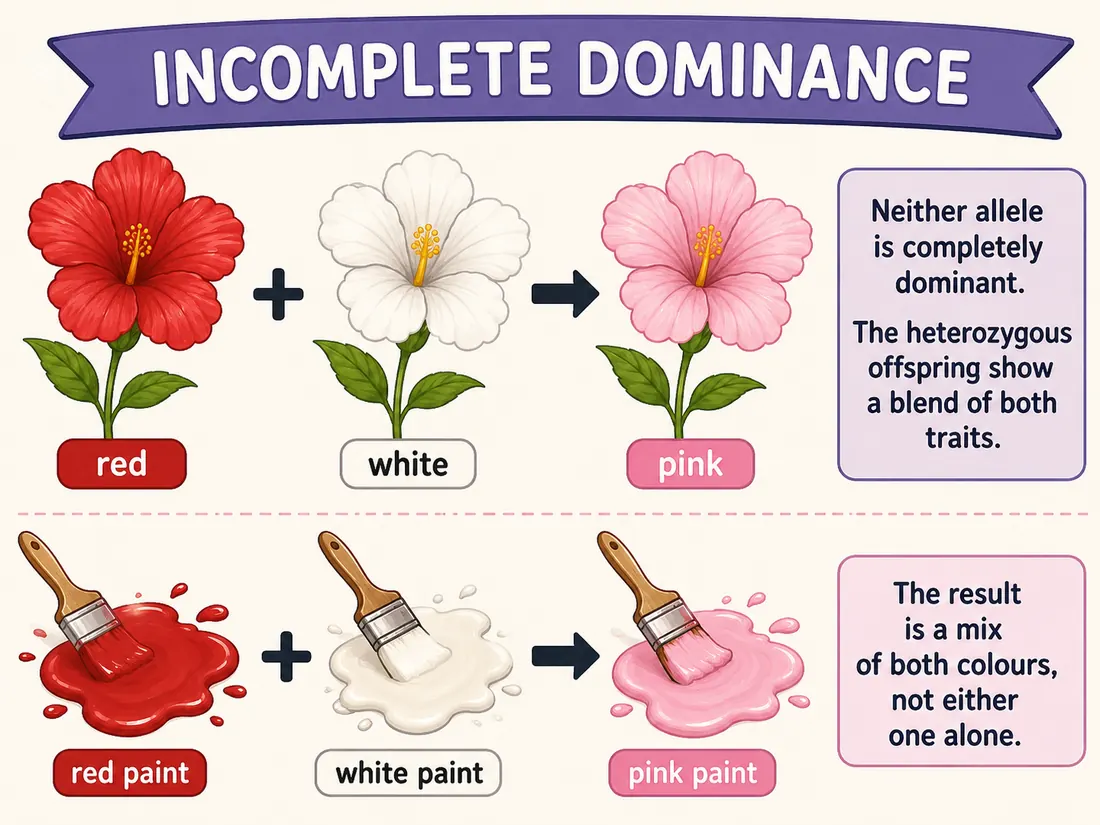
Incomplete Dominance: Blended Trait

Flower and paint illustrations showing incomplete dominance and an intermediate phenotype.
Visual from the original MOSAIC Biology worksheet, page 42.
VocabWhat it means
Incomplete dominanceneither allele fully dominates
*Both alleles are not strong enough to be alone when they are together → they get mixed

Easy Explanation

In incomplete dominance, neither allele fully hides the other. The heterozygous trait is in between. Example: Red flower × white flower → The offspring can be pink. → Pink is the blended phenotype.

Page 43

Compare Box

Pattern What happens? Heterozygous Example Dominance one allele hides another Bb = loud (one trait) Codominance both alleles show AB blood (two traits at the ame time) Incomplete dominance alleles blend RW = pink (two traits mixed)

Page 44

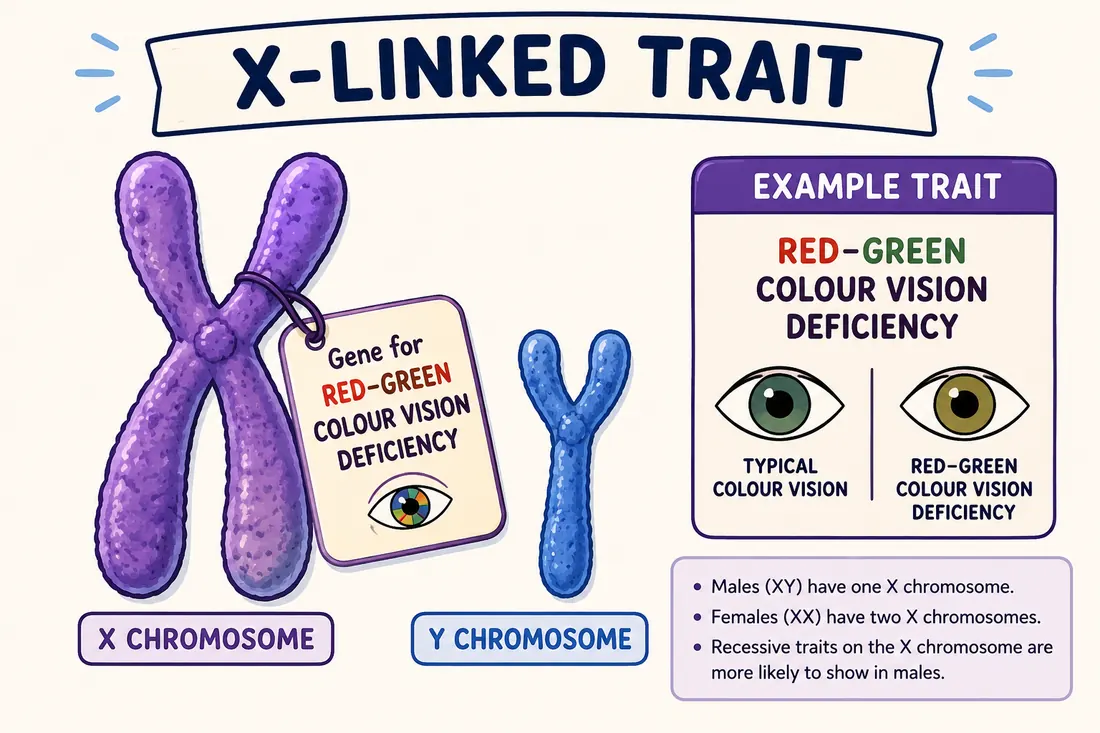
Sex-Linked Traits

X-linked trait diagram using red-green colour vision deficiency as an example.
Visual from the original MOSAIC Biology worksheet, page 44.
VocabWhat it means
sex-linked traitssome genes found on sex chromosomes
MalesX and Y chromosome
FemalesX and X chromosome

Easy explanation

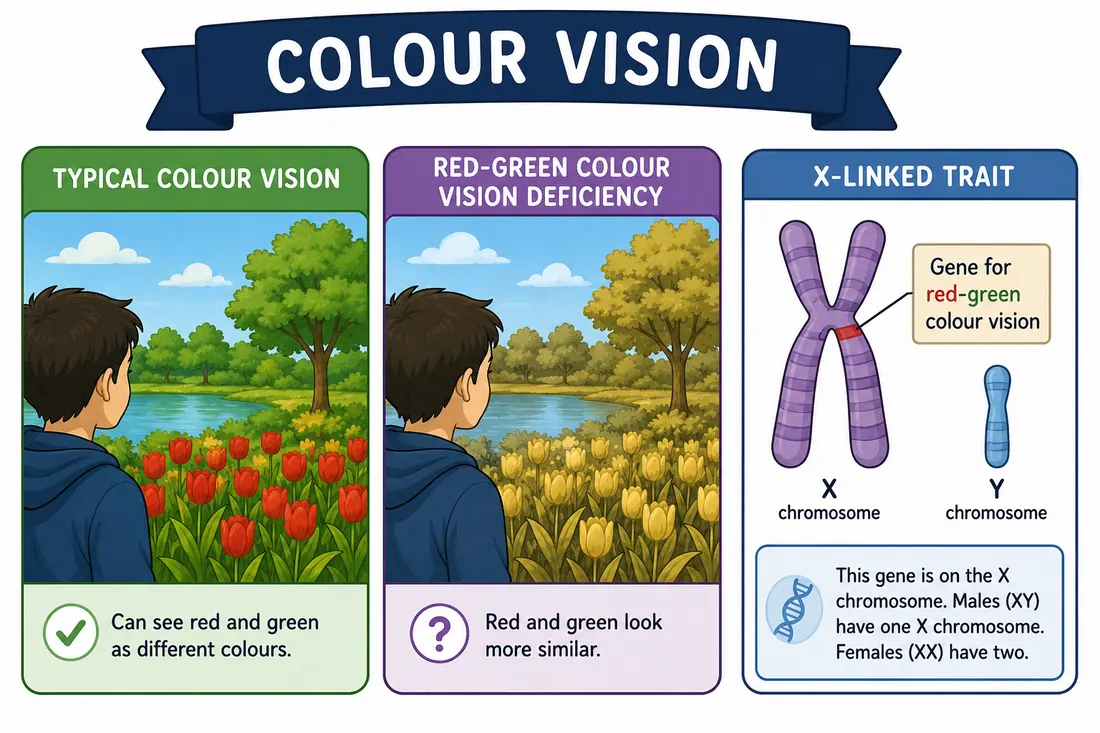
Many sex-linked traits are on the X chromosome. Males usually have one X and one Y. Females usually have two X chromosomes. Because males have only one X, recessive X-linked traits can show more often in males.

Page 45

Colour Vision Example

Comparison of typical colour vision and red-green colour vision deficiency, plus an X-linked inheritance diagram.
Visual from the original MOSAIC Biology worksheet, page 45.

Easy explanation

Some people have difficulty seeing red and green as different colours. This can be caused by an X-linked recessive allele. A male with the recessive allele on his X chromosome will show the trait. Red-green colour vision deficiency as X-linked recessive trait. A male with the recessive allele on his X chromosome will show the trait. A female may be a carrier if one X has the allele and the other X does not.

Page 46

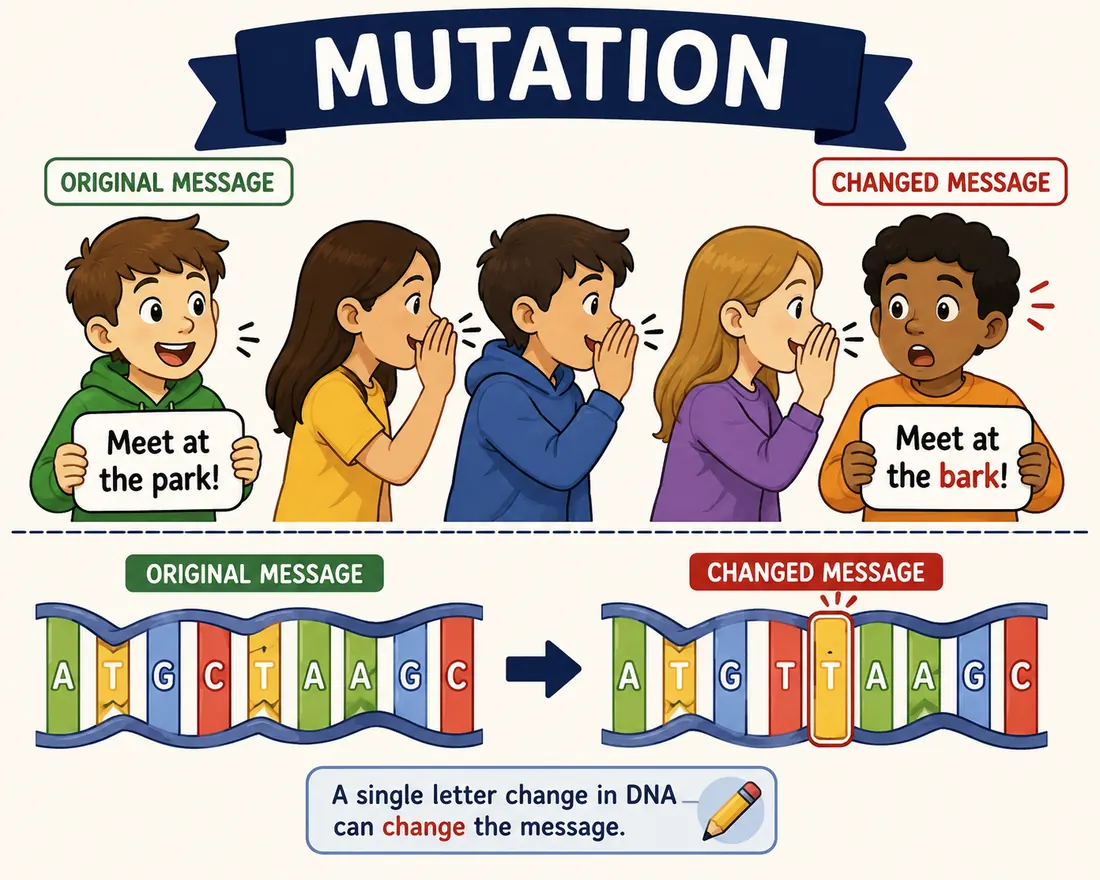
Mutation, Selection, and Population Change

Message-changing cartoon used as an analogy for mutation as a change in DNA.
Visual from the original MOSAIC Biology worksheet, page 46.
VocabWhat it means
Mutationpermanent change in DNA

Easy explanation

A mutation is a change in DNA. Sometimes the change is small. Sometimes it can affect a trait. Mutations can happen when DNA is copied. Mutations can also be caused by environmental factors.

Key Point

Not all mutations are harmful. Some are harmful. Some have no effect. Some can be helpful.

Page 47

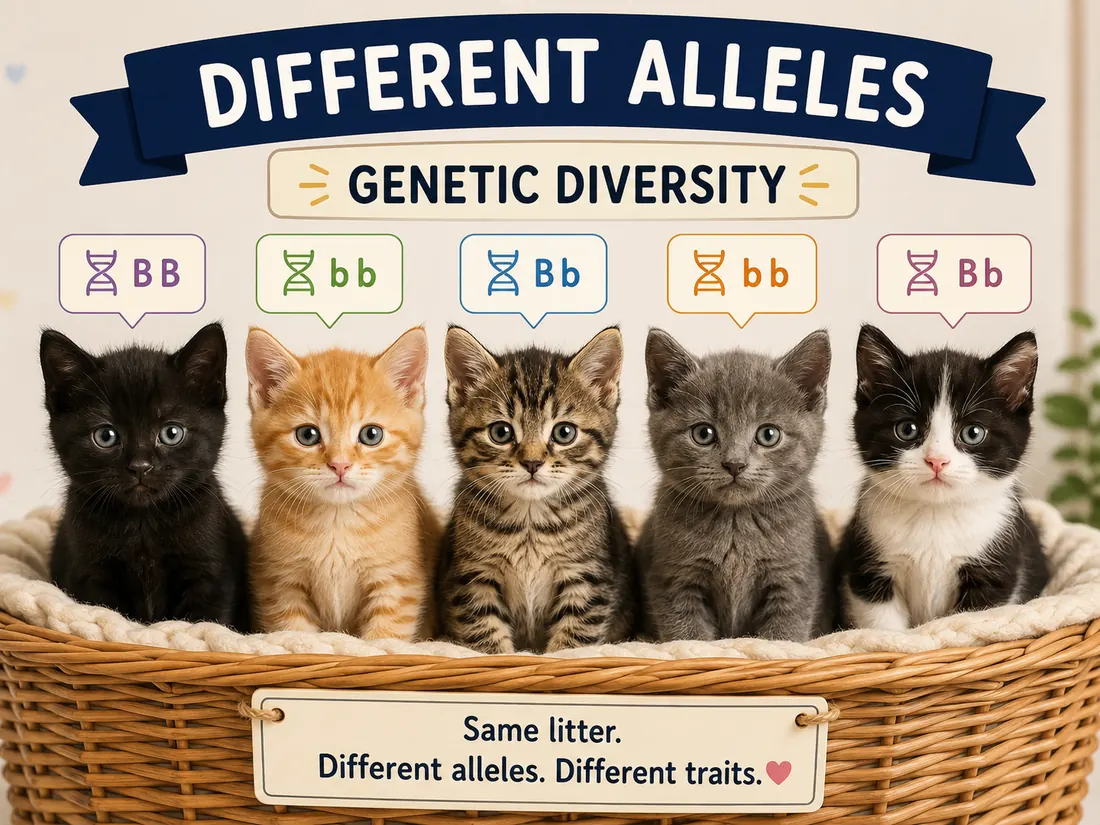
Mutation Creates Genetic Diversity

Cats with different appearances illustrating genetic diversity and different alleles.
Visual from the original MOSAIC Biology worksheet, page 47.

Easy explanation

Members of the same species can look different. This is genetic variation. Mutations can create new alleles. New alleles can add variation to a population. Variation is important for natural selection. → Mutation creates new alleles and variation in a population.

Page 48

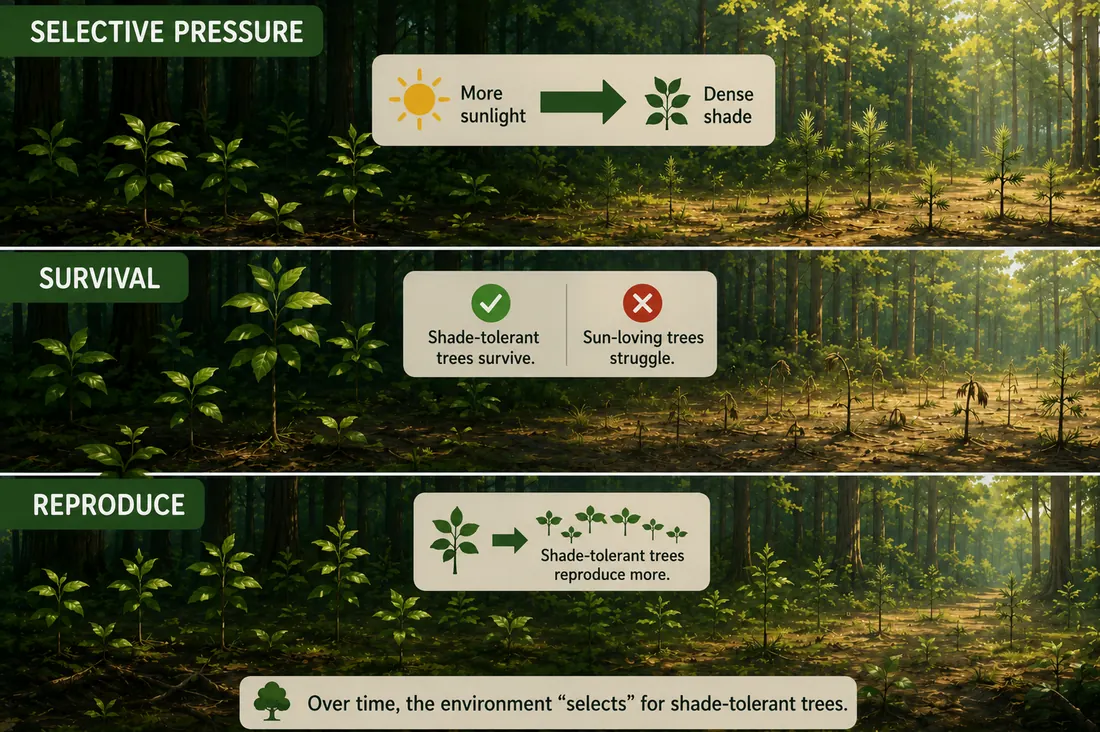
Natural Selection: Advantage in an

Forest sequence showing environmental change, survival, and reproduction under natural selection.
Visual from the original MOSAIC Biology worksheet, page 48.

Environment Natural Selection ⇒ Over time, the environment “selects” for shade-tolerant trees Selective pressure it affects an organism’s ability to survive and reproduce environment change : More sunlight → dense shade Survival staying alive shade-tolerant trees survive sun-loving trees struggle Reproduce create new offsprings shade-tolerant trees reproduce more

VocabWhat it means
Selective advantagea helpful trait
Natural selectionNature favours traits that help survival / reproduction in an environment
Page 49

Easy explanation

Natural selection happens when some traits help organisms survive. A helpful trait is called a selective advantage. Organisms with helpful traits are more likely to survive. They are more likely to reproduce. Their alleles can become more common over generations.

Important Line

Natural selection acts on populations, not just one individual.

Page 50

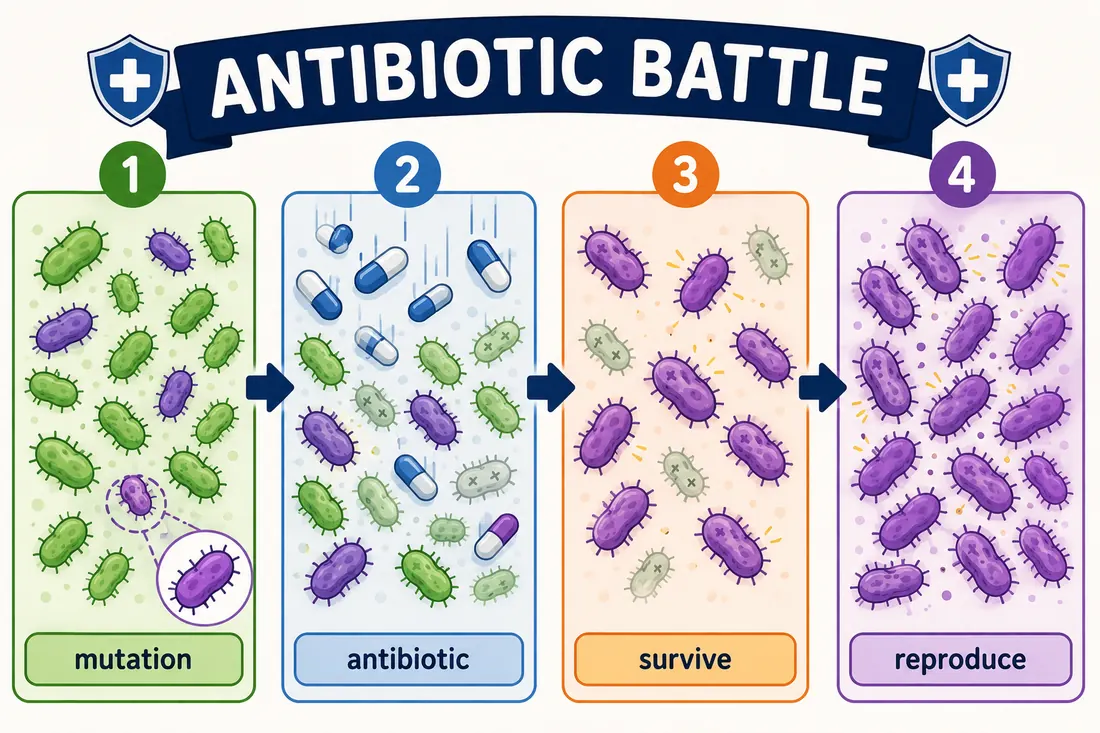
Antibiotic Resistance Example

Antibiotic resistance sequence showing mutation, antibiotic exposure, survival, and reproduction.
Visual from the original MOSAIC Biology worksheet, page 50.

Mutation Antibiotic Survive Reproduce green bacteria become purple bacteria - medicine (killing bacteria) is injected - medicine removes green bacteria purple bacteria survived from the medicine purple bacteria reproduce (make more offsprings)

Easy explanation

Some bacteria may have a mutation. The mutation can make them resistant to an antibiotic (medicine). When antibiotics are used, non-resistant bacteria die. Resistant bacteria survive. They reproduce quickly. Over time, the population changes.

Page 51

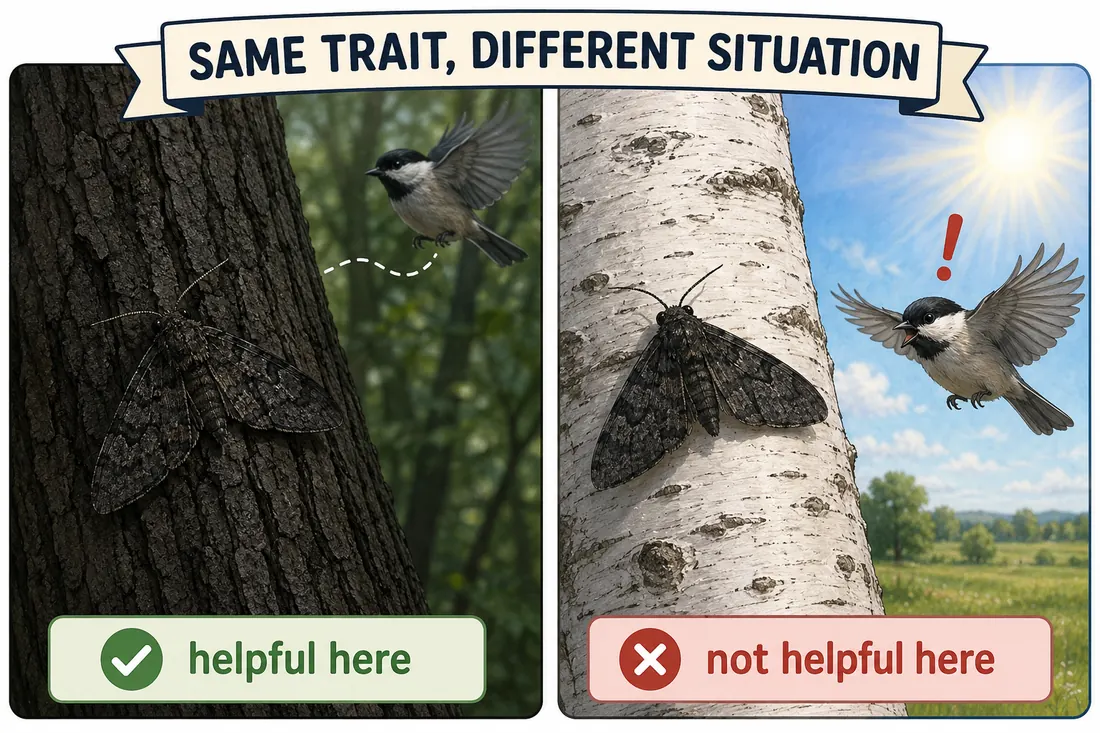
Natural Selection Is Situational

Dark moth shown on dark and light tree bark to illustrate that selective advantage depends on environment.
Visual from the original MOSAIC Biology worksheet, page 51.

Same trait - dark color Helpful here Dark color is helpful to hide because the tree (environment) is also dark Not helpful here Dark color is not helpful here to hide because the tree (environment) is white The color makes it easier to be detected by birds (predator)

Easy Explanation

A trait can be helpful in one environment but not helpful in another. Natural selection has no plan. It depends on the environment. A trait can be helpful in one place. The same trait may not help in another place.

Page 52

If the environment changes, the advantages can change too.

Page 53

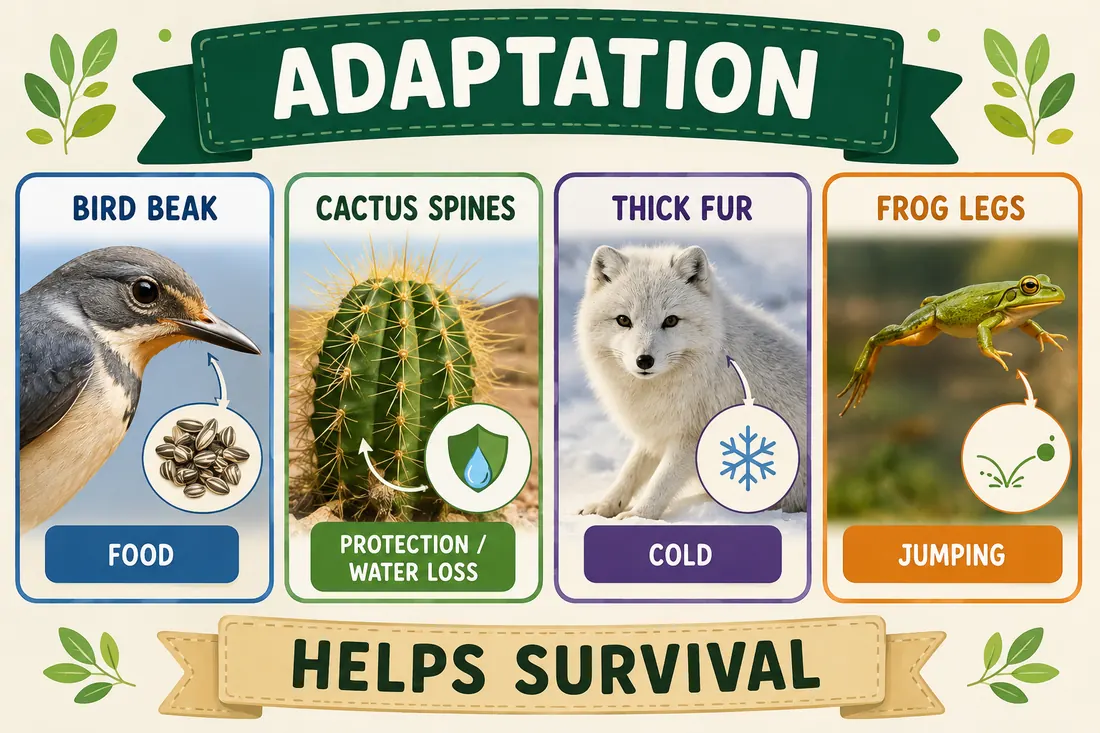
Adaptation

Examples of adaptations including bird beak, cactus spines, thick fur, and frog legs.
Visual from the original MOSAIC Biology worksheet, page 53.
VocabWhat it means
Adaptationstructure/behaviour/process that helps survival and reproduction

Easy explanation

Adaptations can be: body structures behaviours body processes Examples: Bird beaks help birds eat certain food. Thick fur helps animals stay warm. Cactus spines help protect the plant.

Page 54

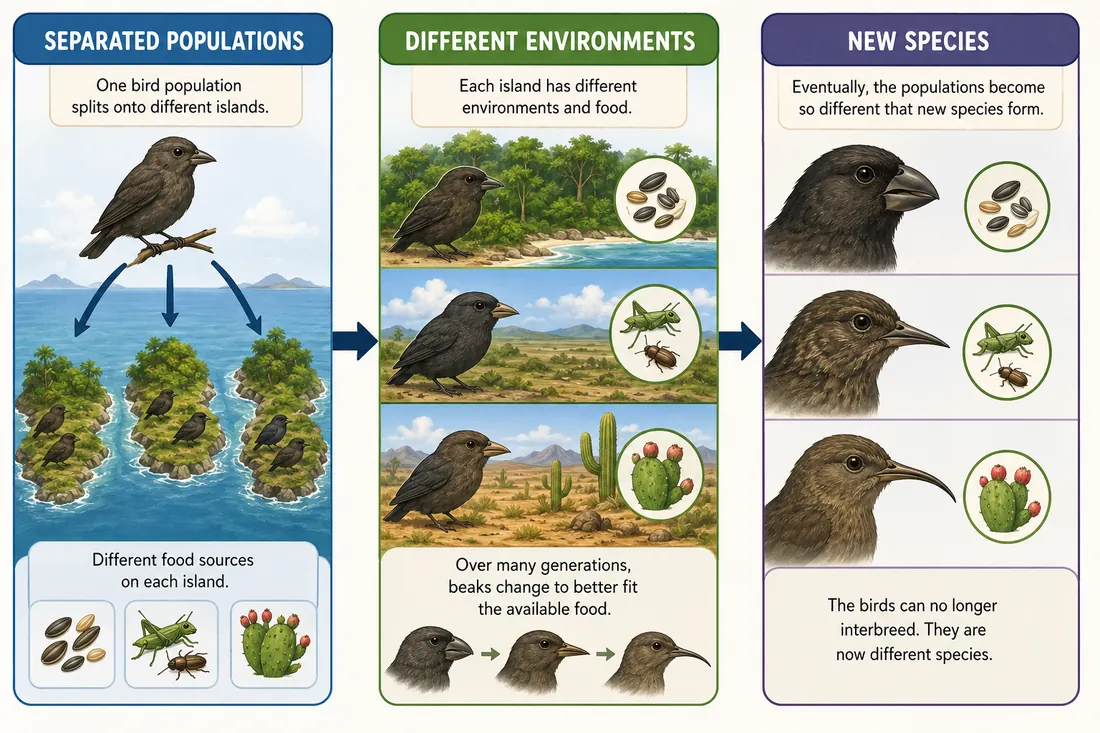
Speciation: New Species Can Form

Bird populations on different islands illustrating separation, different environments, and formation of new species.
Visual from the original MOSAIC Biology worksheet, page 54.

Separated population Different environment New species One bird population splits onto different islands Each island has different food sources Each island has different environments and food Over many generations, beaks change to better fit the available food. Eventually, the populations become so different that new species form. The birds can no longer interbreed. They are now different species.

VocabWhat it means
SpeciationBecause of different environments, populations can become very different and become new species over many generations

Easy explanation

A species is a group that can reproduce and have fertile offspring. Sometimes populations become separated.

Page 55

Different environments create different selective pressures.

Over many generations, populations can become very different. They may become new species. This is called speciation (When populations become separated and change over time, new species form)

Page 56

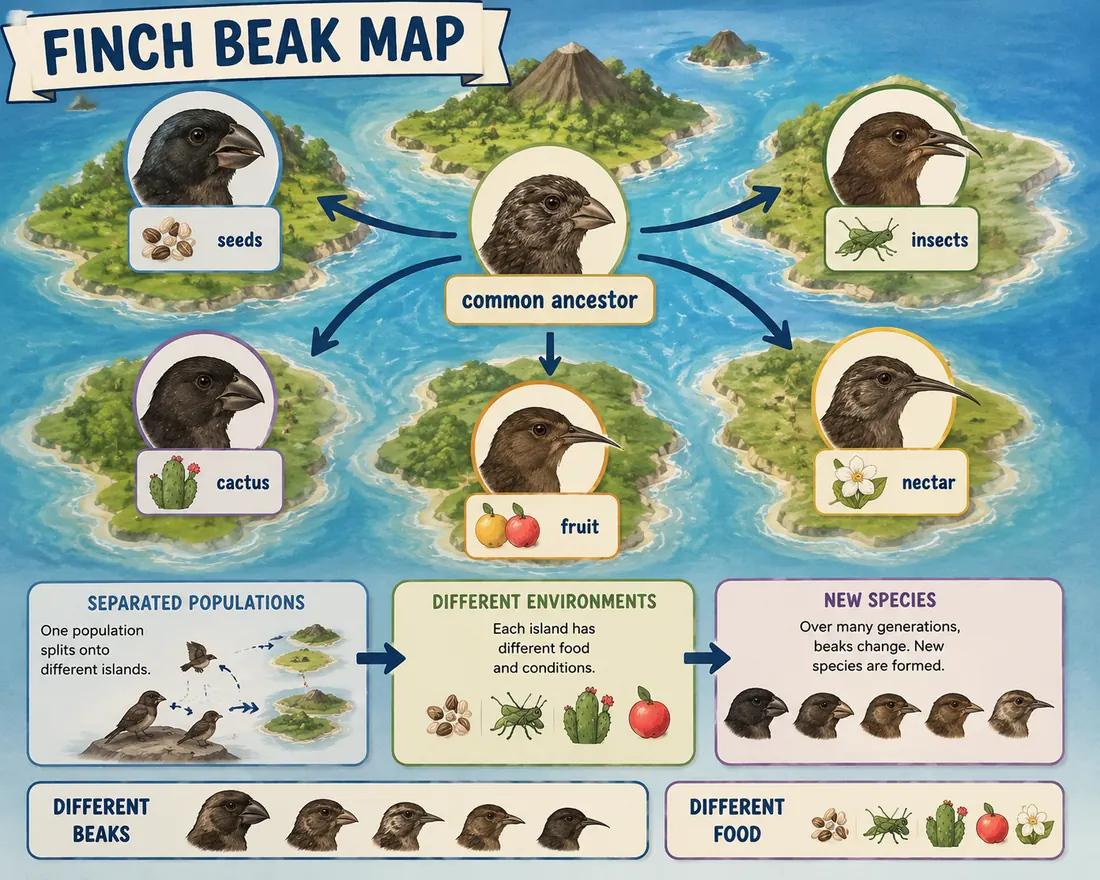
Adaptive Radiation

Finch beak map illustrating adaptive radiation from a common ancestor into different environments.
Visual from the original MOSAIC Biology worksheet, page 56.
VocabWhat it means
Adaptive RadiationIt happens when one ancestral species becomes many species

Easy explanation

This often happens when organisms move into different environments. Different environments favour different traits. Example: Galapagos finches have different beak shapes. Different beaks help them eat different foods.

Page 57

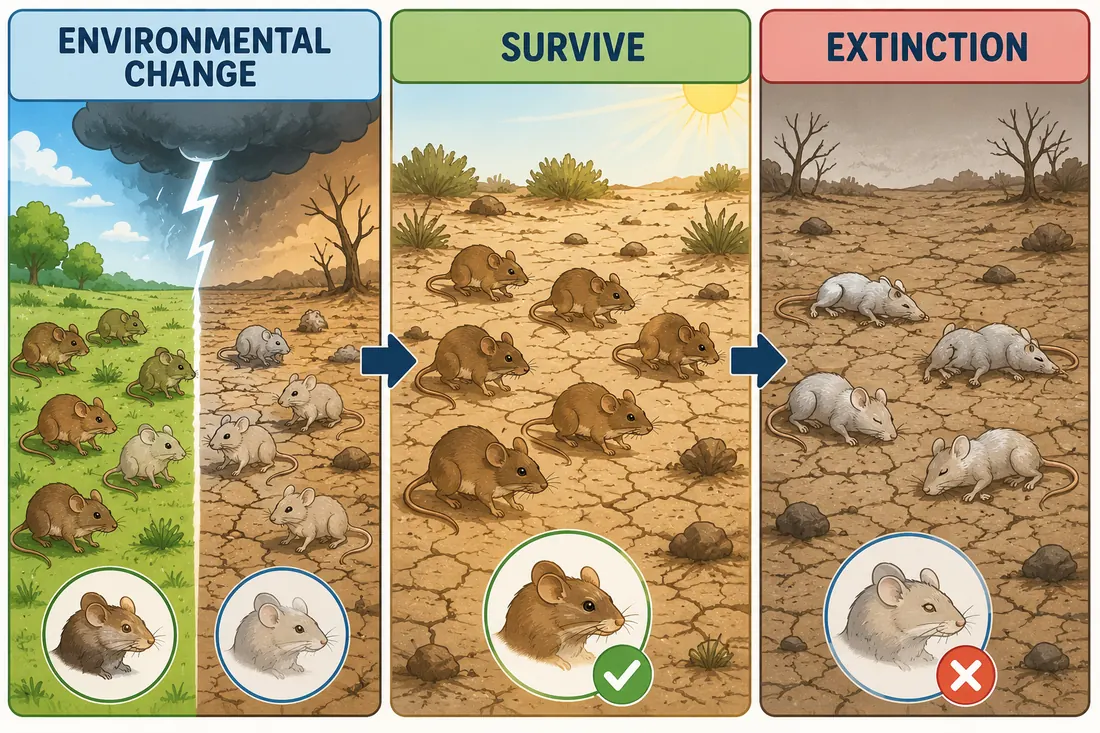
Extinction and Selective Pressure

Environmental-change sequence showing survival and extinction outcomes.
Visual from the original MOSAIC Biology worksheet, page 57.
VocabWhat it means
Extinctionwhen a species disappears from Earth

Easy explanation

Selective pressure can help new species form. But it can also lead to extinction. If a population cannot survive a changed environment (selective pressure), it may die out.

Page 58

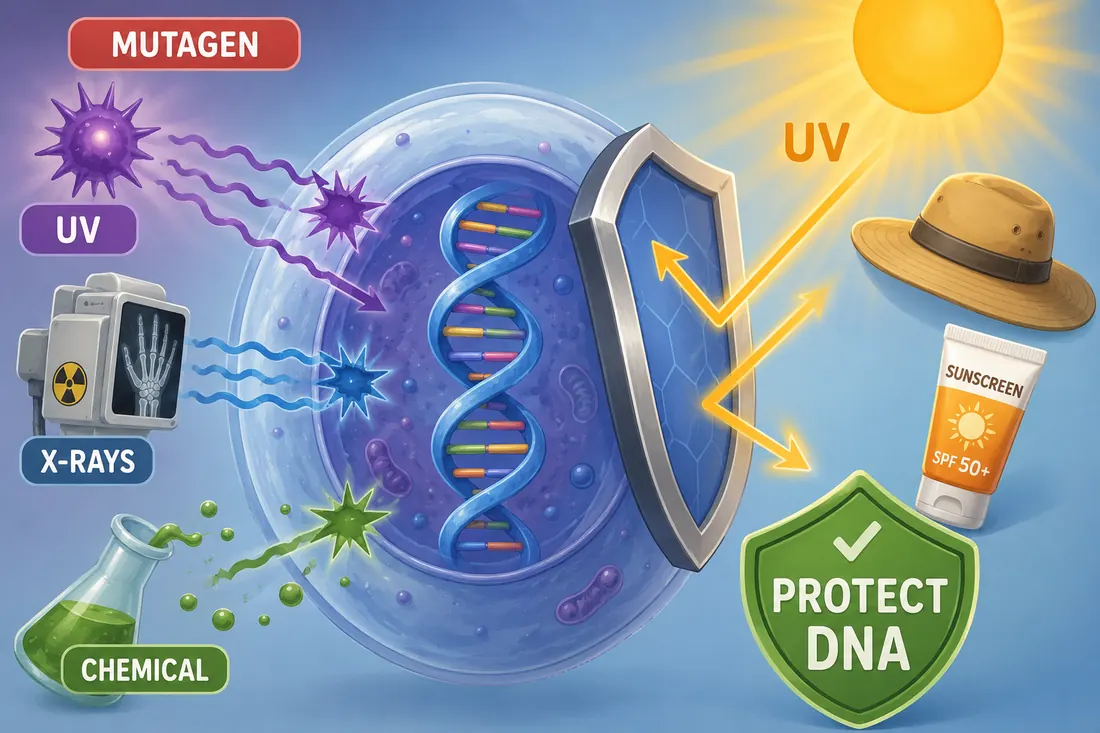
Environmental Factors Can Cause Mutations

Diagram showing mutagens such as UV, X-rays, and chemicals, plus ways to reduce UV exposure.
Visual from the original MOSAIC Biology worksheet, page 58.
VocabWhat it means
Mutagensomething that increases the chance of mutation
Carcinogensomething that can cause cancer

Easy explanation

Examples: UV radiation X-rays some chemicals Some mutagens are carcinogens. A carcinogen is something that can cause cancer. UV radiation can increase the risk of skin cancer. Sunscreen and shade can reduce UV exposure.

Page 59

Final Summary

Explanation

Genes are passed from parents to offspring. Alleles affect traits. Punnett squares predict possible offspring genotypes. Mutations create new alleles. New alleles create variation. Natural selection acts on variation. Over time, populations can change. Sometimes new species form. Sometimes species go extinct.

Topic 3.4

Biotechnology

Big Question: How can DNA technology be used, and what questions can it raise?

Page 60

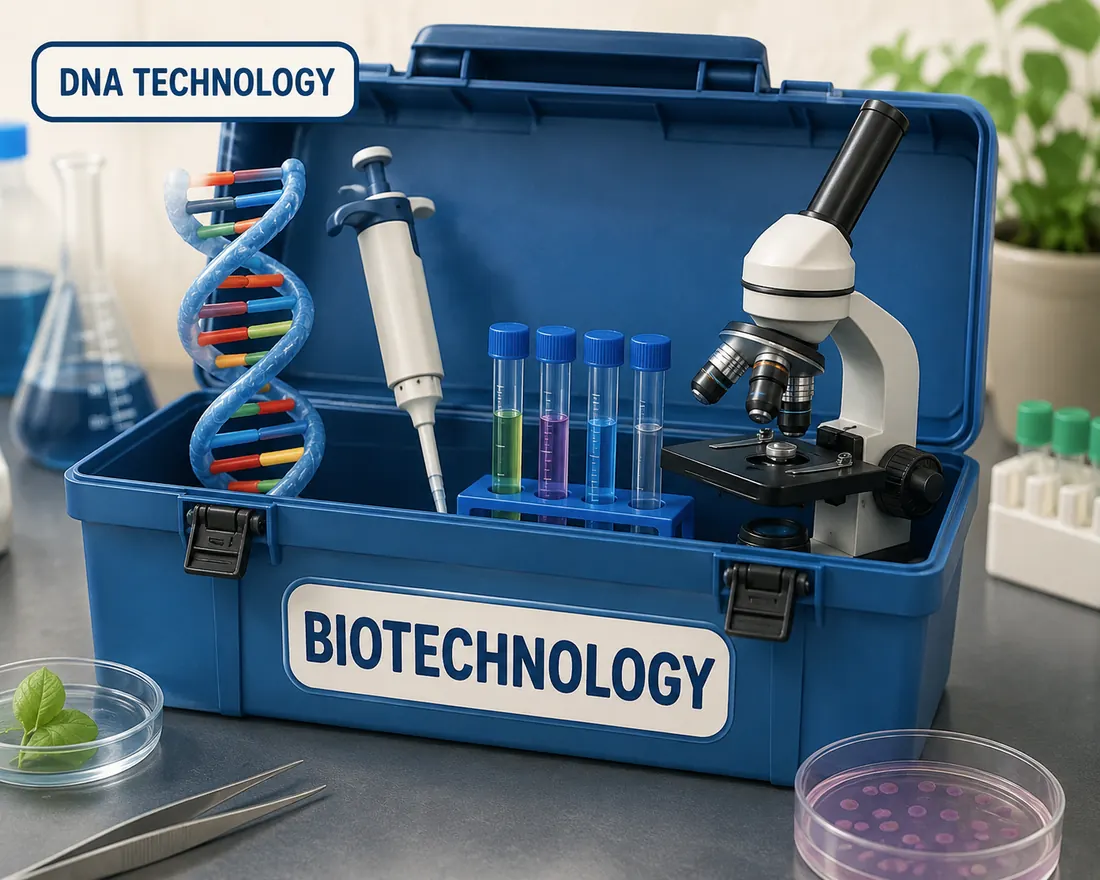
What Is Biotechnology?

Biotechnology toolkit illustration with laboratory equipment and DNA technology.
Visual from the original MOSAIC Biology worksheet, page 60.
VocabWhat it means
BiotechnologyUsing living things or DNA technology to make useful products

Easy explanation

Utilizing biotechnology, scientists can: copy DNA change DNA move DNA into another organism This can help with food, medicine, farming, and disease testing.

Page 61

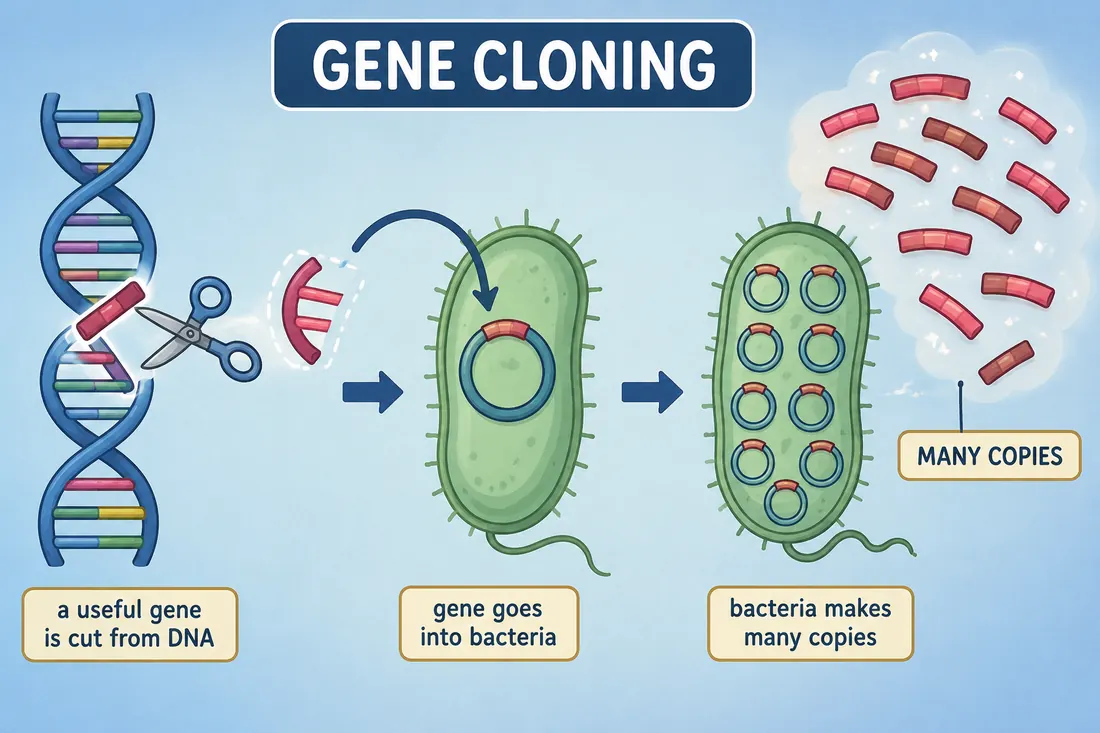
Gene Cloning: Copying DNA

Gene-cloning diagram showing a useful gene inserted into bacteria and copied many times.
Visual from the original MOSAIC Biology worksheet, page 61.
VocabWhat it means
Gene cloningCopying a gene many times
GeneA section of DNA

Explanation

Gene cloning means copying a gene many times. A gene is a section of DNA. Scientists can place a gene into bacteria. The bacteria can copy the gene. Sometimes bacteria can also make a useful protein. Example: A copied insulin gene can help make insulin.

Page 62

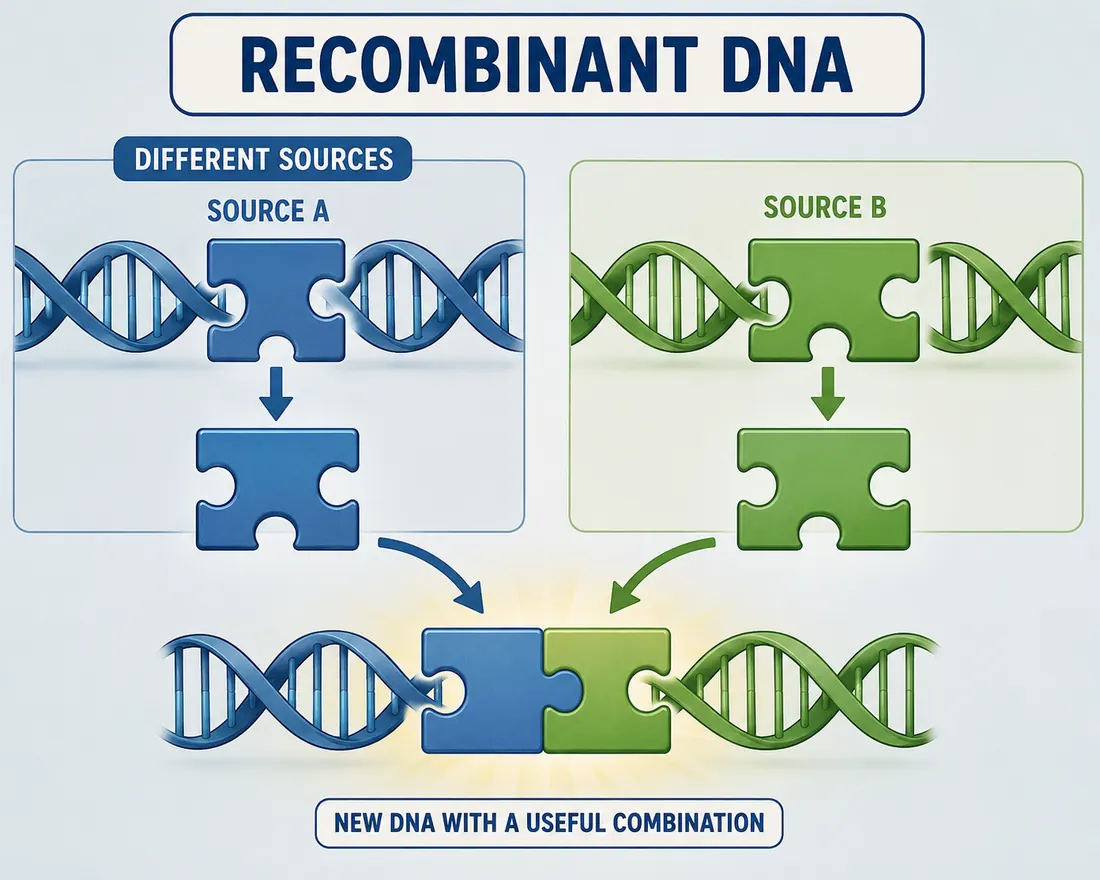
Recombinant DNA

Puzzle-piece diagram showing recombinant DNA made by joining DNA from different sources.
Visual from the original MOSAIC Biology worksheet, page 62.
VocabWhat it means
Recombinant DNADNA made from different sources

Easy explanation

Recombinant DNA is DNA made from different sources. Think of it like combining puzzle pieces. One DNA piece can be joined with another DNA piece. This can create DNA with a new instruction.

Page 63

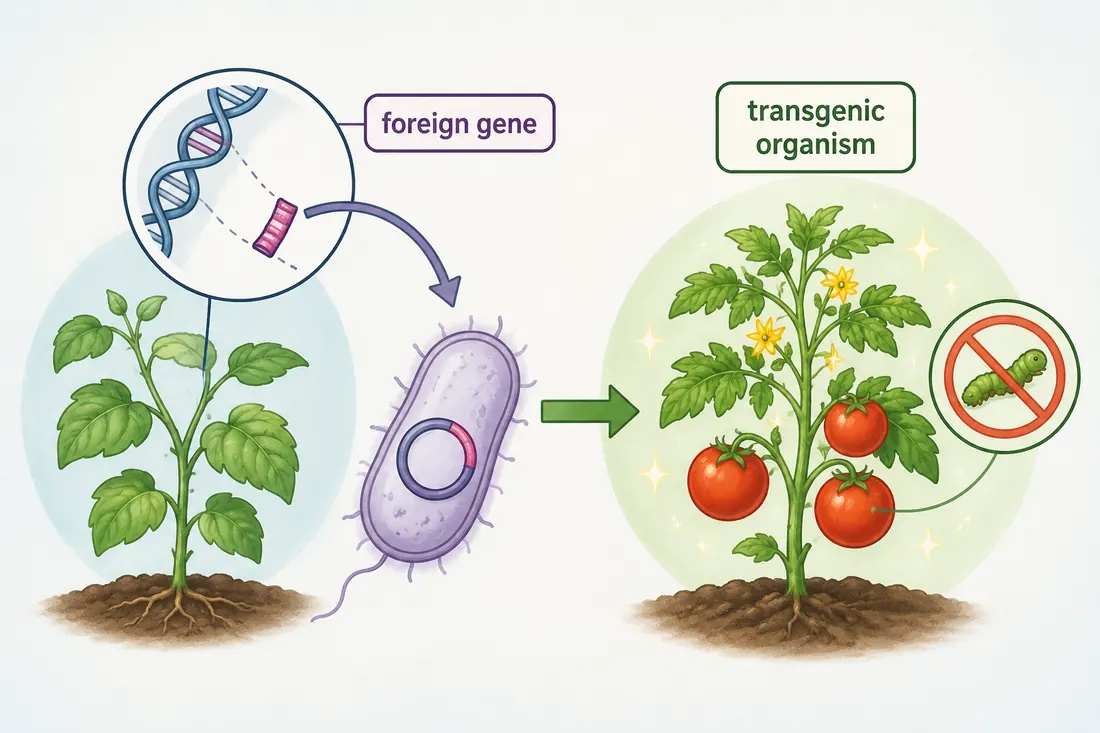
Transgenic Organisms

Plant diagram showing a transgenic organism with DNA from another source and insect resistance.
Visual from the original MOSAIC Biology worksheet, page 63.

The visual above shows a transgenic organism resisting to harmful insects.

VocabWhat it means
Transgenic organismDNA from another organism
Carcinogensomething that can cause cancer

Easy explanation

A transgenic organism has DNA from another organism. Scientists add a useful gene. That gene can give the organism a new trait. Example: A plant may get a gene that helps it resist insects.

Page 64

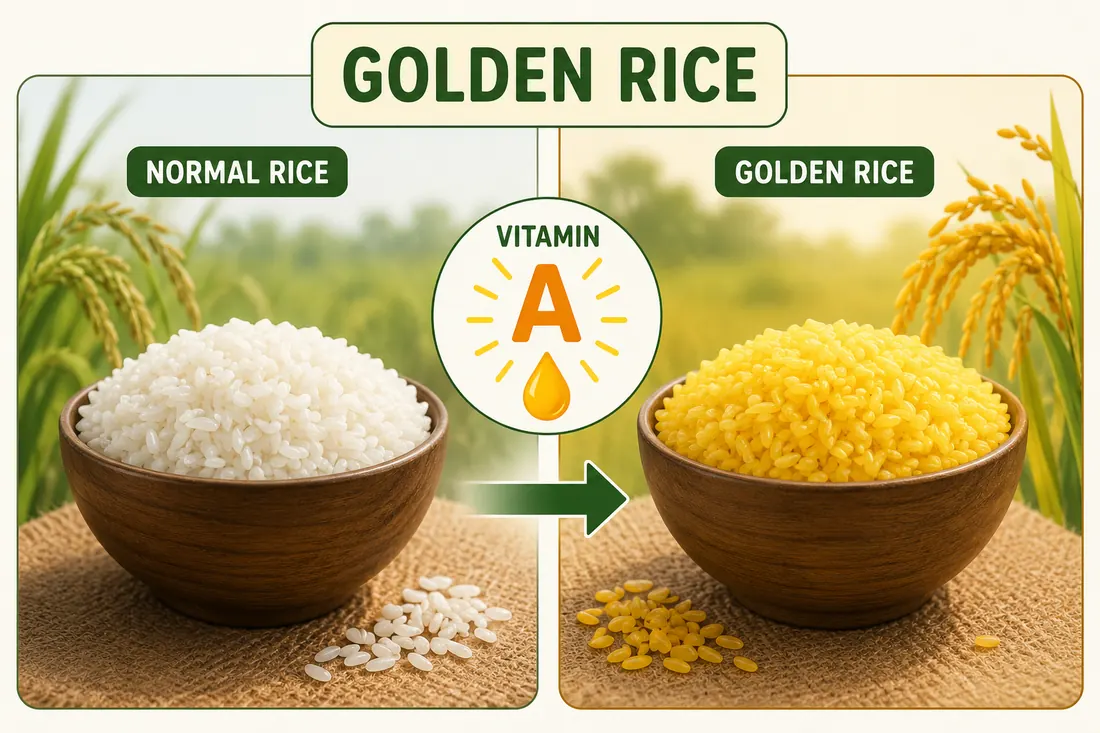
Transgenic Plants: Golden Rice

Comparison of normal rice and golden rice enriched with vitamin A.
Visual from the original MOSAIC Biology worksheet, page 64.
VocabWhat it means
Golden riceRice changed to add more nutrition (vitamin A) after genetic modification

Easy explanation

Some plants are genetically modified. Golden rice is rice changed to add more nutrition. It can help provide vitamin A. This is an example of using DNA technology for food and health.

Page 65

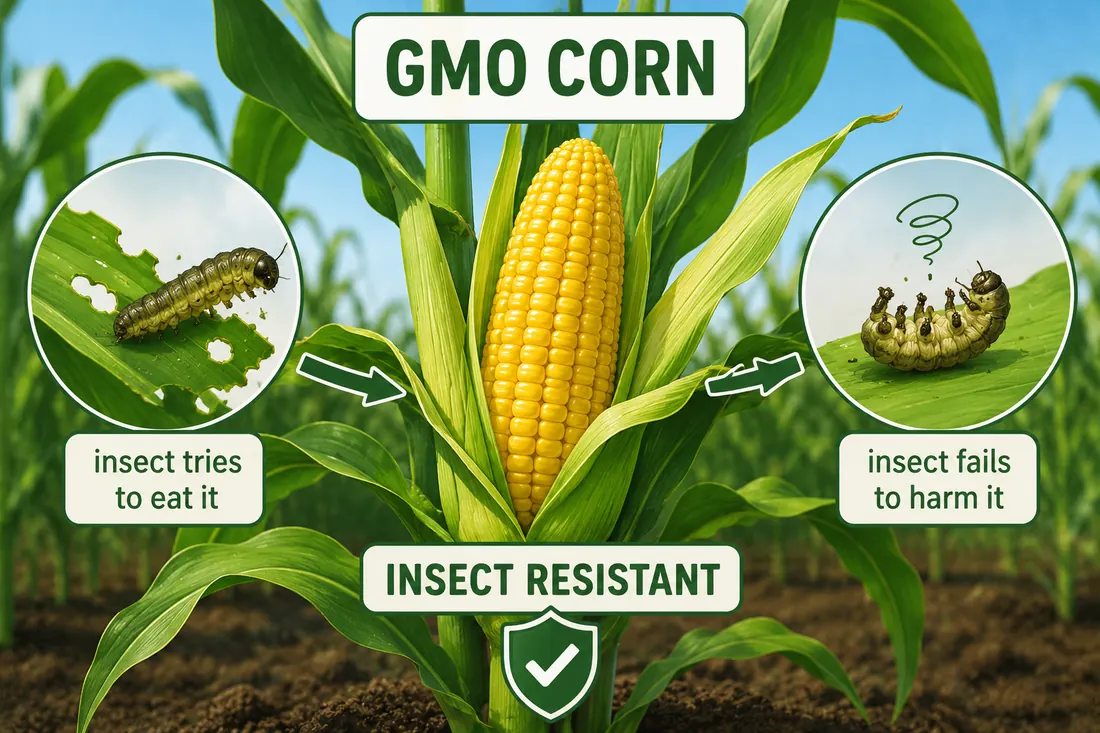
Transgenic Plants: Insect-Resistant Corn

Corn plant illustration showing insect-resistant genetically modified corn.
Visual from the original MOSAIC Biology worksheet, page 65.

Explanation

Some crops are changed to resist insects. This can protect crops. It can help farmers grow more food. But scientists also need to study possible effects on ecosystems.

Page 66

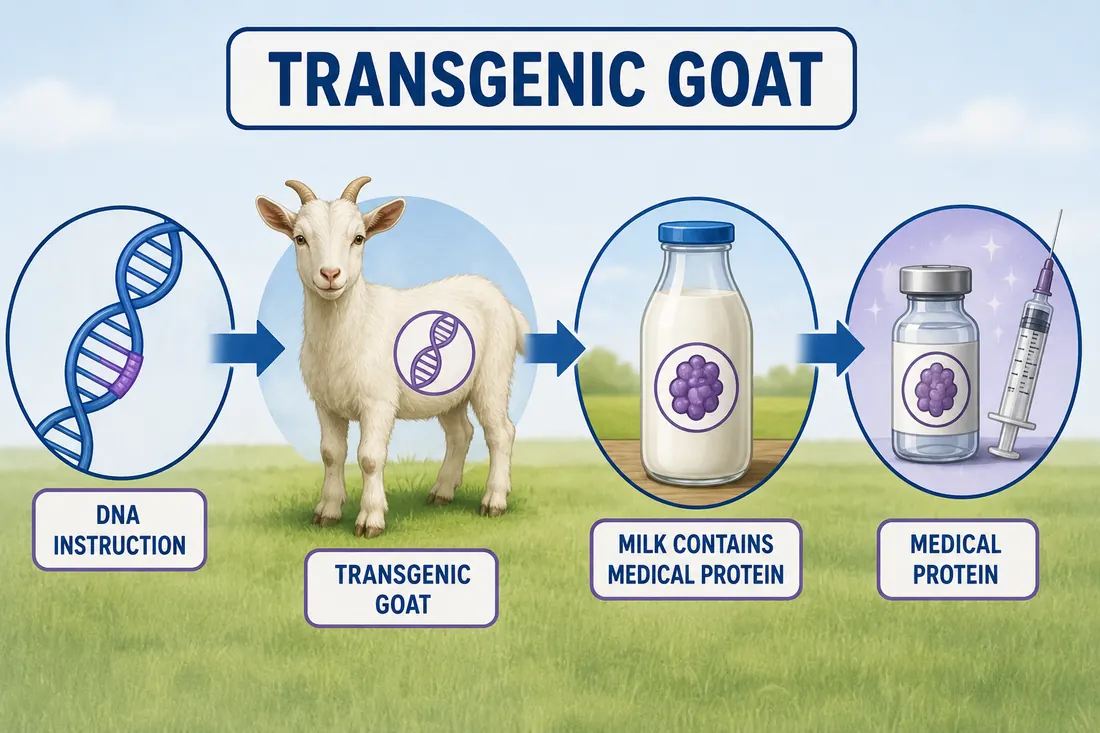
Transgenic Animals

Diagram showing a transgenic goat producing a medical protein in milk.
Visual from the original MOSAIC Biology worksheet, page 66.

Easy explanation

Some animals can be genetically modified. They may produce useful proteins. Example: A goat can produce a medical protein in its milk. This protein may be used for medicine.

Page 67

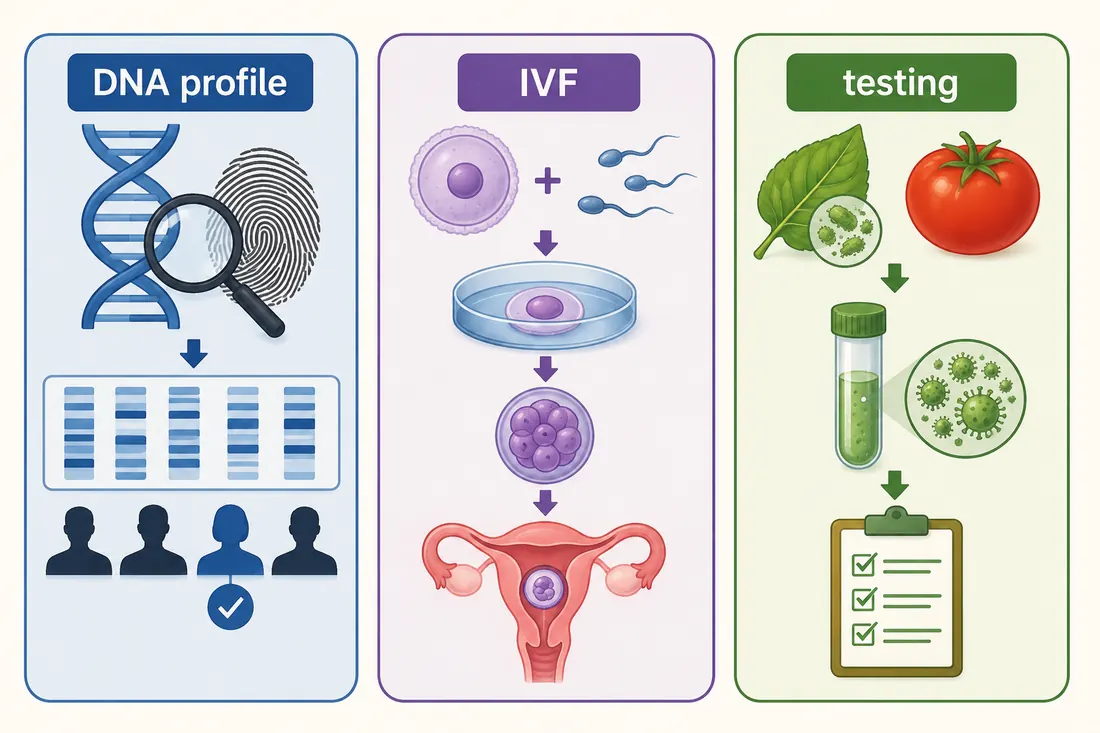
DNA Technology Uses

Three-panel diagram showing DNA profiling, IVF, and crop or disease testing.
Visual from the original MOSAIC Biology worksheet, page 67.

Explanation

DNA technology has many uses. It can help: identify DNA samples study disease test food crops help some people have children detect invasive species

Page 68

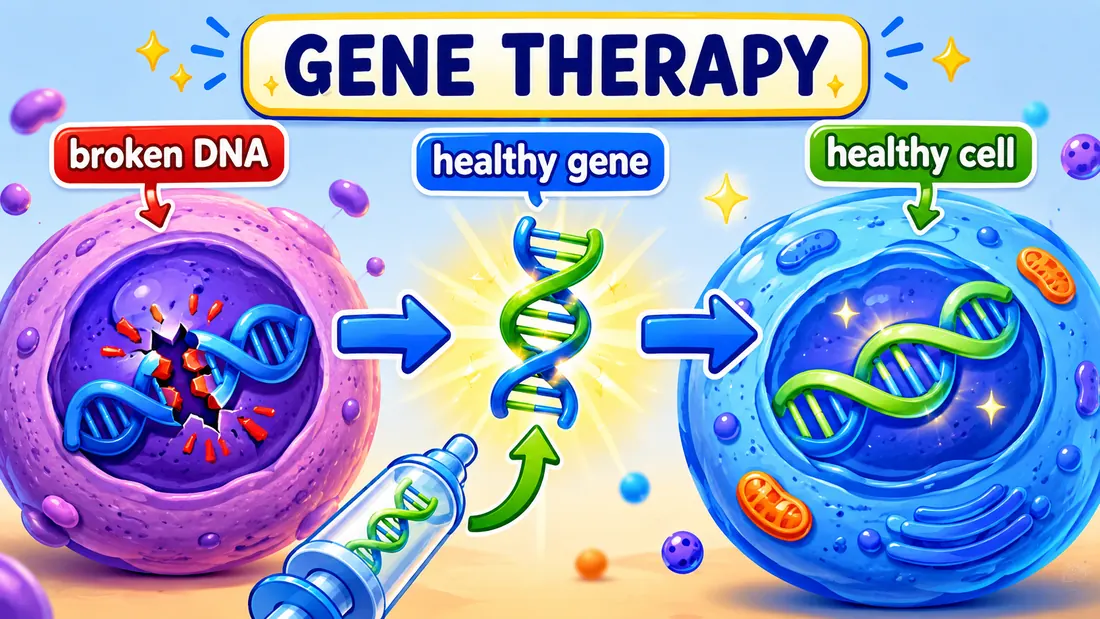
Gene Therapy

Gene-therapy diagram showing a healthy gene added to help a cell make a normal protein.
Visual from the original MOSAIC Biology worksheet, page 68.
VocabWhat it means
Gene therapytreatment of genetic disorders by adding a healthy gene and letting it help cells make a normal protein

Easy Explanation

Gene therapy tries to treat genetic disorders. The goal is to add a healthy gene. The healthy gene may help cells make a normal protein. This technology is still carefully studied.

Page 69

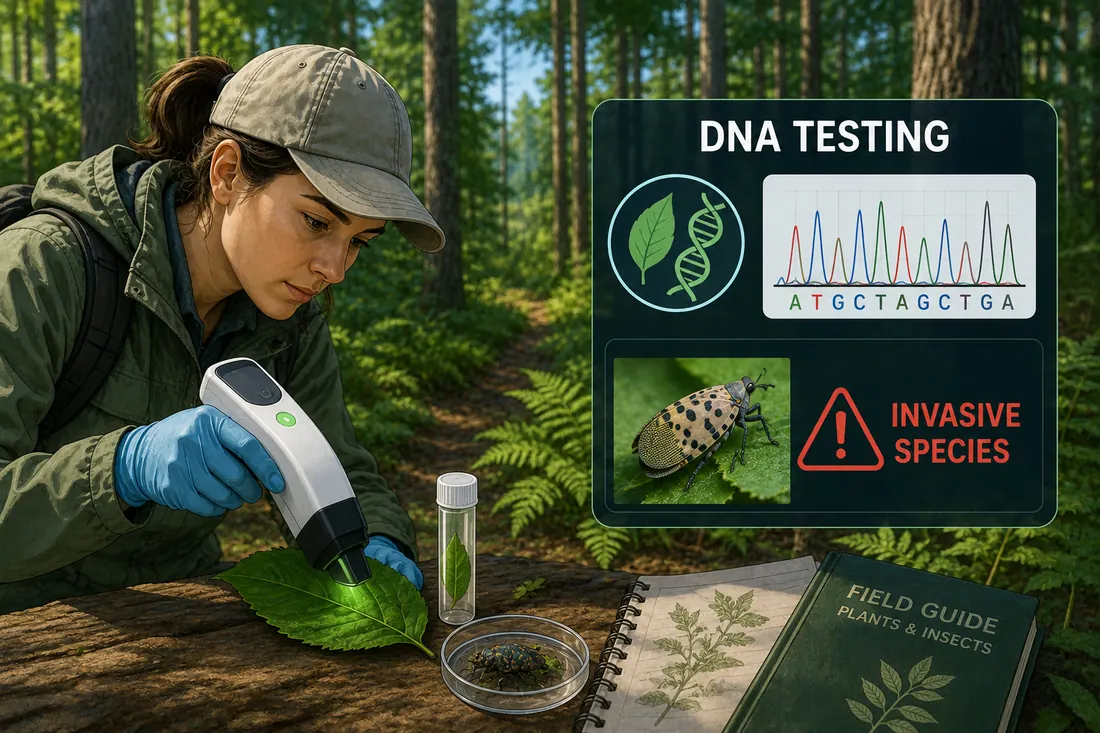
Biotechnology in British Columbia

British Columbia forest scene showing DNA testing for plant viruses, invasive species, or forest pathogens.
Visual from the original MOSAIC Biology worksheet, page 69.

Easy explanation

DNA technology can help British Columbia. Scientists can test plants and forests. They can look for: plant viruses invasive species forest pathogens Early detection can reduce damage.

Page 70

Risks and Ethical Issues

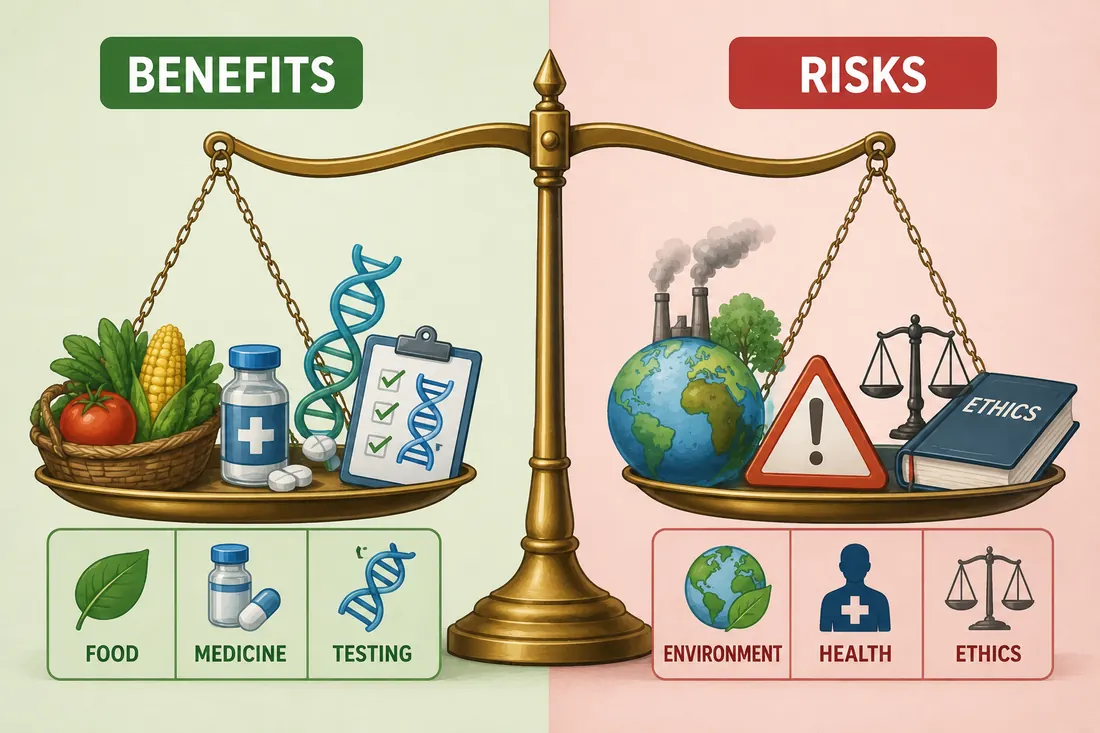
Balance scale comparing benefits and risks of biotechnology.
Visual from the original MOSAIC Biology worksheet, page 70.

Explanation

Biotechnology can be useful. But it can also raise questions. People may ask: Is it safe for the environment? Is it safe for health? Who controls the technology? Is it fair? Should animals be used this way? There is not always one simple answer. \

Page 71

Final Summary

Final Explanation

Biotechnology uses DNA and living organisms. Scientists can copy, change, or move genes. This can create useful products. It can help with farming, medicine, and testing. But every use should be checked for safety, ethics, and environmental effects.

DOWNLOAD WORKSHEETS

Choose a topic

← Back to Home ↑ Back to Top